Dilek Doski
Writer
The Politics of Perception: How Media Frames Kurdish Agency on Paper
In this op-ed, Dilek Doski argues that Western media distorted Kurdish agency during the U.S.–Israel–Iran escalation, amplifying speculation over facts and risking real-world consequences. The piece calls for restraint, accuracy, and accountability in conflict reporting.
By Dilek Doski
Abstract
The Middle East is a crucial region in the global arena, with its energy infrastructure and international investment, bridging economic leverage far beyond the region. However, without the cost of rigorous execution in moments of crisis, media narratives often outpace reality. In the recent U.S.–Israel–Iran escalation, Western coverage failed to uphold a basic standard: accurately representing the agency of actors on the ground, particularly the Kurds.
Beyond talks on the Strait of Hormuz and its impact on the Gulf States and Western partners, the media foreshadowed the impacts of its unjust coverage in dragging the Kurds into this war. The gaps in media perception attempted to sway the Kurds in political antagonization and equip media outlets with the potential for the arming and funding of Iranian Kurds living in the Kurdistan Region to fight against the Islamic Republic of Iran. By default, Iranian-backed militias in Iraq targeted the Kurdistan Region with nearly 638 drone attacks, and reports of nearly 120 drones and missiles targeting Iranian Kurdish groups in the region. Previous wars have come and gone without guarantees of the protection of the Kurds, leaving them as the victims of conflict. With so much uncertainty in the global order, the media's probity, at least, is expected to be reflected in coverage that provides factual information and accountability for its publications.
These actions in themselves can either devastate actors or safeguard them.
Kurdish agency
The Kurdistan Region’s President Nechirvan Barzani and Prime Minister Masrour Barzani both reaffirmed that the Kurds are not part of the war and maintained neutrality with their Iranian neighbor and U.S. partner in an interview with The National. Nonetheless, Western media mainly focused on the involvement of Kurdish Iranian groups, including the Kurdistan Freedom Party (PAK), the Kurdistan Democratic Party- Iran (PDKI), the Kurdistan Free Life Party (PJAK), the Organization of Iranian Kurdistan Struggle (Khabat), and the Komala Party of Iranian Kurdistan, fighting in this war after statements spread from the CIA funding the groups in the first week of March 2026 in a report by CNN and in Forbes for a CIA-Kurdish nexus. While there was no confirmation that the groups, including the PAK and others, had fully agreed to such scrutiny, media coverage from The Washington Times continued the rhetoric that the Kurds must help shape Iran’s future.
Now, why must they, if they have refused to?
Elif Sarican, in a report by Novara Media, stated, “The Kurds Are Nobody’s Proxy.”
Razgar Alani, the UK representative of the PDKI, made clear in remarks to The Jerusalem Post that any meaningful shift would hinge on external backing from the United States, paired with firm guarantees of representation for Iran’s diverse ethnic groups. Yet he was equally unequivocal on one point: the aim has never been to dismantle the Iranian state, but to redefine it.
Distorted media narratives and their implications
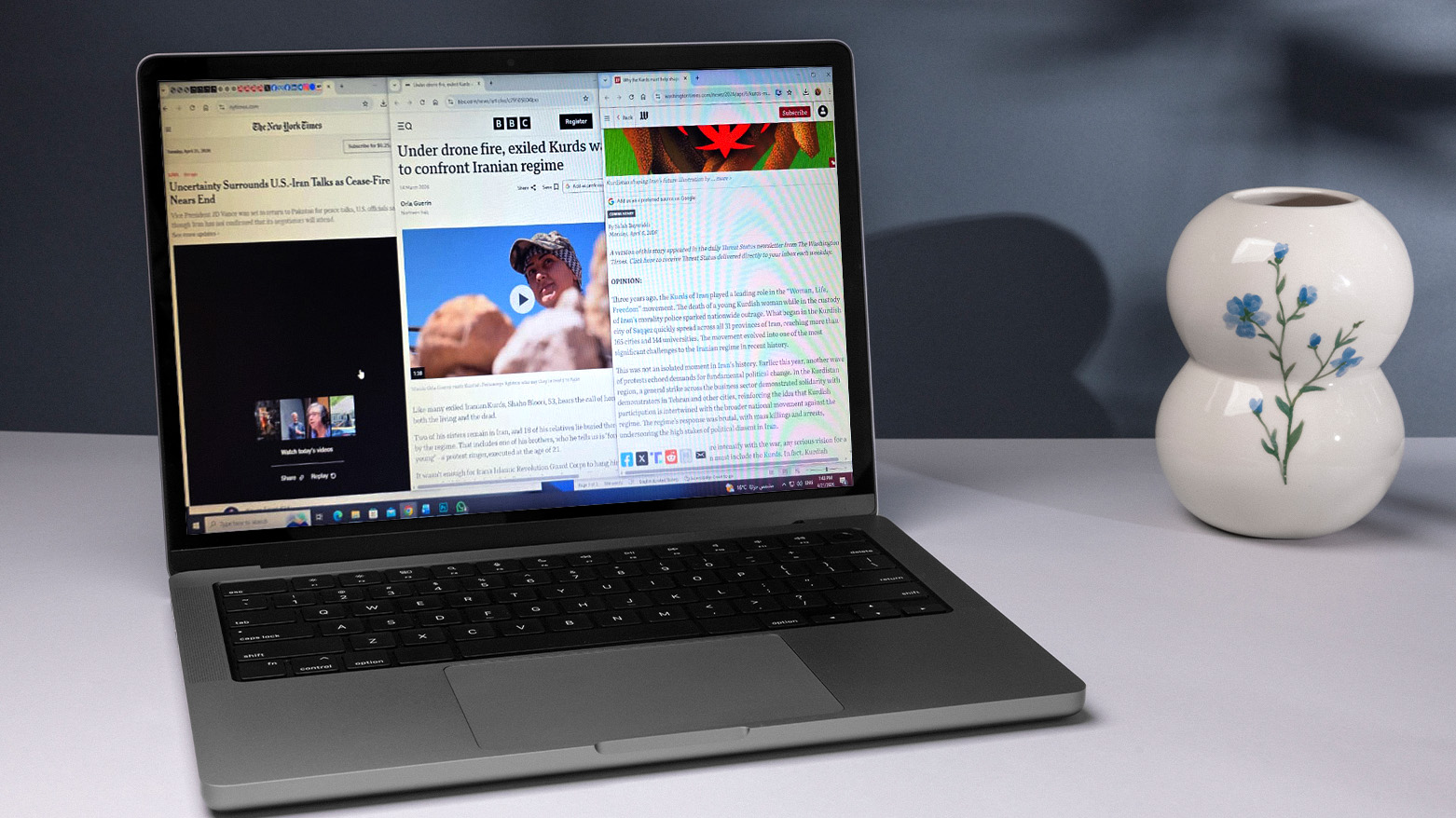
Mainstream media narratives filled its social media channels with the prospect of the “Kurds in Iran helping to put pressure on the Iranian regime,” as John Bolton stated in an interview with The Amargi. Headlines from The New York Times implied their narrative that the “Kurds yearn to join the fight.” And BBC News covered the story of a Komala party fighter, “Thousands of fighters are organised in the mountains, and ready to go home.” The fighter's story mainly reflected her desire for “justice, not revenge,” while sharing grievances of the Iranian regime's cruelty against the fighter and her family.
This framing matters.
Still, BBC News headlines soared with, “Under drone fire, exiled Kurds wait to confront Iranian regime.” The Kurds were not poised for confrontation with the Iranian regime; they were waiting for a credible, structural guarantee of external support. Absent that assurance, there was little expectation that Iranian Kurds would take up arms in a war they were unlikely to win.
President Donald Trump claimed that weapons had been sent to Iranian Kurdish groups and alleged that they had retained them. Further, Fox News stated that the Iraqi Kurds launched a ground offensive in Iran with baseless sources. The April 6, 2026, update reshaped media narratives, suggesting that the Kurds were prepared to engage in a ground offensive against the Iranian regime. In reality, Kurdish actors largely rejected such claims and issued no statements indicating support for the U.S.–Israel war on Iran. These remarks followed Fox News coverage, during which Rudaw’s Washington, D.C. correspondent, Diyar Kurda, asked President Trump whether the Kurds remained part of “Operation Epic Fury.” In response, Trump signaled a clear shift in tone, stating that he wanted the Kurds to “stay away” from the Iran war.
In effect, the media ecosystem amplified speculation faster than it corrected it.
War, Ceasefire, and Aftermath
After forty days of conflict, a fragile ceasefire emerged on April 8, 2026. The toll was immense: economic disruption, destroyed infrastructure, and civilian casualties across the region.
For the Kurdistan Region, the cost was particularly acute. Despite its neutrality, it endured sustained attacks and was repeatedly positioned, both rhetorically and strategically, as a participant in the war. It was, in effect, pulled into the conflict through perception before action.
Lessons in responsibility
The Kurds found themselves under intense media scrutiny, with speculation mounting over whether they would take up arms against the Iranian government. The episode underscores a broader lesson: media narratives are not neutral. They shape expectations, influence policy debates, and can inadvertently implicate actors in conflicts they seek to avoid. Yet through deliberate restraint and a commitment to neutrality, they avoided the catastrophic costs of escalation.
The media must meet that same standard of restraint.
Media perceptions, however, shift rapidly amid the fog of conflict and heightened reporting during moments of uncertainty. This volatility underscores a critical responsibility: the media must avoid narratives that lack transparency and accuracy, and refrain from drawing actors into wars they neither initiated nor sought to join.
The views expressed in this article are those of the author and do not necessarily reflect the views of Kurdistan24.