
Tara Shwan
Writer
The Global Power Equation: Trump’s China Visit and the Future of Strategic Rivalry
Tara Shwan, Executive Director of AKEI, said on the US-China relations: "Trump's transactional diplomacy meets Xi's long-horizon strategy. Their May 14–15 meeting is not theater — it is a fragile negotiation of interdependence and rivalry in a multipolar world."
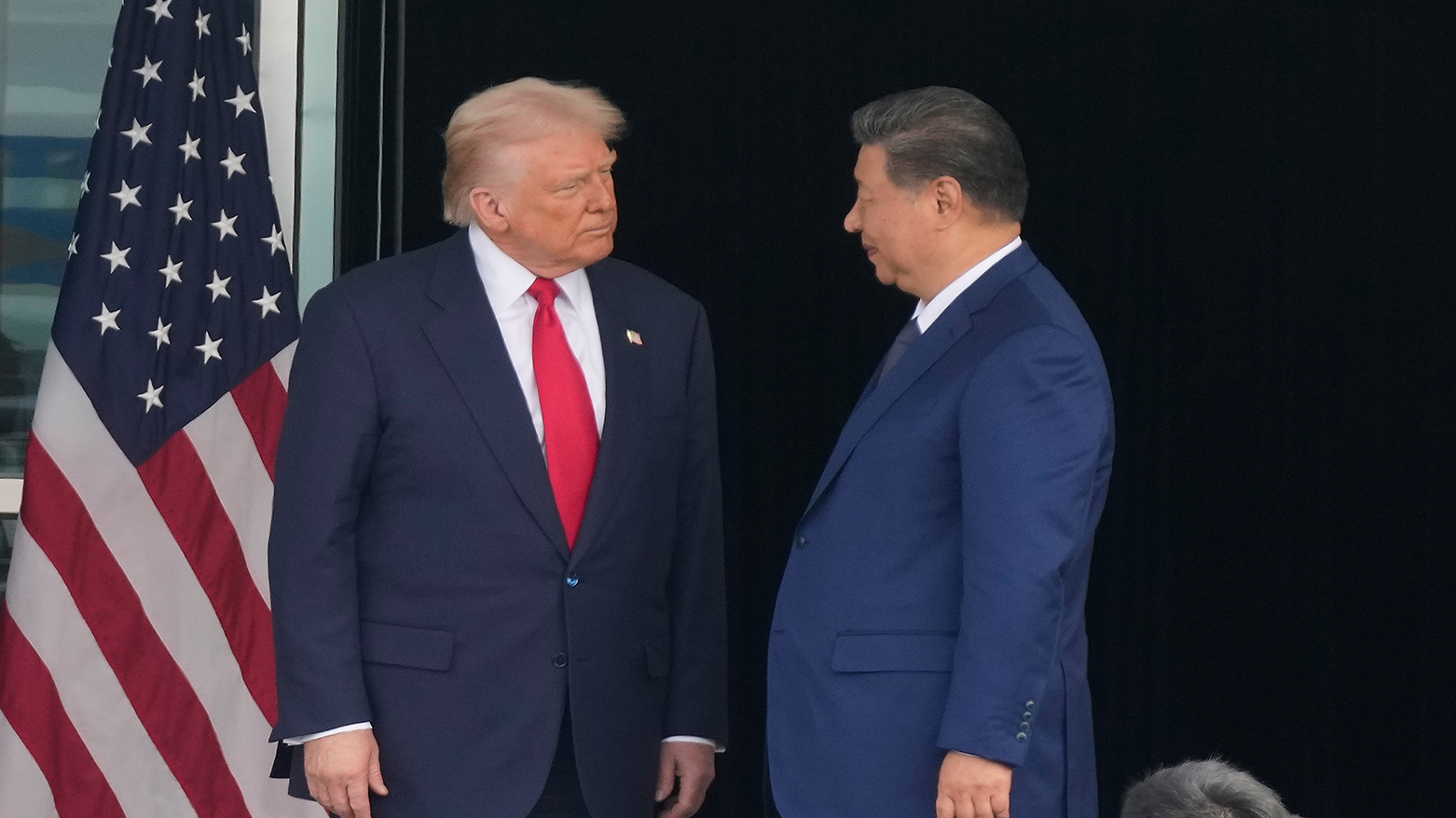
The meeting between Donald Trump and Xi Jinping stands as one of the most consequential diplomatic encounters of the modern era. Trump’s official visit to China, scheduled from May 14 to May 15, represents more than a ceremonial state engagement. It reflects a critical phase in the evolving relationship between the world’s two largest powers, at a time when economic rivalry, technological competition, and geopolitical influence increasingly shape the international order. It is not simply a visit between two heads of state. It is a moment that reflects the shifting structure of global power, where the United States and China define the boundaries of competition and cooperation for the rest of the world. When I look at this kind of engagement, I see more than political theatre. I see the outline of a world order being negotiated in real time, where neither side can fully dominate, yet neither side can afford to disengage. The stakes extend far beyond trade or protocol. They reach into the future of global stability itself.
From my perspective, Donald Trump approaches international relations with a distinctly transactional mindset. His style is built around leverage, direct negotiation, and visible outcomes that can be framed as wins. In the context of his May 14–May 15 visit to China, this approach becomes even more pronounced as discussions are expected to center around trade relations, industrial competitiveness, supply chain security, tariffs, and strategic technology sectors such as artificial intelligence and semiconductors. He tends to view economic relationships through the lens of imbalance and competition, particularly when it comes to manufacturing strength, trade deficits, and technological leadership. This framing reduces diplomacy to measurable gains, where agreements are judged by immediate impact rather than long term structural alignment.
On the other side, Xi Jinping represents a fundamentally different strategic philosophy. His leadership style is rooted in long horizon planning, institutional stability, and the gradual expansion of influence through economic and geopolitical infrastructure. When Xi engages with a counterpart like Trump, the goal is not only to negotiate specific terms but to preserve strategic flexibility while reinforcing China’s position within global systems. China is also expected to use the visit to project diplomatic confidence and present itself as a stabilizing force amid broader global uncertainty. The contrast between these two approaches creates a dynamic that is less about mutual understanding and more about controlled competition.
What makes this meeting so significant is how it reflects the broader transformation of global power. The era of uncontested American dominance has given way to a more complex and fragmented structure. The United States remains the leading military power and a central financial authority, but China’s rise in industrial capacity, technological innovation, and global investment networks has created a parallel center of influence. In addition to economic issues, the visit is expected to involve discussions surrounding Taiwan, the Indo Pacific balance of power, cybersecurity concerns, and the future of global trade governance. When these two leaders meet, it is not merely diplomacy. It is an acknowledgment that the world now operates under dual poles of power rather than a single hierarchy.
In my view, the most overlooked aspect of this relationship is the deep economic interdependence between the two nations. Despite escalating tensions, their economies remain tightly linked through supply chains, capital markets, and consumer demand. This creates a paradox where rivalry and dependency coexist. Neither country can fully decouple without significant internal disruption. As a result, meetings between Trump and Xi are not just about asserting dominance. They are about managing a fragile balance that prevents competition from turning into systemic breakdown.
The symbolism of such a visit also carries enormous weight. Global audiences interpret these encounters as signals of future direction. Allies of the United States watch for consistency in policy and commitment, while regional powers in Asia assess China’s diplomatic confidence and restraint. Financial markets react instantly to tone, body language, and perceived outcomes. The May 14–May 15 timeframe also gives the visit concentrated international visibility, increasing its importance not only as a bilateral meeting but as a global geopolitical event closely monitored by governments, investors, and strategic analysts worldwide. In this sense, the meeting becomes a performance of stability, even when underlying tensions remain unresolved. The optics matter almost as much as the substance.
I also believe that these high level engagements expose the limitations of traditional diplomatic thinking. The language of cooperation often masks deeper structural disagreements that cannot be resolved through short term agreements. Issues such as technology competition, intellectual property control, military positioning in the Indo Pacific, and global standard setting are not isolated disputes. They are expressions of a broader struggle over who defines the rules of the twenty first century international system.
Ultimately, the meeting between Donald Trump and Xi Jinping should not be understood as a contest with a clear winner. That interpretation is too simplistic for the complexity of modern geopolitics. Instead, it should be seen as an ongoing negotiation between two systems that are simultaneously interdependent and competitive. The future of global stability will depend not on eliminating rivalry, but on learning how to contain it within manageable boundaries. In that sense, this encounter is not just a moment in time. It is a preview of the enduring structure of global relations in a multipolar world.
By Tara Shwan,
Executive Director,
American-Kurdish Economic Institute, AKEI
The views expressed in this article are those of the author and do not necessarily reflect the views of Kurdistan24.