
Ahmad M. Alkuchikmulla
Political Economy Analyst
Kurdistan’s Window: Unity, Energy, and the Map Being Redrawn
Ahmad M. Alkuchikmulla argues the Kurdistan Region faces a narrowing strategic window to secure its role in Iraq's post-war energy order. He contends that only Kurdish unity, institutional reform, and decisive governance can turn geopolitical leverage into lasting political and economic influence.
In the second week of July 2026, three clocks are ticking at once. The ceasefire between Washington and Tehran is under strain, with American strikes resuming after attacks on shipping in the Strait of Hormuz. The 1972 treaty governing the Iraq–Turkey Pipeline has reached its renegotiation deadline. And a new government in Baghdad is concluding agreements with American envoys that will shape Iraq's energy architecture for a generation.
Each of these clocks matters enormously to the Kurdistan Region, and each represents an opening that will not stay open for long. The war settled the question of whether Kurdistan matters to the new regional map; its geography answered emphatically. The question now is whether the Region arrives at the table with the unity this moment demands. That is the central task of Kurdish statecraft today, and the window for it is measured in months, not years.
The war’s paradox
When Iranian missiles and drones struck across the region from late February, the Kurdistan Region was not spared. Erbil's airport and the American consulate were among the targets, and positions inside the Region absorbed hundreds of strikes in the war's opening weeks. The Region withstood a conflict it had no part in starting, and did so, it should be said, while continuing to function, host displaced people, and protect the international presence on its soil.
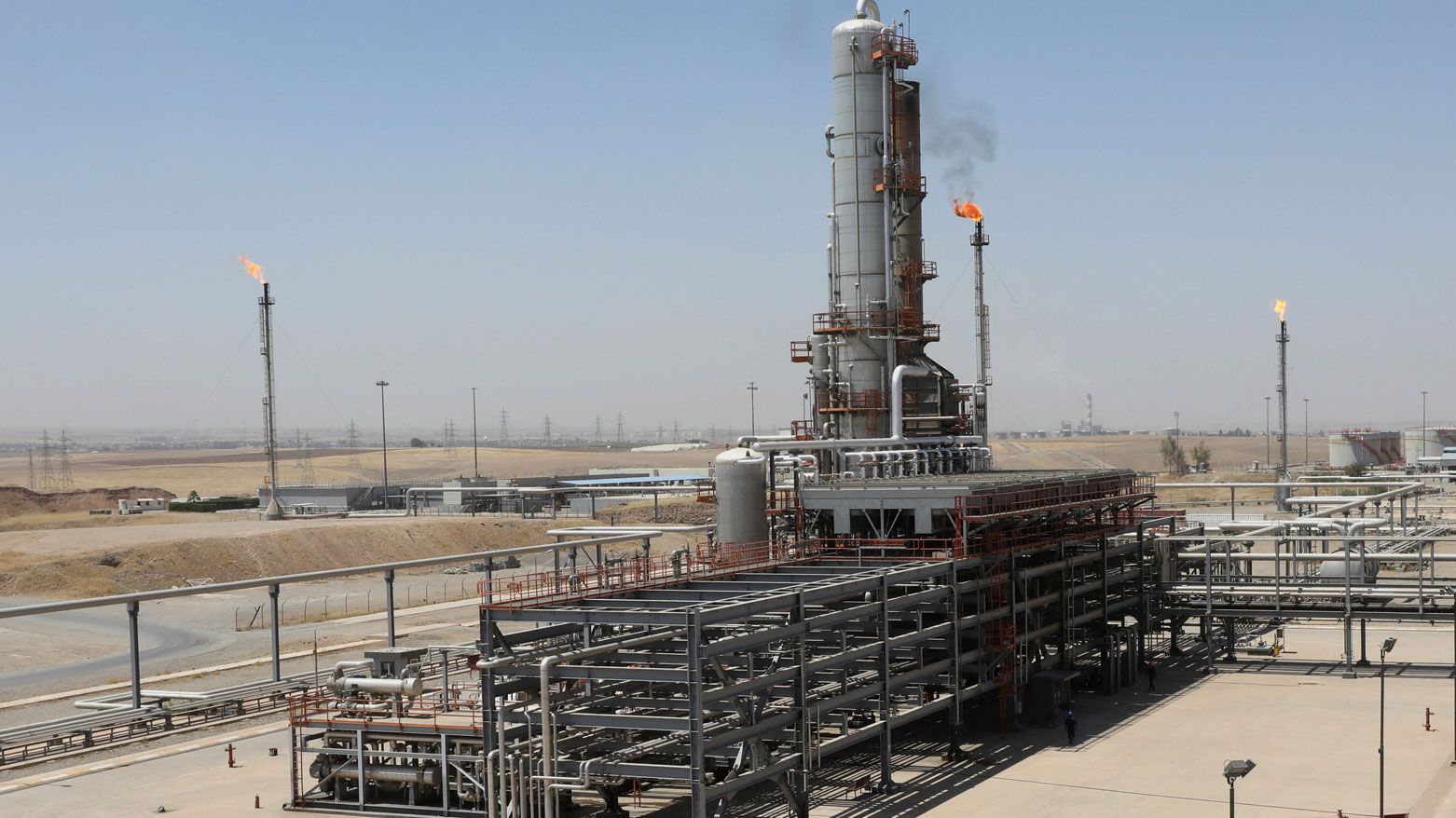
Yet the same war made Kurdistan’s geography indispensable. Iraq exports the overwhelming share of its crude, more than nine barrels in ten, through the Gulf terminals at Basra. When Iran closed the Strait of Hormuz, that artery was severed almost overnight. Storage filled, southern fields shut in, and national output collapsed to a fraction of its pre-war level. The federal treasury, dependent on oil for over 90% of its revenue, came within weeks of being unable to pay salaries. In that moment, the northern route through Kurdish territory to Ceyhan, reopened only months earlier through a US-brokered arrangement, after a closure that had cost the Region tens of billions of dollars- went from an afterthought to the Iraqi state's only functioning export lifeline.
Geography, in short, handed Erbil the kind of relevance it had spent two decades arguing for. What the moment revealed deserves honest reflection, not to assign blame, but to draw the lesson.
The cost of a divided house
When the crisis peaked, the Kurdistan Regional Government understandably sought guarantees before opening its infrastructure without conditions. Its caution was well-founded. After years of withheld budget transfers, salary crises, adverse court rulings, and a new federal customs system that stripped the Region of revenue control, no responsible government in Erbil could have offered open-ended cooperation on trust alone. The demands themselves, assurances on revenue and customs, were legitimate, and history vindicates the instinct behind them.
What weakened the Region’s hand was not the substance of its position but the absence of a united front behind it. More than eighteen months after the 2024 regional election, government formation remains incomplete, and at the decisive hour, there was no single Kurdish voice to hold the line. That vacuum allowed Kurdistan’s detractors in Baghdad, including factions aligned with regional allegiances, to recast legitimate Kurdish concerns as wartime obstruction, and the narrative stuck. A united Kurdistan making the same demands would have been negotiating; a divided one was portrayed as bargaining.
The episode also carried a quieter lesson about partnership. Washington’s overriding interest was the continuity of oil flows, and it brokered the outcome accordingly. The friendship between Kurdistan and the United States is deep, proven again by the U.S presence that remains anchored in Erbil. But friendships between states are sustained by capability and coherence, not sentiment alone. The surest way to keep Washington invested in Kurdistan is to be the partner whose unity makes supporting it easy.
Disunity is the oldest poison in Kurdistan’s politics, and its costs now compound daily. While the house remains divided, files migrate quietly to Baghdad: export marketing, customs collection, payroll oversight. The Region’s hard-won autonomy is not being challenged in a single stroke; it is being diluted file by file, and only a functioning, united government in Erbil can reverse the current.
A map is being drawn…
The post-war order is taking shape at speed. Baghdad’s new government has concluded a sweeping framework with Washington that brings American firms into Iraq’s gas, power, and import infrastructure, with the explicit aim of reducing dependence on Iranian energy. Talk of reviving westward export routes across Syria, a country that emerged from the war as an unexpected corridor state, already receiving trucked Iraqi crude bound for the Mediterranean, is no longer theoretical.
The strategic lesson every capital has drawn from this war is redundancy. The Gulf states, for all their wealth and ambitious diversification agendas, discovered how exposed their economies became the moment a single chokepoint closed; even Saudi Arabia’s alternative pipeline was struck. Every serious actor now wants export routes that do not depend on Hormuz. Those routes run north and west, either through the Kurdistan Region, or around it. For the first time, around it is a conceivable option. The choice before Kurdistan’s leadership is whether the Region becomes a node in the new energy map, an actor with a seat and a stake, or merely a right-of-way that infrastructure crosses and decisions bypass.
Three things Kurdistan can do now
First, complete the government and unify the energy file. The most consequential step available to the Region costs nothing and requires no one’s permission: all parties placing Kurdistan above party and finishing what voters mandated in 2024. Beyond cabinet formation, the Region needs a single statutory energy negotiating authority, a professional body with a cross-party mandate, insulated from political rotation, so that Kurdistan presents one position in the trilateral talks with Ankara and Baghdad over the pipeline treaty, and one address for Washington. The treaty talks will not wait for Kurdish unity; they will simply proceed without it. Second, convert the stopgap into a settlement. The arrangement that reopened northern exports was a truce in the Baghdad–Erbil oil dispute, not a peace. The Region should now negotiate to exchange what has already shifted in practice, independent marketing of crude, for what has never been secured in law: a federal hydrocarbons statute and an automatic, constitutionally anchored revenue-transfer mechanism that no future government in Baghdad can suspend at will. The moment to strike that bargain is now, while Washington remains invested in the northern route and Baghdad still remembers what the closure of Hormuz felt like. Leverage of this kind evaporates the day the Gulf feels safe again. Third, sell resilience, not barrels. Kurdistan’s pitch to Baghdad, the Gulf, and Washington should be built around what the war proved scarce: strategic redundancy. That means expanded pipeline throughput and storage, gas-to-power development that helps displace Iranian energy imports, and an equity stake in any westward corridor rather than mere transit fees.
The Region has a genuine foundation to build on, the investment reforms, diversification drive, and digital governance agenda of recent years have created real momentum. Pairing that record with a unified political front is what will distinguish Kurdistan as a serious destination for the Gulf capital now actively seeking post-war placements.
The measure of the moment
A foreign minister analysing the region this month sees a map being rewired under pressure: new mediators, new governments, new corridors. The Kurdistan Region sits at a junction of that rewiring. The war proved both its exposure and its worth. But value on a map is not the same as power at a table, and a seat at the table is earned by unity and institutions, not geography alone.
If the war taught one lesson, it is this: Kurdistan's greatest vulnerability was never the missiles aimed at it. It was the difficulty of speaking with one voice. The Region has overcome harder trials in its history, and it retains every asset this moment requires: the geography, the partnerships, the record of stability. What remains is the act of political will that turns those assets into authorship. The clocks are running.
Ahmad M. Alkuchikmulla
Communication Associate, MEA Institute for Strategic Studies
Global Development Researcher, SOAS University of London
1st Class BSc Politics with Economics Graduate, University of Bath
London, United Kingdom
The views expressed in this article are those of the author and do not necessarily reflect the views of Kurdistan24.