
Dilek Doski
Writer
Is America Ready to Exit Iraq?
Dilek Doski argues that Washington must tie its Iraq withdrawal to stronger state control over armed factions and continued support for Kurdistan’s air defenses, warning that premature disengagement could create another costly security vacuum.
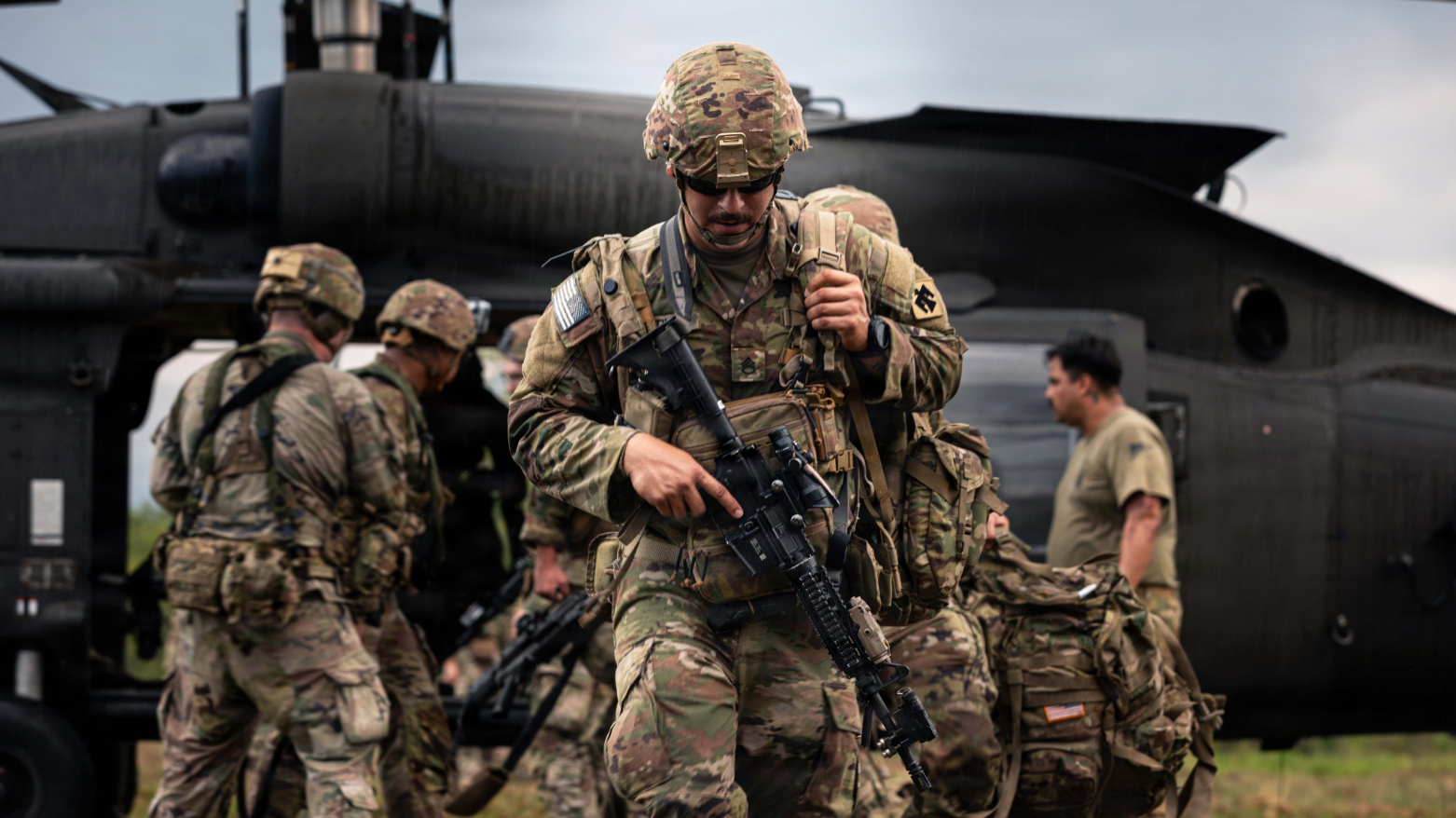
With 10 days remaining before the U.S.-led coalition ends its military mission and withdraws its remaining forces from Iraq, two critical conditions remain unmet: Baghdad has not established effective state control over armed factions, and the Kurdistan Region still lacks effective protection against escalating drone and missile attacks.
Following discussions in Washington in mid-July and subsequent talks with U.S. Central Command Commander General Brad Cooper, Iraqi Prime Minister Ali al-Zaidi reconfirmed September 30 as the fixed and final date for ending the coalition’s military mission and withdrawing its forces. Baghdad presents the withdrawal as an affirmation of Iraqi sovereignty. Iraq should ultimately assume full responsibility for its security. But sovereignty matters only when the state can control armed forces, prevent attacks from its territory, and protect every part of the country regardless of political partisanship. By those measures, Iraq’s security transition remains incomplete.
The central question is therefore not whether American forces should remain indefinitely. It is whether Washington can withdraw responsibly while the Kurdistan Region remains exposed to attacks and significant armed formations remain outside effective state control.
The Question Washington Should Be Asking
Washington has faced the consequences of withdrawal without a durable security framework before. Most U.S. forces departed Iraq in 2011 under the timetable established by the 2008 Status of Forces Agreement, after Washington and Baghdad failed to reach a legal arrangement protecting a residual American force. The negotiations unfolded amid domestic political opposition under Prime Minister Nouri al-Maliki and considerable Iranian pressure. Although many Iraqis viewed the withdrawal as an opportunity to restore sovereignty and consolidate national control, the political and security order that followed proved fragile.
The United States returned in 2014 after ISIS exploited Iraq’s institutional weaknesses and security vacuum. Working alongside Iraqi forces and the Peshmerga, the U.S.-led coalition dismantled ISIS’s territorial control. The campaign also demonstrated the distinct strategic value of the American-Kurdish partnership to the U.S. Department of Defense, while Washington’s relationship with Baghdad was frequently constrained by political negotiations. Cooperation with the KRG provided a comparatively stable and operationally dependable security partner.
ISIS remains a threat, but it is no longer the sole or most immediate test of Iraq’s security readiness. The more urgent questions are whether Baghdad can establish effective control over armed actors within its territory and whether the Kurdistan Region can defend itself against drones, missiles, and attacks. This leaves Washington facing considerable strategic uncertainty and risks undermining decades of investment, institutional ties and security cooperation, only to potentially return later under more dangerous and costly conditions.
Sovereignty Without Control
The Popular Mobilization Forces (PMF) are formally incorporated into Iraq’s security structure and funded by the state. Yet some formations retain separate political affiliations, autonomous command relationships, and close ties to Iran. As the September 30 deadline approaches, Baghdad has not completed the disarmament of armed factions or established an effective state monopoly over weapons. Several armed factions have expressed conditional willingness to surrender their weapons or integrate into state institutions, while others have categorically rejected disarmament.
However, establishing a state monopoly over weapons cannot occur overnight or through a bilateral agreement alone. Some armed factions retain close ties to Iran and assess domestic and foreign actors through the lens of regional alignments. A wider confrontation involving Saudi Arabia or another regional power would therefore test whether disarmament commitments could withstand escalation and whether foreign diplomatic missions would remain protected. Washington should consider these contingencies when assessing Iraq’s readiness to assume full security responsibility.
This distinction matters. A state cannot fully exercise security sovereignty while consequential military power remains distributed among the Iraqi Armed Forces, PMF formations, political parties, and other armed groups with competing loyalties. The danger is not simply that these groups exist, but that the departure of American capabilities could give the most powerful among them greater freedom to operate.
A recent ISIS attack on a PMF position near Khurmatu also demonstrated that armed factions continue to invoke the counterterrorism threat to justify retaining independent military capabilities. Baghdad must still prove it can confront residual ISIS cells through a unified, accountable national security structure rather than overlapping chains of command.
Kurdistan’s Air-Defense Gap
The more urgent danger is unfolding above the Kurdistan Region. According to Prime Minister Masrour Barzani, the Kurdistan Region has faced more than 1,000 drone and missile attacks since the war with Iran began on February 28. Drones have repeatedly been intercepted over Erbil, while other attacks have targeted political leaders, security institutions, energy infrastructure, and foreign interests. The August 17 drone strikes on Prime Minister Masrour Barzani’s office demonstrated the seriousness of the threat. It was not an isolated security incident but evidence of a widening capability gap. The Kurdistan Region is expected to defend itself while remaining within a federal security architecture it does not fully control.
The question is no longer merely whether the Peshmerga can defeat ISIS fighters on the ground. It is whether the KRG can protect its territory against drones, missiles and increasingly sophisticated attacks by state-backed actors. The Peshmerga continues to face limitations in air and missile defense, counter-drone technology, intelligence and surveillance, advanced military systems and integrated command structures.
Baghdad has announced a three-year plan to modernize Iraq’s air defenses, including protection for the Kurdistan Region. Yet that timetable leaves an immediate security gap after coalition forces depart. At the same time, the U.S.-KRG Memorandum of Understanding supporting the Peshmerga and institutional reform expires on September 30. Although the agreement’s expiration is not necessarily tied directly to funding, the future of American military assistance remains uncertain.
Withdrawal Should Not Mean Disengagement
Continued American engagement is not charity toward Iraq or the Kurdistan Region. It serves U.S. strategic interests by limiting armed confrontation, protecting American personnel and investments, preserving intelligence access, safeguarding energy infrastructure, and reducing the likelihood of another costly intervention.
The United States does not need to remain in Iraq indefinitely. But its transition should be conditions-based and preserve air-defense and counter-drone assistance, Peshmerga modernization, joint training, strategic advising, and rapid-response capabilities. It should also require measurable progress from Baghdad in bringing armed factions under effective state control.
Washington may be ready to leave, but the security environment is not yet ready for Washington to disengage. A responsible withdrawal should be measured not by the number of American troops departing, but by whether the institutions remaining behind can deter the actors most capable of exploiting their absence.
If the withdrawal leaves the Kurdistan Region undefended from the air and Iraq’s most powerful armed factions beyond effective state control, Washington may discover that leaving Iraq is not the same as leaving the conflict behind.
By Dilek Doski
The views expressed in this article are those of the author and do not necessarily reflect the views of Kurdistan24.