
Tara Shwan
Writer
America at a Political Crossroads: Democrats Emerge as Front Runners Ahead of a Defining Midterm Election
In an op-ed, Tara Shwan, Executive Director of the American-Kurdish Economic Institute (AKEI), argues that declining approval of President Trump, economic frustration, and strong Democratic polling could reshape Congress in the November 3 US midterm elections.
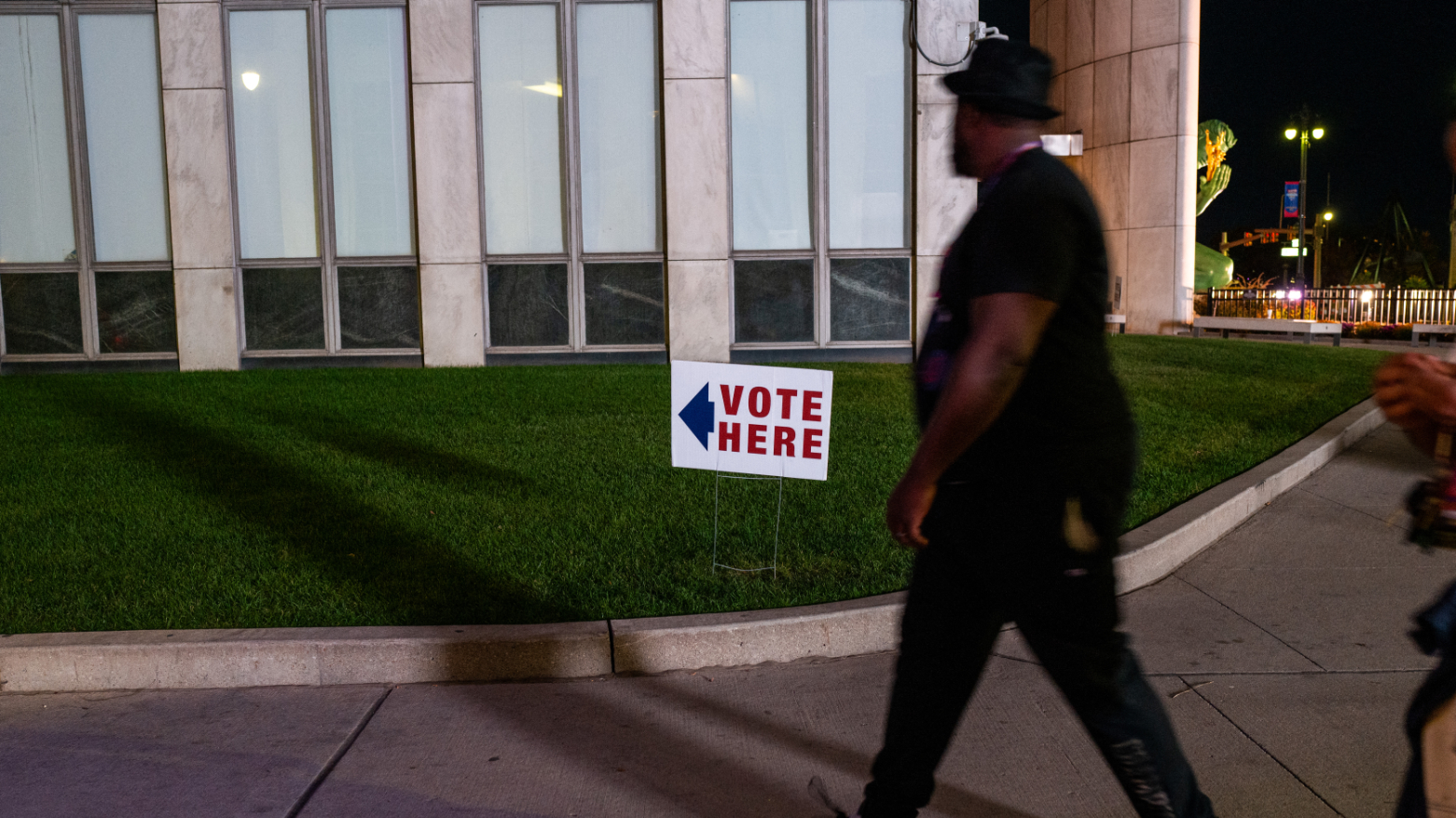
As the United States approaches its November 3 midterm elections, the political landscape is beginning to reveal a potentially significant shift in the balance of power in Washington. The latest polling suggests that the Democratic Party is entering the final stretch of the campaign with considerable momentum, raising the possibility of a major electoral setback for President Donald Trump and the Republican Party. What initially appeared to be another fiercely contested midterm election is increasingly developing into a broader public judgment on the direction of the country, the performance of its leadership, and the political consequences of the administration’s domestic and international policies.
The numbers are becoming increasingly difficult for Republicans to ignore. According to a Reuters/Ipsos poll published on October 26, Democrats lead Republicans by 47 percent to 36 percent among registered voters on the generic congressional ballot. Among likely voters, the Democratic advantage stands at 53 percent to 44 percent. Meanwhile, the latest average compiled by Nate Silver’s Silver Bulletin placed Democrats approximately nine points ahead nationally as of October 30. These figures indicate that Democratic momentum is not simply the product of one isolated survey but part of a broader electoral trend. Although national polling cannot independently predict the outcome of individual congressional races, the consistency of the Democratic advantage represents a serious warning sign for Republicans.
At the heart of this political movement is growing dissatisfaction with the Trump administration. Presidential approval ratings traditionally play a significant role in determining the outcome of midterm elections, particularly when voters view congressional contests as an opportunity to express their satisfaction or frustration with the party occupying the White House. Trump’s approval rating has fallen considerably, reaching 31 percent in the October 19 Reuters/Ipsos survey before recovering slightly to 32 percent in the October 26 polling. Such figures suggest that the president is entering one of the most politically challenging periods of his second administration. For Republicans, the difficulty is that congressional candidates are increasingly being judged not only on their individual records but also on their association with the president and his political agenda.
Economic anxiety remains another decisive factor. Despite the administration’s promises of economic strength and national prosperity, many American households continue to express concern about the cost of living, inflation, energy prices, and their overall financial security. According to Reuters/Ipsos polling, 73 percent of respondents in its October 26 survey believed the cost of living was moving in the wrong direction. This is particularly damaging for Republicans because economic performance is traditionally one of the strongest measures by which voters evaluate an incumbent administration. Political messaging about economic achievements becomes considerably less persuasive when families continue to experience financial pressure in their everyday lives.
The significance of these concerns should not be underestimated. Elections are frequently decided not by the grand political promises made in Washington but by the practical experiences of ordinary Americans. The price of groceries, housing costs, healthcare expenses, gasoline, and employment opportunities often carry greater electoral weight than ideological arguments. If voters believe that their financial circumstances have deteriorated, they may use the ballot box to demand a change in political direction. For Democrats, this creates an opportunity to transform economic frustration into electoral support.
Another important development is the apparent enthusiasm gap between the two parties. The October 27 NPR/PBS News/Marist poll found that Democratic candidates held a 52 percent to 44 percent advantage among likely voters. Perhaps more revealingly, 44 percent of likely voters said their congressional vote was primarily a vote against Trump, compared with 21 percent who described it as a vote in support of the president. This suggests that the midterms are becoming, to a considerable extent, a referendum on Trump’s leadership. The Democratic advantage among independent voters is particularly important because independents frequently determine the outcome of competitive congressional races.
Nevertheless, it would be premature to declare a Democratic victory before the votes are counted. The United States electoral system contains significant geographical and structural obstacles, particularly in Senate elections. Democrats may enjoy a substantial national advantage while still facing difficult battles in individual states. Senate contests are determined by state level voting patterns rather than the national popular preference, and the political composition of several states gives Republicans a potentially important advantage. The House of Representatives, where Republicans currently hold a narrow majority, appears to offer Democrats a more realistic opportunity to regain control.
The consequences of a Democratic victory could extend far beyond the congressional arithmetic. If Democrats regain the House, the final two years of Trump’s presidency could become considerably more complicated. Congressional investigations, budget negotiations, legislative confrontations, and increased oversight of the administration could dominate Washington’s political agenda. A divided Congress would make it significantly more difficult for the president to advance major legislative priorities, while potentially transforming the remainder of his term into a continuous struggle over political authority and accountability.
There is also a wider question about the future direction of American politics. The current polling suggests that a significant segment of the electorate is searching for a political alternative, but it does not necessarily mean that voters have embraced every element of the Democratic Party’s agenda. Some may simply be expressing dissatisfaction with the Republican administration rather than offering unconditional support for the opposition. This distinction matters because winning an election on the strength of public frustration is considerably easier than maintaining political support through effective governance.
Ultimately, the November 3 midterm elections represent much more than a contest for congressional seats. They are a critical test of the Republican Party’s ability to maintain political control, Trump’s influence over the American electorate, and the Democrats’ capacity to turn growing public dissatisfaction into a sustainable electoral advantage. The latest polling clearly places Democrats in a stronger national position, while the economic mood and presidential approval figures present serious challenges for Republicans.
Whether this momentum develops into a decisive Democratic victory or produces a narrower shift in congressional power remains to be seen. One thing, however, is becoming increasingly clear: the political environment that Republicans face is far more challenging than the one they might have anticipated. If the current polling trends translate into actual votes, November 3 could mark an important turning point in Trump’s second presidency and a significant rebalancing of political power in Washington. For the Democratic Party, the opportunity is substantial. For Republicans, the warning is unmistakable.
Sources and references
The analysis draws on the following polling and political research published in October 2026:
Reuters/Ipsos, October 26, 2026: Congressional voting preferences, presidential approval, and economic concerns.
NPR/PBS News/Marist Poll, October 27, 2026: Democratic advantage among likely voters, independent voter preferences, and public attitudes toward President Trump.
Nate Silver’s Silver Bulletin, October 30, 2026: National generic congressional ballot polling average, showing Democrats with an approximately nine point advantage.
Reuters, October 19, 2026: Analysis of Trump’s declining approval rating and the growing Democratic advantage in congressional polling.
Northeastern University, October 12, 2026: Historical analysis of midterm elections, presidential approval, and the possibility of a Democratic takeover of the House.
By Tara Shwan,
Executive Director,
American-Kurdish Economic Institute, AKEI
The views expressed in this article are those of the author and do not necessarily reflect the views of Kurdistan24.