Iran Denounces IAEA Nuclear Report as Politically Biased, Accuses Israel of Misinformation
In response to the report, Israeli PM Netanyahu issued a rare statement, asserting that the findings "strongly reinforce what Israel has been saying for years — the purpose of Iran’s nuclear program is not peaceful." His office called on the international community to “act now to stop Iran.”
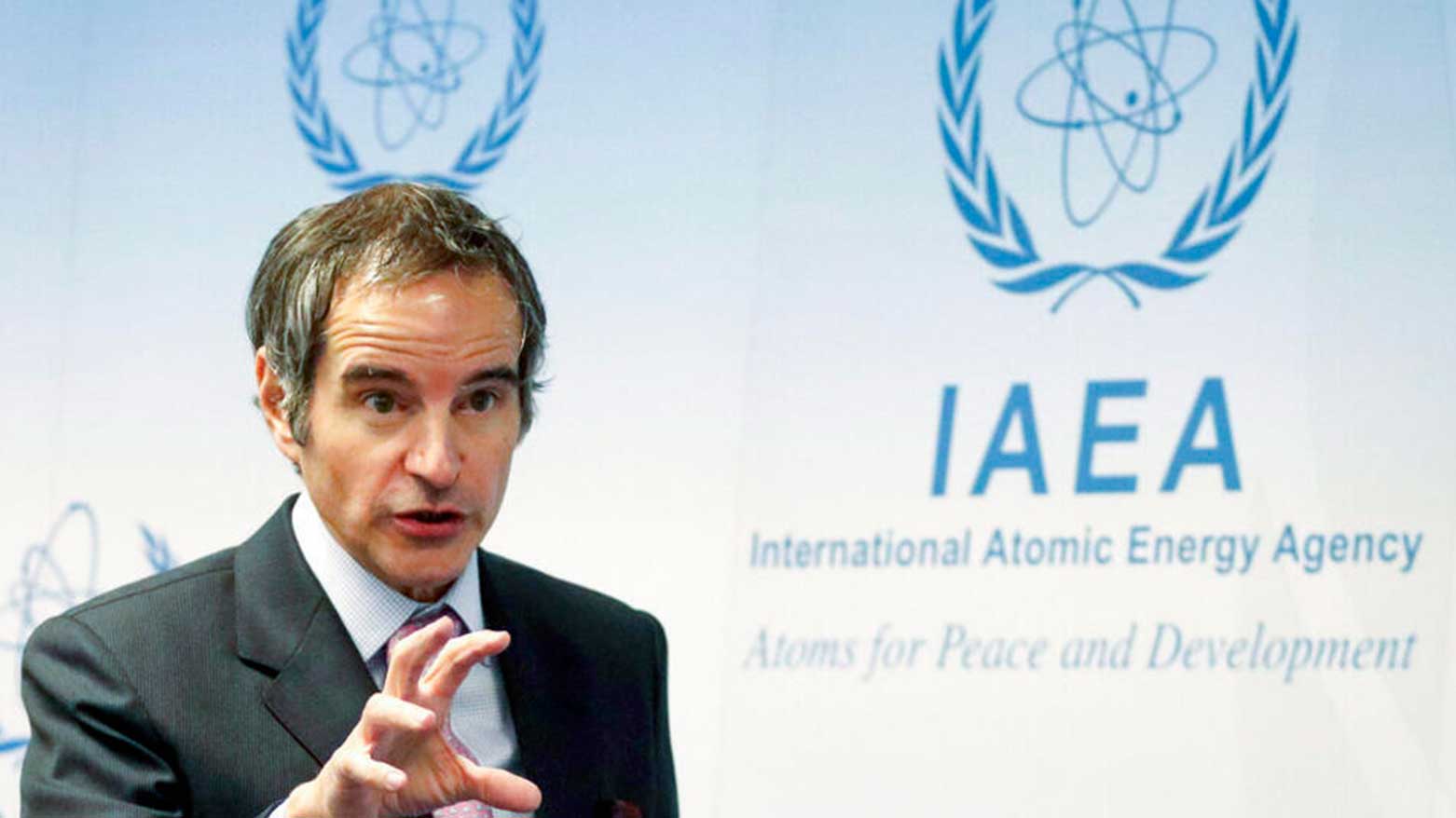
ERBIL (Kurdistan24) — Iran’s foreign ministry on Saturday strongly criticized the latest report by the United Nations’ nuclear watchdog, accusing the agency of political bias and reliance on "unreliable and misleading information" allegedly supplied by Israel, according to AFP.
In a sharply worded statement, Tehran dismissed the International Atomic Energy Agency’s (IAEA) findings that Iran has significantly increased its stockpile of highly enriched uranium. The ministry argued that the report “lacks a comprehensive and accurate assessment” and was “prepared for political purposes.”
“Relying on unreliable and misleading information sources provided by the Israeli regime… is contrary to the IAEA’s principles of professional verification,” the ministry stated, pushing back against the watchdog’s latest conclusions.
According to an IAEA report seen by The Associated Press, Iran has amassed 408.6 kilograms of uranium enriched up to 60% — an increase of nearly 50% since February. This enrichment level is only a technical step away from weapons-grade material. The IAEA warned that Iran remains “the only non-nuclear-weapon state to produce such material,” calling the development “a matter of serious concern.”
The report further noted that Iran’s total stockpile of enriched uranium had risen to 9,247.6 kilograms as of May 17. That includes both low and high-level enriched uranium, and reflects a sharp increase of over 950 kilograms in just three months.
In response to the report, Israeli Prime Minister Benjamin Netanyahu issued a Saturday statement, asserting that the findings "strongly reinforce what Israel has been saying for years — the purpose of Iran’s nuclear program is not peaceful." His office called on the international community to “act now to stop Iran,” adding that Iran's level of uranium enrichment “has no civilian justification whatsoever.”
The IAEA's report arrives at a pivotal moment in nuclear diplomacy. The administration of U.S. President Donald Trump has been engaged in on-and-off negotiations with Tehran to limit its nuclear activities, though talks have so far failed to yield an agreement.
Meanwhile, IAEA Director-General Rafael Grossi reiterated his "urgent call" for Tehran to cooperate fully with the agency’s years-long probe into uranium traces found at several undeclared sites in Iran. A separate 22-page IAEA document detailed Iran’s “less than satisfactory” cooperation and highlighted the discovery of manmade uranium particles at suspicious locations, including one revealed in 2018 by Netanyahu as a “clandestine nuclear warehouse.”
Though Iran maintains its nuclear program is for peaceful purposes, recent statements by Iranian officials have increasingly hinted at the possibility of pursuing a nuclear weapon. U.S. intelligence agencies assess that while Iran has not yet launched a formal weapons program, it has taken steps to position itself to build a bomb if it chooses to do so.
As tensions escalate, Iran continues to frame the nuclear standoff as one rooted in political pressure and misinformation — particularly from Israel — and accuses international bodies of being complicit in undermining its sovereignty.