Barzani's Vatican Visit Strengthens Kurdistan’s Profile and Commitment to Coexistence, Says Khalid Albert
Christian affairs official highlights Barzani’s meeting with Pope Leo XIV as a message of peace and regional stability.
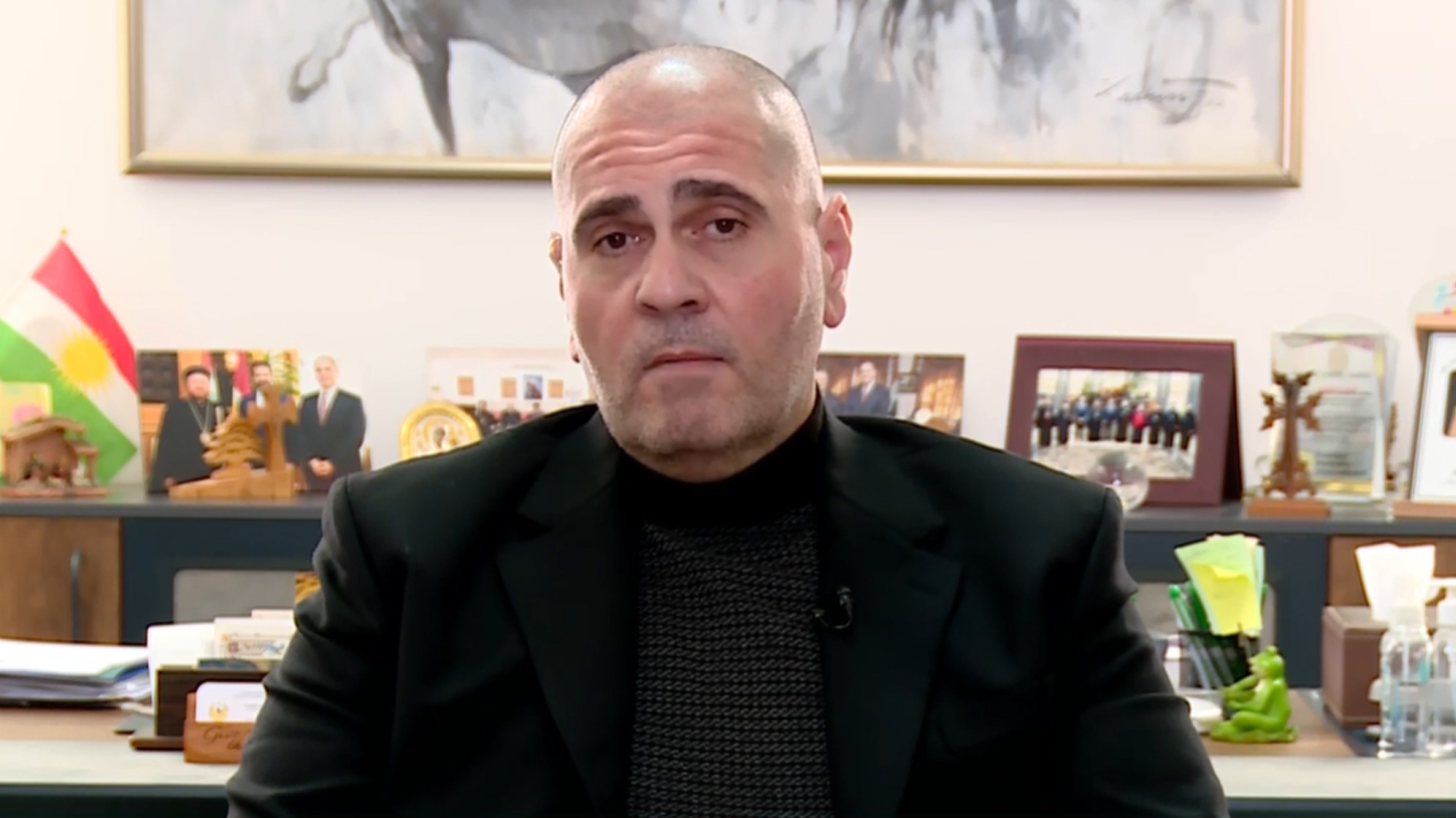
ERBIL (Kurdistan24) — Khalid Albert, Director General of Christian Affairs at the Kurdistan Regional Government's (KRG) Ministry of Endowments, said on Wednesday that President Masoud Barzani’s visit to the Vatican and his meeting with Pope Leo XIV carry significant political and humanitarian weight.
In an exclusive interview with Kurdistan24, Albert described the visit as far more than a ceremonial meeting, emphasizing its role in delivering Kurdistan’s message of stability to the global center of decision-making.
Albert noted that the Vatican holds substantial influence over Europe and the United States. He said Barzani’s visit would ensure the international community pays closer attention to the region’s challenges and exerts pressure to protect the Kurdistan Region as a model of democracy and coexistence.
He highlighted that Kurdistan hosts eight distinct religious communities under the Ministry of Endowments, all living peacefully in the region. Albert stressed that the KRG continues to maintain and establish churches for Christians, including Armenian and Syriac Orthodox congregations, demonstrating ongoing support for religious freedom.
Albert also pointed out how Kurdistan has opened its borders to over one million Christians displaced by ISIS and internal conflict in Syria. The visit by President Barzani to the Pope serves as recognition of Kurdistan’s humanitarian role in protecting vulnerable communities.
He described the visit as sending a broad message of peace across the region, particularly for Kurds in Rojava and Syria, ensuring that civilians are not caught in political conflicts and that lasting stability is maintained.
“This high-level visit reinforces the Kurdistan Region’s identity as a model of coexistence, which the world can recognize on the global political stage,” Albert said.
President Barzani has been formally invited to Italy and is scheduled to meet Pope Leo XIV at the Vatican on Wednesday, as part of an official visit aimed at strengthening the Kurdistan Region's relations with the Vatican.
According to information obtained by Kurdistan24, President Barzani will hold talks at the Vatican with Pope Leo XIV, as well as meetings with senior Italian officials. Ano Jawhar, the Kurdistan Regional Government’s (KRG) Minister of Transportation and Communications, is accompanying Barzani during the visit.
The visit is primarily intended to further reinforce ties between the Kurdistan Region and the Vatican, building on previous official invitations extended to Kurdish delegations in recent years.
A key objective is also to initiate direct engagement with the newly elected pope and to highlight the Kurdistan Region’s role as a center of peace and religious coexistence in the Middle East.
The delegation is expected to underscore Kurdistan’s long-standing model of coexistence, where Christians, Muslims, Yazidis, and followers of other faiths live together peacefully.
Another central aim of the visit is to expand international support for the Kurdish people through strengthened diplomatic and moral engagement with global religious and political institutions.
The Vatican represents more than 1.4 billion Catholics worldwide, giving the meeting added symbolic and diplomatic significance.
In addition to the Vatican meetings, President Barzani is expected to hold several political discussions with high-ranking Italian officials. These talks will address Kurdistan–Italy relations, broader developments in the Middle East, and recent attacks by armed groups affiliated with the Syrian Arab Army against Kurds in western Kurdistan (Rojava), including reports of mass killings and civilian casualties.
Mobilizing broader international support for the Kurds in Rojava is also expected to feature prominently on the agenda.