U.S. Consulate in Erbil Marks Holocaust Remembrance Day, Honoring Victims of Anfal and ISIS
The U.S. Consulate General in Erbil marked International Holocaust Remembrance Day, linking the memory of the Holocaust to the Kurdish Anfal campaign and ISIS atrocities to stand against hatred.
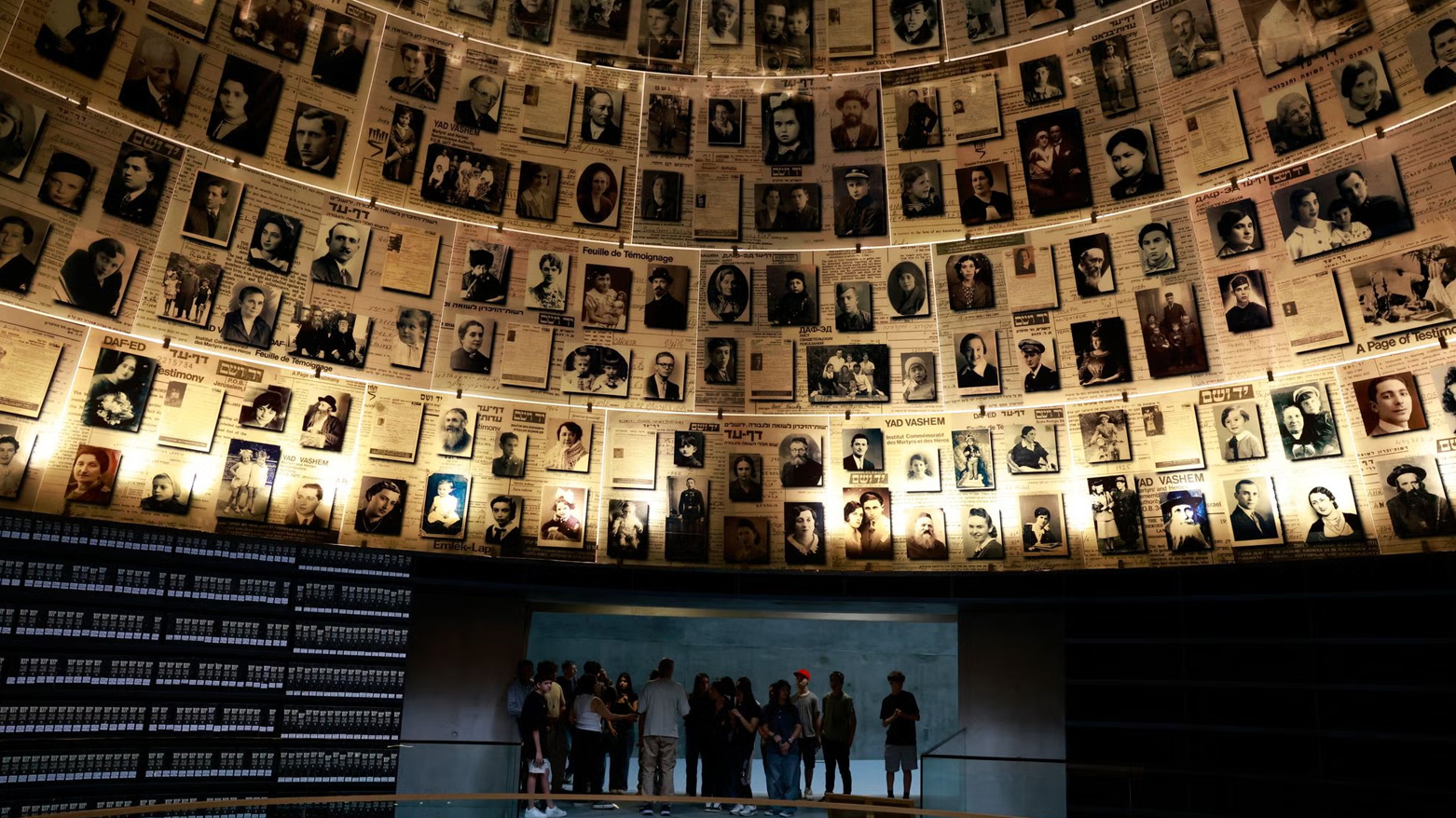
ERBIL (Kurdistan24) - The United States Consulate General in Erbil on Tuesday issued a formal statement commemorating International Holocaust Remembrance Day, honoring the six million Jews murdered by the Nazi regime while drawing parallels to regional atrocities, including the Anfal campaign against the Kurds and the more recent violence perpetrated by the Islamic State.
In a post published on its official Facebook page on Jan. 27, 2026, the Consulate emphasized the necessity of reflecting on historical tragedies to prevent future violence.
The mission’s statement linked the global memory of the Holocaust to specific local chapters of persecution, noting that the day serves to honor "the victims of the Holocaust as well as the victims of other tragedies including the Anfal campaign against the Kurds and ISIS brutality against all factions of the Iraqi people."
The statement included a message from U.S. President Donald Trump, who reaffirmed the administration’s commitment to combating the foundations of genocide.
"We cherish the eternal memories of all those whose lives were lost to the deadly scourge of anti-Semitism," the President stated, according to the Consulate’s release. "Above all, we vow to never forget the atrocities of the Holocaust. By reflecting on these dark chapters in history, we reaffirm our commitment to stand against hatred and prevent future atrocities."
Survivor Testimony and European Commemoration
The commemorations in Erbil coincided with high-level events in Europe marking the 81st anniversary of the liberation of the Auschwitz-Birkenau Nazi concentration camp on Jan. 27, 1945.
According to a press release from the European Parliament, MEPs convened for a special plenary session in Brussels to mark the International Day of Commemoration.
The session was headlined by Tatiana Bucci, an 88-year-old Holocaust survivor who was among the youngest children to survive the camp. Born in 1937 in what is now Croatia, Bucci was arrested by the Nazis in 1944 at age six and deported to Auschwitz alongside her four-year-old sister, Andra.
The sisters were subjected to ten months in the camp before its liberation. European Parliament President Roberta Metsola opened the ceremony, which included a minute of silence and emphasized the legislative body's commitment to the mantra of "never again."
The Architecture of Genocide
The historical context of the day is rooted in the systematic, state-sponsored persecution and murder of European Jews between 1933 and 1945.
As detailed by the Holocaust Encyclopedia, the era began with the Nazi Party’s rise to power and the subsequent implementation of discriminatory regulations, such as the 1935 Nuremberg Race Laws, which stripped German Jews of their citizenship.
The persecution became increasingly radicalized, culminating in the "Final Solution to the Jewish Question"—the organized mass murder of nearly two-thirds of Europe's Jewish population.
By the end of the conflict in May 1945, the Nazi regime and its collaborators had utilized an industrial-scale system of ghettos, transit camps, and gas chambers to execute a genocide that claimed six million Jewish lives and millions of other victims.
The United Nations High Commissioner for Human Rights, Volker Turk, issued a warning regarding the contemporary relevance of these events.
In a statement reported by Agence France-Presse (AFP), Turk urged the world to recognize that the Holocaust did not begin with mass executions but with "apathy and silence in the face of injustice, and with the corrosive dehumanisation of the other."
He noted that "hatred and dehumanisation are creeping into our daily lives, including through our social media feeds," and cited a sharp rise in threats and assaults against Jews in recent years as a cause for global concern.
The Anfal Genocide: A Legacy of Systematic Extermination
The U.S. Consulate’s decision to mention the Anfal campaign alongside the Holocaust reflects the deep-seated historical trauma of the Kurdish people.
According to historical reports provided by Kurdistan24, the Anfal campaign remains etched in memory as a horrific manifestation of the Ba’athist regime’s effort to erase Kurdish identity through systematic extermination.
The broader Anfal campaign, executed in eight calculated stages between 1986 and 1989, claimed the lives of over 182,000 Kurds. Backed by the First and Fifth Army Corps, the Republican Guard, and paramilitary units, the campaign reflected a militarized effort to annihilate a population.
Sultan Hashim, Iraq’s Minister of Defense, served as the primary field commander, while Ali Hassan al-Majeed—infamously known as “Chemical Ali”—supervised acts of racial cleansing and chemical warfare.
The third stage of the Anfal, occurring between April 7 and April 20, 1988, was particularly devastating for the Germian and Chamchamal regions. During this phase, families vanished and whole communities were wiped off the map.
Kurdistan24 reports that tens of thousands of Kurdish civilians, including women, children, and the elderly, were rounded up and buried alive in the southern deserts of Iraq. Justice for these acts was partially realized in 2007 when the Iraqi High Criminal Court sentenced al-Majeed, Hashim, and other top officials to death or life imprisonment.
This wider campaign followed a blueprint established forty-two years ago during the specific purge of the Barzani tribe.
In the late 1970s, the regime began relocating Barzanis to mass detention camps such as Diana, Harir, and Bahrka. In 1980, further groups were transferred to the notorious Quds and Qadisiya camps in Qushtapa.
According to official documents, elite security units launched a covert operation in 1983 to arrest all Barzani males above the age of 15.
The operation took place in three waves: targeting Qushtapa on July 31, the Mergasor areas on August 10, and a final house-by-house sweep on October 1. More than 8,000 men and boys were seized and transported in military trucks to Baghdad; none were seen again.
Modern Extremism and Human Rights
The U.S. diplomatic mission also highlighted the brutality of the Islamic State (ISIS) as a modern iteration of the "scourge of hatred." The extremist group’s efforts to target all factions of the Iraqi people reminded the region of the fragility of modern society.
The UN High Commissioner, Volker Turk, emphasized in the AFP report that the tools of education, international law, and human rights remain the primary defenses against a repetition of such dark chapters.
He stated that society is currently "equipped with the memory of how exclusion can turn into annihilation," provided that political leaders and citizens refuse to look away from emerging injustices.
The various commemorations held on Tuesday underscore a shared international and regional objective: ensuring that historical accountability remains a central tenet of modern governance.
By linking the Holocaust to the Anfal campaign and ISIS, the U.S. Consulate in Erbil signaled that the lessons of the mid-20th century are fundamental to navigating the current security and political challenges facing the Middle East and the wider world.