Syria’s Interior Ministry Issues Implementation Guidelines for Granting Citizenship to the Kurds
Syria’s Interior Ministry issued Decision 1944 on Friday, detailing procedures under Presidential Decree 13 to grant citizenship to eligible Kurdish citizens, establishing application offices, three-stage review committees, and appeal mechanisms.
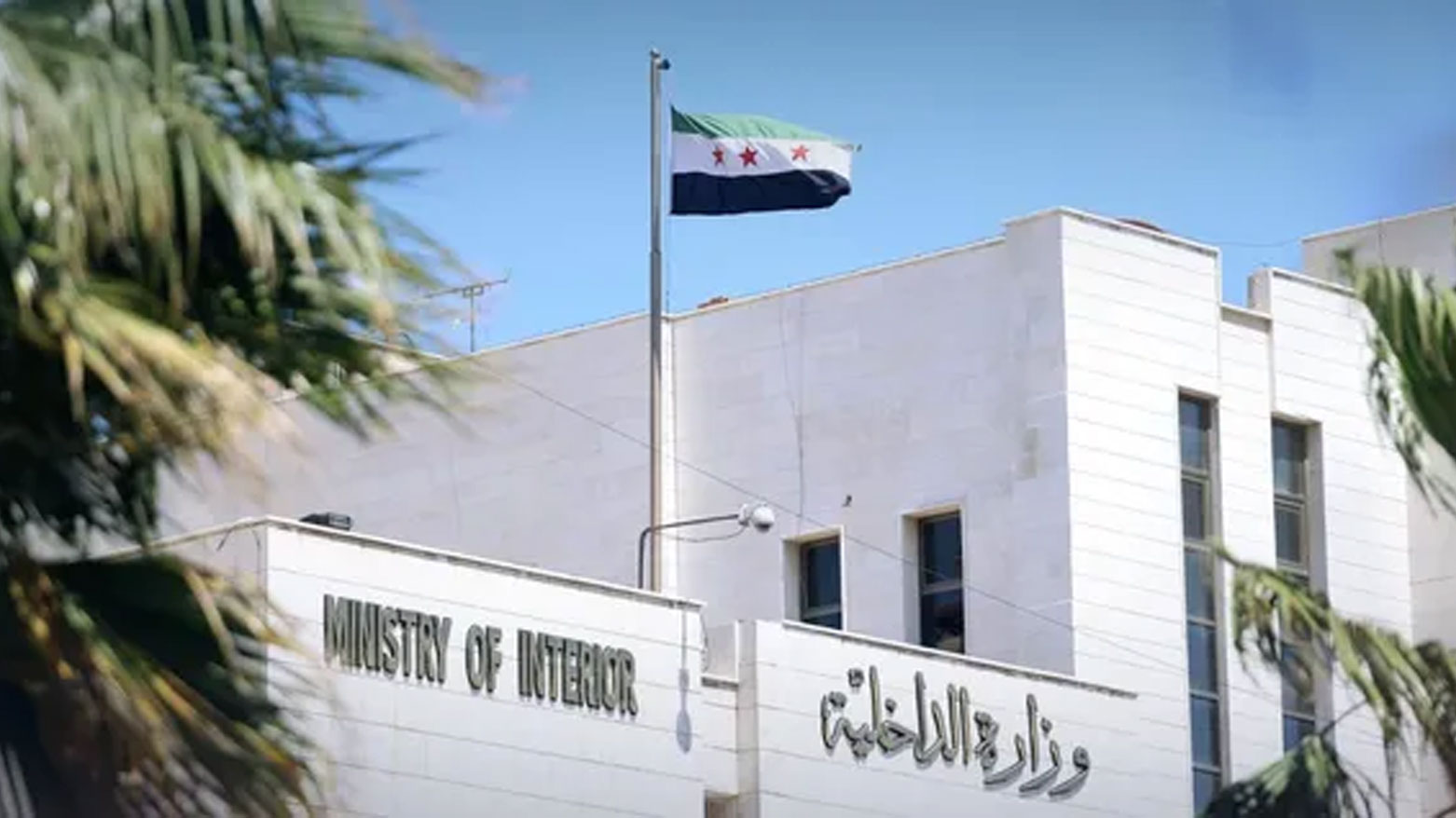
ERBIL (Kurdistan24) - A new administrative framework has been set in motion in Syria, as the country’s Interior Ministry formally published implementation guidelines regulating the granting of Syrian citizenship to Kurdish citizens covered under Presidential Decree No. 13 of 2026.
On Friday, Syria’s Interior Ministry issued Decision No. 1944, detailing the executive procedures for implementing Presidential Decree No. 13 of 2026. The decree, issued by Syrian President Ahmed al-Sharaa on Jan. 16, 2026, addresses the legal status of Kurdish citizens and provides for the granting of Syrian nationality to those included under its provisions.
According to the decision, the process is grounded in the principles of equality among citizens, social stability, and national integration.
Under Article One, any individual wishing to obtain Syrian citizenship and meeting the stipulated conditions must submit an application using the designated form, whether individual or family-based. Applications are to be filed at offices specifically allocated for this purpose.
Article Two specifies that application offices will operate in Damascus province with one office, Aleppo province with one office, Raqqa province with one office, Deir al-Zor province with one office, and Hasaka province with five offices.
Applicants are required to attach several documents, including a certificate of identification issued by a mukhtar, proof of residence accompanied by documents confirming place of residence, and any other official document establishing presence in the area, such as electricity, water, or telephone bills, or school enrollment documents for children.
The decision establishes a three-stage review system.
At the first stage, each application office will form a committee chaired by a judge and comprising a civil affairs employee and “a designated Kurdish figure from the area who holds Syrian citizenship.” This committee is tasked with receiving applications, fingerprinting applicants, and forwarding files to the subsidiary committee within 20 days.
At the second stage, subsidiary committees in the provinces, chaired by the governor and including an appellate judge and the provincial director of civil affairs, will review applications and elevate approved names to the central committee within 10 days. These committees will also receive objections to the results.
At the third stage, the central committee at the ministry, chaired by the Assistant Minister of Interior for Civil Affairs and composed of senior judges, will issue final decisions and approve the lists for the issuance of ministerial decisions.
Article Five stipulates that any person dissatisfied with the decision of the subsidiary committee has the right to file an objection within 15 days. The central committee must issue its decision on the objection within 15 days.
Article Nine warns that if information provided is proven incorrect or if document forgery is detected, the application will be annulled and legal measures will be taken against the applicant.
Presidential Decree No. 13 of 2026, issued by President Ahmed al-Sharaa, includes provisions related to the legal, cultural, and political status of Kurds in Syria. The decree recognizes aspects of Kurdish rights and identifies the Kurdish language as a national language of the country. It also provides for a final decision to grant citizenship to Kurds who were deprived of nationality as a result of the 1962 census.
The newly issued guidelines formalize the administrative pathway for implementing these provisions, defining application procedures, review mechanisms, and legal safeguards.