Iranian Official Denies Talks With U.S., Says Trump Delayed Strikes Under Pressure
An Iranian official said no negotiations are underway and attributed the postponement of U.S. strikes to military and financial pressures, while Washington maintains discussions are ongoing.
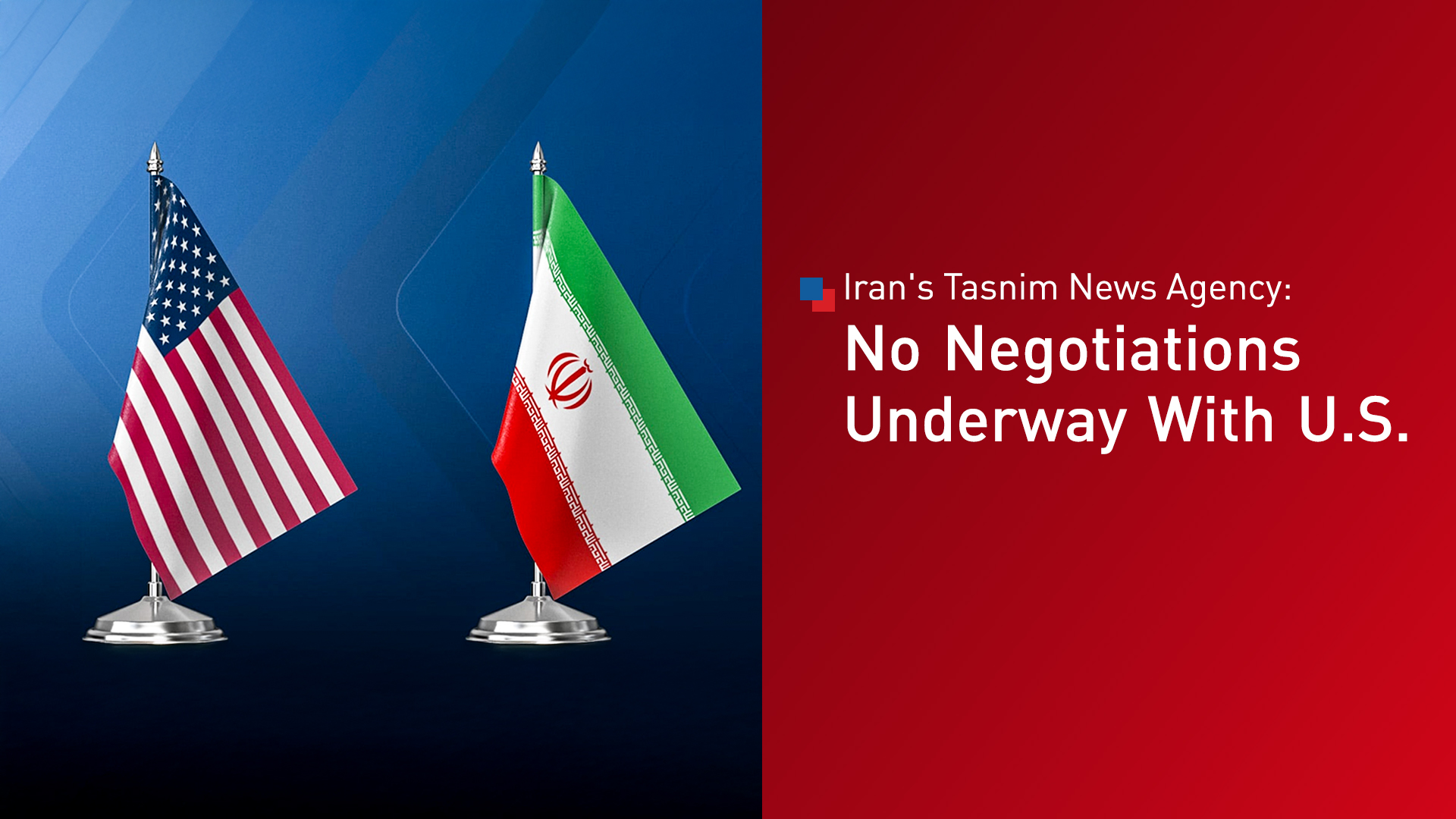
ERBIL (Kurdistan24) - A senior Iranian security official said no negotiations are underway with the United States and that President Donald Trump retreated from planned military action due to Iranian deterrence measures and financial pressures, according to remarks reported Monday by Tasnim News Agency.
The official stated that “no negotiations with Trump are taking place,” adding that the U.S. president’s decision to refrain from attacking Iranian infrastructure was the result of “Iran's military threats” becoming credible. The comments came as Washington announced a temporary postponement of strikes on Iranian energy facilities following what President Trump described as “very good and productive conversations” with Tehran over the past two days.
According to the Iranian official, multiple messages had been conveyed to Tehran through intermediaries since the beginning of the conflict, but Iran’s response remained consistent. “From the beginning of the war until today, messages have been sent to Tehran by various mediators, to which the clear response has been that we will continue our defense until the necessary level of deterrence is achieved,” the official said.
The official further emphasized that “no negotiations have been or are currently in progress,” contradicting statements issued by the U.S. president.
Trump had earlier announced via his Truth Social platform that discussions between Washington and Tehran had been constructive and ongoing, leading him to instruct the Department of War to postpone planned strikes against Iranian power plants and energy infrastructure for a five-day period.
In his statement, Trump said the decision was based on the “tenor and tone” of what he described as “in depth, detailed, and constructive conversations,” adding that the delay in military action would remain contingent on the outcome of the discussions expected to continue throughout the week.
The Iranian official attributed the U.S. decision not only to military considerations but also to economic factors, stating that “pressure from financial markets and the threat to bonds within the United States and the West has increased, and this was another significant factor behind this retreat.”
He added that ongoing tensions would continue to affect global energy markets and maritime conditions.
“With this method of psychological warfare, neither will the situation in the Strait of Hormuz return to its pre-war state, nor will calm return to the energy markets,” the official said.
He also described Trump’s earlier ultimatum regarding the reopening of the Strait of Hormuz as indicative of continued U.S. pressure, stating that Iran would persist in what he described as “extensive defense of the country.”
The exchange of statements reflects sharply differing accounts of recent developments between Washington and Tehran as the conflict enters its fourth week.
According to previous reporting by Kurdistan24, Trump had warned that if Iran did not fully reopen the Strait of Hormuz within 48 hours, the United States would “hit and obliterate” Iranian power plants, beginning with the largest facilities.
The Wall Street Journal reported that such potential strikes would likely focus on natural gas-powered electricity plants, which account for a significant share of Iran’s energy production.
Data cited by the International Energy Agency and reported by the Wall Street Journal indicates that approximately 80 percent of Iran’s electricity generation came from natural gas as of 2023, totaling around 303,000 gigawatt-hours. The report also noted that Iran was the second-largest electricity producer in the region after Saudi Arabia.
Among the potential targets identified was the Damavand combined-cycle power plant southeast of Tehran, which has a capacity of approximately 3,000 megawatts and accounts for a notable share of national output, according to the report.
Developments on the diplomatic front have coincided with continued military activity across the region. According to AFP and AP, Iranian missile and drone operations have extended beyond Israel to include the Gulf, where air defense systems in the United Arab Emirates and Saudi Arabia intercepted incoming threats on Sunday.
The UAE Ministry of Defense said its air defenses were actively responding to missile and drone activity, while Saudi officials reported intercepting a ballistic missile aimed toward Riyadh and downing several drones targeting the kingdom’s eastern region, according to AP.
Iranian missile strikes on southern Israel have also resulted in casualties and damage. AP reported that missiles struck the cities of Arad and Dimona, injuring dozens of people and causing structural damage to residential buildings.
Israeli military officials said air defense systems were activated but did not intercept at least one incoming missile, according to statements cited by AFP and AP.
Iranian authorities have said the strikes were carried out in response to earlier attacks on Iranian territory, including a reported strike on the Natanz nuclear facility. According to AP, Iranian officials and the International Atomic Energy Agency confirmed that no abnormal radiation levels were detected following the incident.
The broader conflict has also affected maritime activity and global energy markets. The United Kingdom Maritime Trade Operations center reported that a projectile struck near a commercial vessel north of Sharjah, raising concerns about shipping security in the region, according to AP.
AFP reported that a coalition of 21 countries, including the UAE, has moved to support efforts to secure the Strait of Hormuz, which remains a critical transit route for global oil supplies. Officials described the situation as a “de facto closure” of the waterway, although Iran has denied restricting access and maintains that navigation continues under wartime conditions.
Oil prices have risen in response to the disruptions, with market reports indicating that Brent crude exceeded $110 per barrel and West Texas Intermediate surpassed $100 per barrel before easing slightly.
U.S. officials have also taken economic measures, including a temporary easing of sanctions on certain Iranian oil shipments already at sea. Treasury Secretary Scott Bessent said the move would allow approximately 140 million barrels of oil to enter global markets, according to AP.
Meanwhile, the Pentagon has deployed additional military assets to the region, including three warships and approximately 2,500 Marines, marking the second such deployment within a week, AP reported. Officials have not confirmed whether these forces will be engaged in combat operations.
The conflicting narratives regarding diplomatic engagement and military planning highlight the continued volatility of the situation, as both sides maintain public positions that differ on the existence and nature of any talks.
This article was updated on Monday, March 23, 2026, at 03:14pm.