Saudi Arabia Warns of Potential Danger in Jazan as Houthi Attacks Escalate
Civil defense alert comes amid renewed Houthi attacks on Saudi energy facilities and fears that Yemen’s fragile truce could collapse into full-scale war
ERBIL (Kurdistan24) — Saudi Arabia’s civil defense agency on Sunday issued an alert warning of a “potential danger” in the southern province of Jazan along the border with Yemen, amid a recent escalation in attacks by the Iran-backed Houthis.
“A warning has been issued by the National Early Warning Platform in the Jazan Province to alert of a potential danger,” the Saudi Civil Defense said in a statement.
Such alerts are typically issued ahead of potential attacks or other hazards targeting a specific area, although the agency did not provide further details about the nature of the threat.
The warning came as the Houthis have repeatedly targeted energy and petroleum facilities in Jazan in recent weeks. The Iran-backed group has also intensified attacks against Saudi-linked targets amid a broader deterioration in Yemen’s security situation.
A years-long truce between the Houthis and Yemen’s Saudi-backed, internationally recognized government appeared to collapse last month as fighting between regional allies of the United States and Iran intensified.
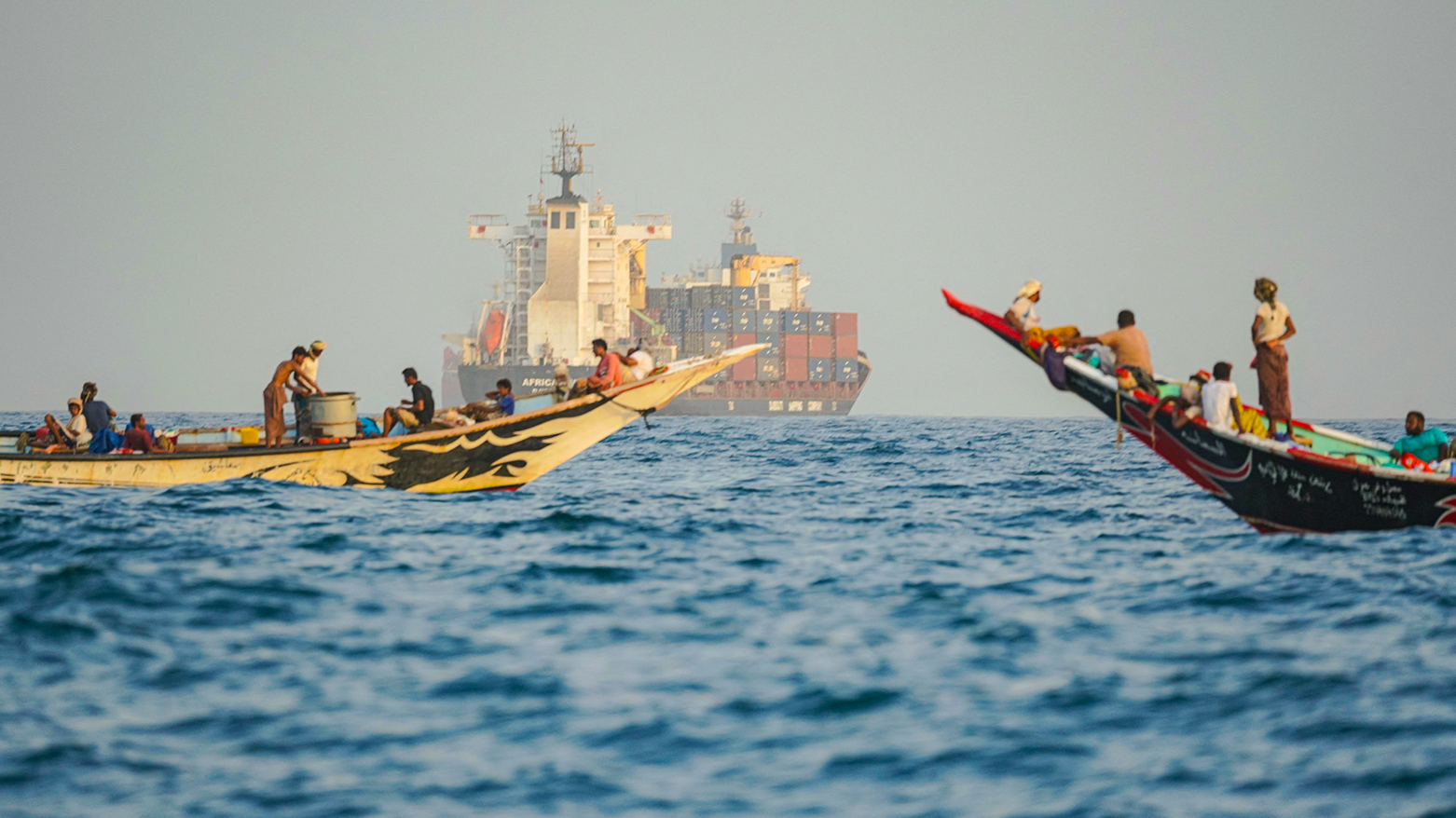
The breakdown of the UN-backed 2022 truce came after the Houthis announced a maritime blockade targeting Saudi Arabia, striking Saudi tankers in the Red Sea and attacking the kingdom’s oil infrastructure.
The developments have raised fears of a wider regional escalation, with Iran simultaneously imposing a blockade in the Strait of Hormuz on the opposite side of the Arabian Peninsula.
The Houthis control large parts of Yemen, including the capital, Sanaa, as well as territory bordering Saudi Arabia’s Red Sea provinces.
Fears of renewed war in Yemen
Yemen’s conflict has killed tens of thousands of people, displaced millions and pushed the country toward famine over more than a decade of fighting. The 2022 truce brought relative calm to much of the country, but the renewed hostilities have revived fears of a return to full-scale war.
For civilians who endured the worst years of the conflict, the latest escalation has brought back memories of displacement and violence.
Anwar, a father of two from Hodeida, fled the advance of the Houthis years ago and sought refuge in the Red Sea city of Mokha.
Last week, explosions shook the city when the Houthis struck Mokha port, renewing fears among residents that another cycle of fighting and displacement could be underway.
“I do not want our lives to be haunted by constant panic caused by Houthi terror. Mokha used to be a safe city and a haven for many Yemenis,” Anwar told AFP.
“The hardest part is not fearing for my own safety, but fearing for my children and family,” he added.
Anwar’s three-year-old daughter was born after the 2022 truce and has never experienced war. When explosions erupted, she ran to her father and asked what was happening.
Unable to explain the situation to her, Anwar told her the sounds were fireworks for a wedding.
Najem Hammoud al-Wahbani, another resident of Mokha, said the return of attacks had left people living in fear.
“Every day, Houthi missiles and drones fly overhead. We hear shelling in the distance, but we fear that, tomorrow, it could be right here,” he told AFP.
‘It could destroy everything’
The latest escalation followed a series of developments that have further strained the already fragile situation.
Last month, the Houthis welcomed an Iranian aircraft in Sanaa, after which a series of tit-for-tat attacks intensified. The group subsequently announced a maritime blockade targeting Saudi Arabia, which led a coalition that heavily bombed Yemen during the war.
The Houthis have since targeted Saudi-linked shipping in the Red Sea while stepping up attacks against government forces inside Yemen.
Mohammed Ali, who was displaced from Hodeida province to al-Khokha, north of Mokha, said he was considering moving his family farther east to Aden.
If fighting reaches al-Khokha, where he runs a construction business, “it could destroy everything, including my future and my children's future,” he told AFP.
The Houthis have also intensified attacks against Saudi-backed government forces since last month.
Earlier this month, Houthi attacks killed 58 government troops, according to a military source, with most of the casualties reported in oil-rich Marib province.
Two civilians were also killed the same day in Houthi shelling of residential areas and displacement camps in Marib.
‘Where would I flee?’
Marib, which is divided between government forces and the Houthis, has emerged as a major flashpoint in the renewed fighting.
The province hosts around 60 percent of Yemen’s internally displaced population, according to the International Organization for Migration, making any renewed offensive there particularly threatening to civilians.
Ali Munif, 46, has lived in a displacement camp outside Marib city since his village was seized by the Houthis in 2021.
“If war returns to Marib, where would I flee?” he told AFP.
A woman living near one of the military camps targeted in recent attacks said the strikes shook doors and windows “like a quake.”
“It brought back the fear, anxiety, and despair we experienced at the height of war,” she told AFP, requesting anonymity for security reasons.
The woman, who works for a charity, said the attacks had left her struggling to sleep.
“We now live with the constant thought that we could become a target at any moment,” she said.
The renewed fighting has added to concerns that Yemen could once again become one of the region’s major theaters of conflict, while the escalating Houthi-Saudi confrontation risks widening the consequences beyond Yemen’s borders and into the Red Sea and Gulf.