PM Barzani Attends Peshmerga Funeral, Vows to Defend Kurdistan Region After Deadly Attack
Describing the attack as unjustified, the Prime Minister said the Peshmerga had been targeted in an act of “treachery and betrayal.”
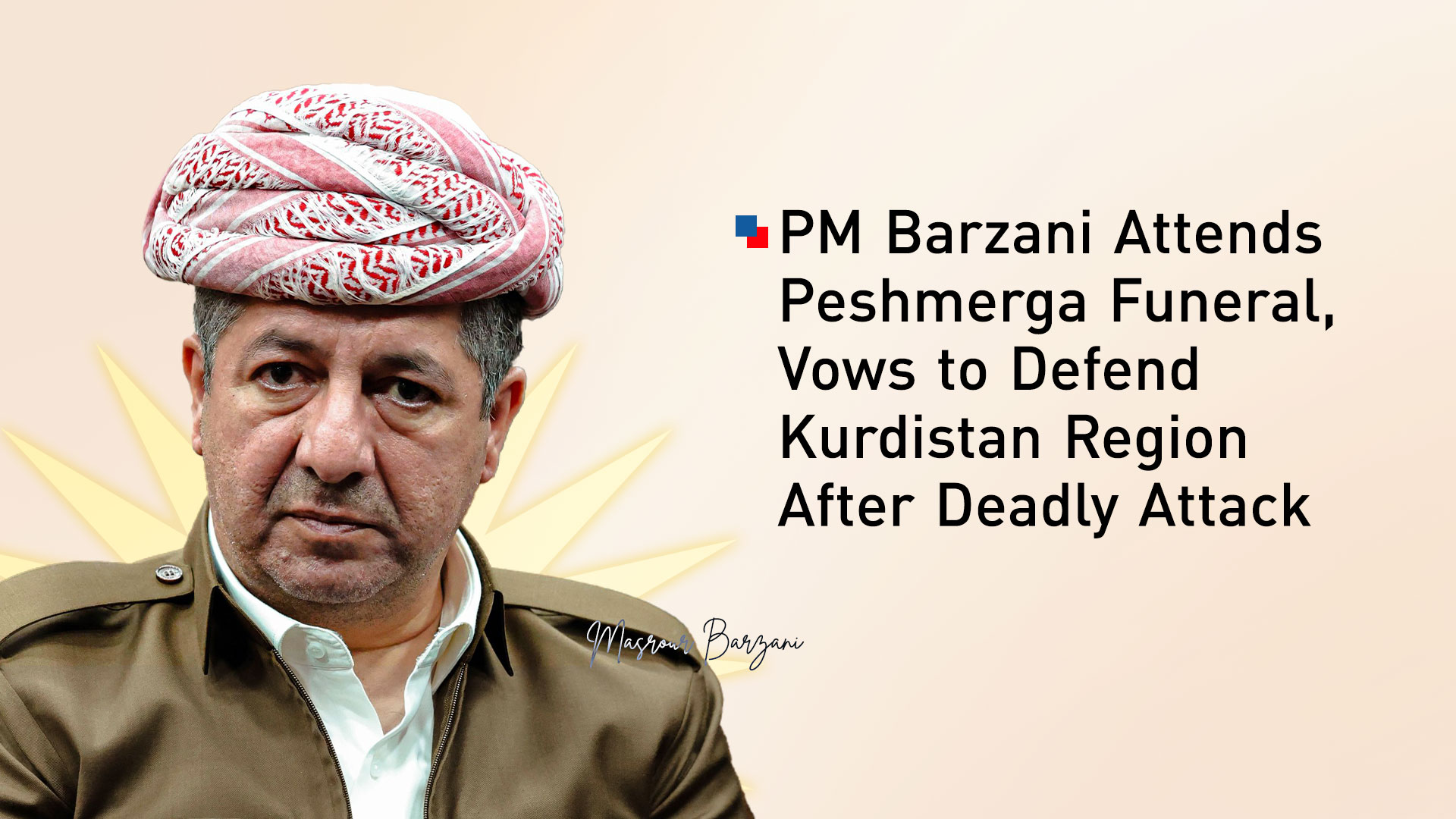
ERBIL (Kurdistan24) – Masrour Barzani, Prime Minister of the Kurdistan Region, on Wednesday attended the funeral ceremony of Peshmergas killed in a recent attack, where he offered condolences and reaffirmed the government’s commitment to safeguarding the region.
During a press conference, Barzani extended his deepest sympathies to President Masoud Barzani, the families of the fallen Peshmergas, and the people of Kurdistan. He also wished a swift recovery to those injured, noting that authorities are closely monitoring their condition.
Describing the attack as unjustified, the Prime Minister said the Peshmerga had been targeted in an act of “treachery and betrayal.” He stressed that the sacrifices of the fallen Peshmergas have ensured that the people of Kurdistan can live with dignity and pride, adding that their blood will not be in vain.
Barzani emphasized that the Kurdistan Region has long been defended through the sacrifices of its martyrs, expressing confidence that the aspirations for which they gave their lives—freedom and prosperity—will ultimately be realized.
“We will continue on the path of our martyrs,” he said, underscoring that while the Kurdistan Region does not seek conflict, it remains fully prepared to defend its land, rights, and dignity.
He also noted that the situation in the Kurdistan Region is being closely followed internationally, with several countries expressing support for the Kurdish people.
The Prime Minister concluded by reaffirming that both the government and the Peshmerga forces will remain steadfast in their mission to protect the homeland, vowing not to retreat from what he described as their “sacred duty,” regardless of external pressures.