White House Reiterates Four War Objectives as Trump Weighs Major Military Escalation
The White House reaffirmed four war goals against Iran as Trump considers a high-risk uranium seizure plan, while ceasefire talks via mediators continue amid escalating conflict.
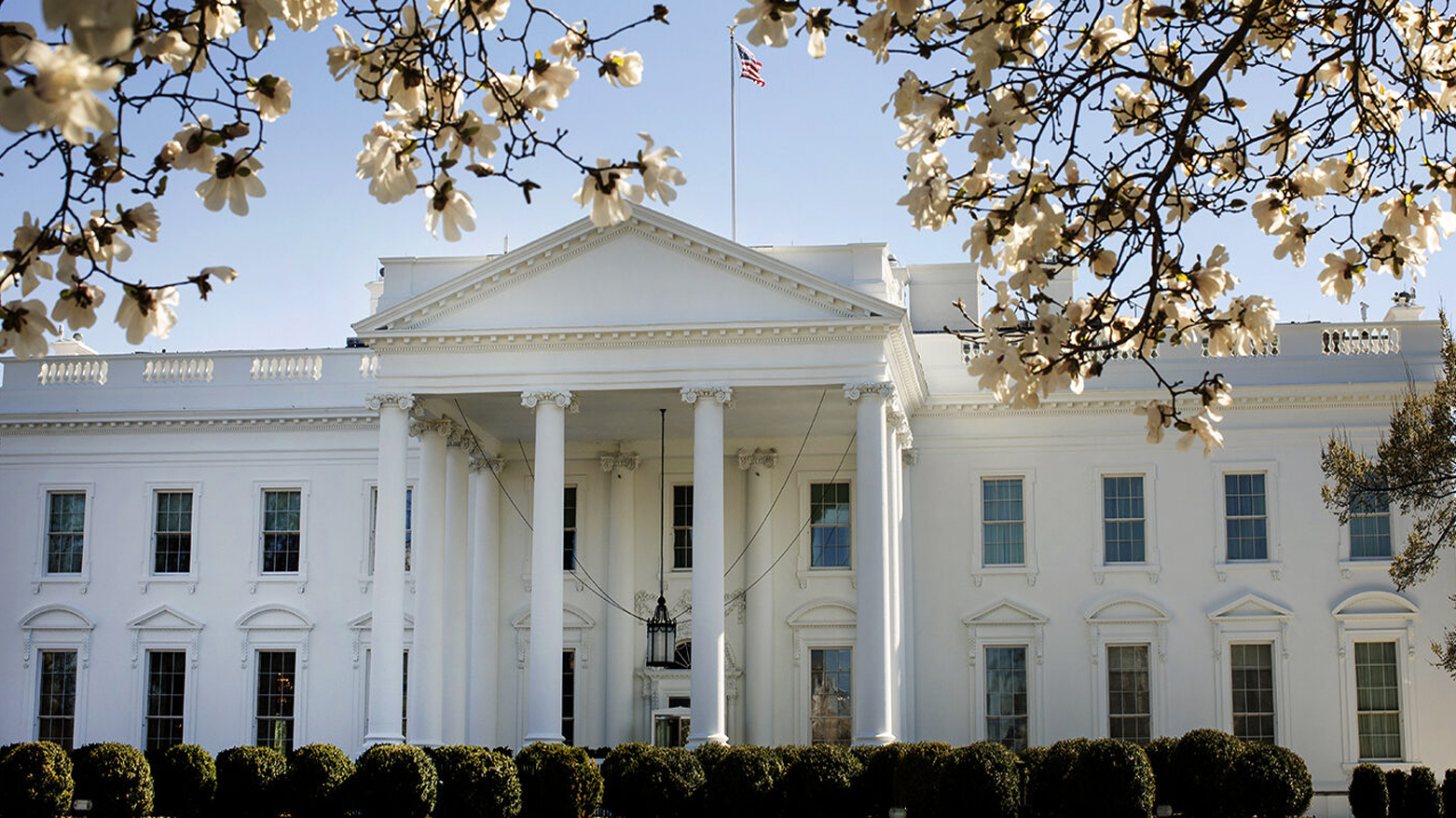
ERBIL (Kurdistan24) - Hours before a highly anticipated national address by US President Donald Trump, the White House reaffirmed its core war objectives against Iran, even as reports point to a potential ground operation, ongoing ceasefire contacts, and rising diplomatic activity behind the scenes.
On Wednesday, the White House issued a statement emphasizing that Operation Epic Fury will continue until all four strategic objectives set by Washington are achieved. The statement framed the campaign as a “decisive military effort” aimed at systematically dismantling Iran’s ability to threaten the United States and the “free world.”
According to the statement, US forces are executing the mission with “unprecedented precision and intensity.” The White House reiterated the four primary objectives that have been defined as red lines since the first day of the war on Feb. 28. These include the complete elimination of Iran’s ballistic missile arsenal and production capability, the total destruction of Iran’s naval forces, cutting all support and ties between Tehran and its affiliated armed groups in the region, and ensuring permanently that Iran never acquires nuclear weapons.
The statement is widely seen as signaling that Trump’s upcoming address could either declare full achievement of these objectives or announce an escalation of military operations if Tehran refuses to comply.
Parallel to these declarations, The Washington Post reported that the Pentagon has presented Trump with a complex plan for a high-risk ground operation aimed at seizing approximately 1,000 pounds of enriched uranium in Iran.
According to the report, which cited two informed sources, Trump requested proposals on how to secure what he referred to as “nuclear dust.” The plan involves deploying thousands of elite US forces, including Delta Force and Navy SEALs, to nuclear facilities in Isfahan and Natanz.
Military experts described the mission as one of the most complex in history, requiring a temporary occupation, the deployment of heavy excavation equipment, breaching 300-foot-deep tunnel systems, and constructing a temporary airstrip inside Iranian territory to transport the material.
Unlike previous operations such as the killing of Osama bin Laden or the capture of Maduro, which were completed within hours, this mission could take weeks under continuous missile, drone, and artillery fire from Iran’s Revolutionary Guard forces.
US Secretary of Defense Pete Hegseth defended the approach, stating: “Iran must not obtain a nuclear bomb.” According to International Atomic Energy Agency data, Iran possesses 970 pounds of uranium enriched to 60 percent, which is only a short step away from weapons-grade material.
IAEA Director Rafael Grossi warned that the material is highly dangerous and that any direct impact could trigger an environmental disaster and deadly radiation.
Domestically, the Trump administration is facing mounting pressure. Polls show 62 percent of Americans strongly oppose deploying ground troops to Iran. However, in Congress, Trump allies including Senator Lindsey Graham and Mark Levin are pushing for the operation, viewing it as the only way to eliminate the nuclear threat.
These developments come after Tehran rejected a 15-point US peace proposal. White House Press Secretary Karoline Leavitt said the Pentagon is preparing options to keep the president’s hand open, warning that if Iran does not return to negotiations, Trump is ready to “rain hell” on the country.
At the same time, Bloomberg reported that Trump has tasked Vice President JD Vance with engaging Iran through mediators in an effort to reach a possible ceasefire agreement.
According to sources, Vance held discussions with Pakistani mediators on Tuesday regarding the conflict. Trump instructed him to inform Tehran that Washington is open to a ceasefire, provided specific conditions are met.
Axios, citing three US officials, reported that discussions are ongoing about a potential deal involving a ceasefire in exchange for reopening the Strait of Hormuz.
Trump also stated on Truth Social that he would only consider Iran’s request if the strait is reopened “free and clear.”
The diplomatic efforts are unfolding as the war between the United States and Israel on one side and Iran on the other enters its 33rd day, with intensified exchanges of missile and drone attacks.
The conflict began on Saturday, Feb. 28, 2026, when the United States and Israel launched airstrikes on Iran, killing several senior figures. Iran responded rapidly, launching missiles toward Israel and targeting multiple US bases and military positions across the region.
As the world awaits Trump’s address, the unfolding developments highlight a critical moment where military escalation, nuclear risk, and fragile diplomacy intersect, leaving the next phase of the conflict uncertain.