CENTCOM Says 3,500 Marines Ready as US-Iran Ceasefire Talks Emerge
CENTCOM confirmed 3,500 Marines are combat-ready as US-Iran ceasefire talks emerge, with Trump signaling possible withdrawal, continued strikes, and openness to a deal tied to reopening Hormuz.
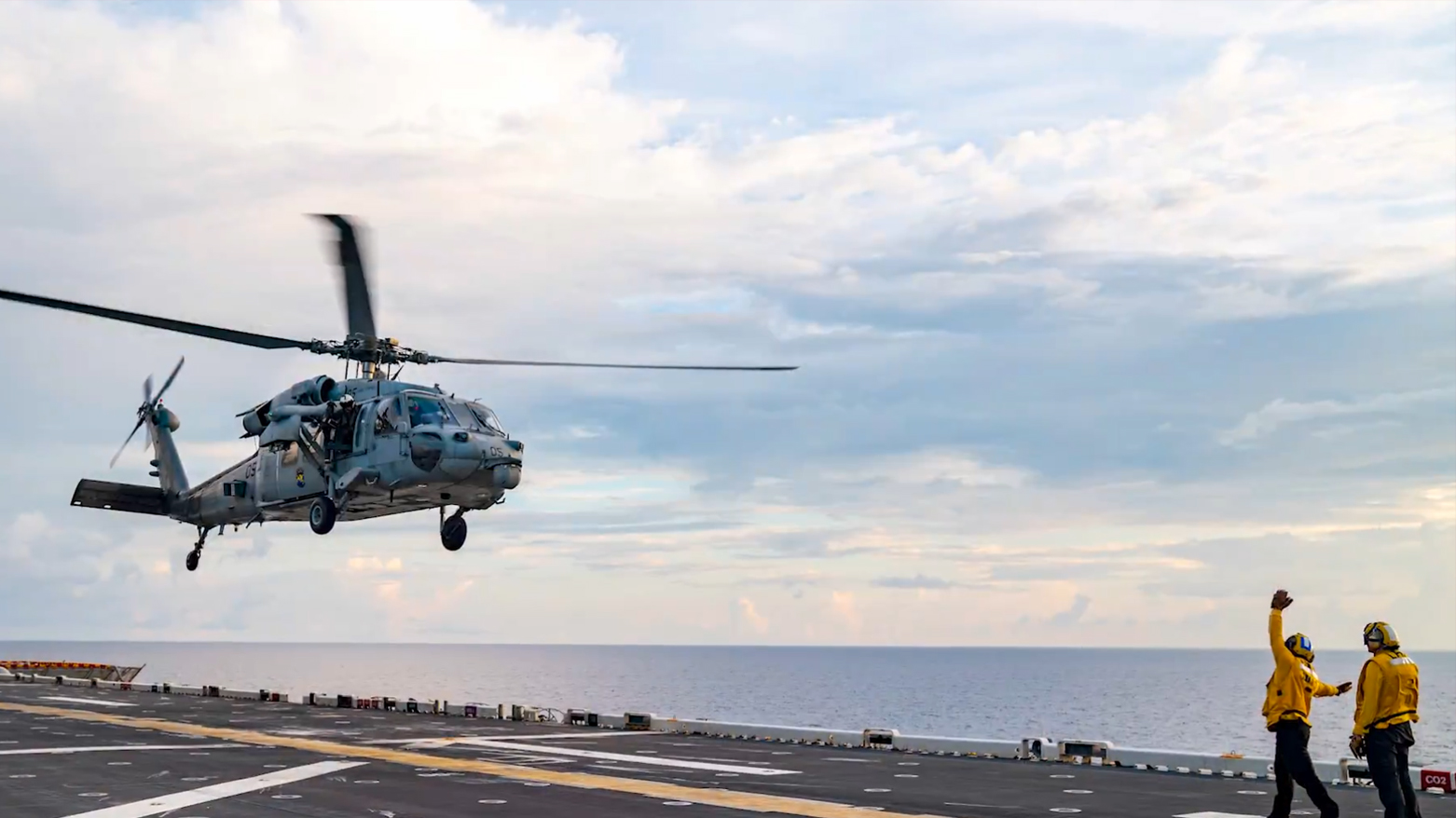
ERBIL (Kurdistan24) - Amid rising military readiness and parallel diplomatic maneuvering, US Central Command confirmed that thousands of Marines remain fully prepared for combat operations, even as discussions over a potential ceasefire with Iran begin to surface.
On Wednesday, US Central Command (CENTCOM) announced via X that approximately 3,500 sailors and Marines aboard the USS Tripoli (LHA-7) are continuing daily operations and training within its area of responsibility. The statement underscored that forces are “staying sharp and maintaining peak warfighting readiness.”
The development comes as multiple reports point to ongoing efforts behind the scenes to de-escalate the conflict between the United States and Iran, now in its fifth week.
According to Axios, three US officials said Washington and Tehran are discussing a potential agreement that would involve a ceasefire in exchange for Iran reopening the Strait of Hormuz. The officials noted it remains unclear whether these discussions are taking place directly or through mediators, and cautioned that no agreement is guaranteed.
US President Donald Trump has been engaged in conversations on the issue with regional and international leaders. Sources said Trump raised the possibility of a ceasefire during a call on Wednesday with Saudi Crown Prince Mohammed bin Salman, and also spoke with UAE President Mohammed bin Zayed.
Behind the scenes, Vice President JD Vance has been in contact with mediators as recently as Tuesday. A source familiar with the talks said Vance conveyed a message that the United States is open to a ceasefire if its demands are met, including the reopening of the Strait of Hormuz. He also reiterated Trump’s warning that Iranian infrastructure could be targeted if no deal is reached.
Trump publicly claimed on Wednesday that Iran had requested a ceasefire, stating he would consider it only if the strategic waterway is reopened. Writing on Truth Social, he said: “Iran’s new regime president, much less radicalized and far more intelligent than his predecessors, has just asked the United States of America for a ceasefire! We will consider when Hormuz Strait is open, free, and clear.”
He added that, in the meantime, the United States would continue “blasting Iran into oblivion or, as they say, back to the Stone Ages!!!”
Iran’s Foreign Ministry swiftly rejected Trump’s claim, describing it as “false and baseless,” and has consistently denied any direct negotiations with Washington.
US officials suggested Trump may have been referring to remarks by Iranian President Masoud Pezeshkian, who said during a call with European Council President António Costa that Iran was willing to end the war, but only if US attacks stopped and guarantees were provided that hostilities would not resume.
Meanwhile, China and Pakistan presented a peace initiative on Tuesday aligned with the concept of reopening the Strait of Hormuz in exchange for a ceasefire.
As diplomatic channels remain uncertain, Trump indicated he is preparing a major address to the nation scheduled for 9 p.m. EDT, outlining the next phase of US strategy.
In remarks to Reuters, Trump said the United States would be “out of Iran pretty quickly,” while leaving open the option of returning for “spot hits” if necessary. He declined to provide a specific timeline for ending the military campaign, although he previously suggested it could conclude within two to three weeks.
The president also criticized NATO, saying he was “absolutely” considering withdrawing the United States from the alliance, which was established in 1949. He accused NATO allies of failing to support US objectives in Iran, stating: “They haven’t been friends when we needed them… it’s a one-way street.”
Trump said the conflict has already resulted in a “full regime change” in Iran, adding: “I didn’t need regime change, but we got it because of the casualties of war. We got it.” He further claimed that Iran is now “incapable” of developing a nuclear weapon and “nor do they want one.”
He acknowledged that a significant portion of Iran’s uranium enriched to 60 percent remains stored deep underground in a tunnel complex at Isfahan, but dismissed concerns, saying: “That’s so far underground, I don’t care about that… we’ll always be watching it by satellite.”
The conflict, which has spread across the Middle East, has killed thousands and driven a surge in global energy prices, raising inflation concerns worldwide.
A Reuters/Ipsos poll conducted from Friday to Sunday found that two-thirds of Americans believe the United States should move quickly to end its involvement in the war, even if that means not achieving all of the administration’s stated objectives.
Despite pressure for de-escalation, Trump said he sees “a very good chance that we’ll make a deal because they don’t want to be blasted anymore,” while maintaining that military options, including a potential ground operation, remain under consideration.
The evolving situation reflects a complex intersection of military preparedness and fragile diplomacy, as both sides weigh escalation against the possibility of a negotiated pause.