UAE President, Trump Discuss Regional Security as Hormuz Tensions Deepen
UAE President Mohammed bin Zayed and Donald Trump discussed regional security and maritime risks, as Trump pressures European allies to help reopen the Strait of Hormuz.
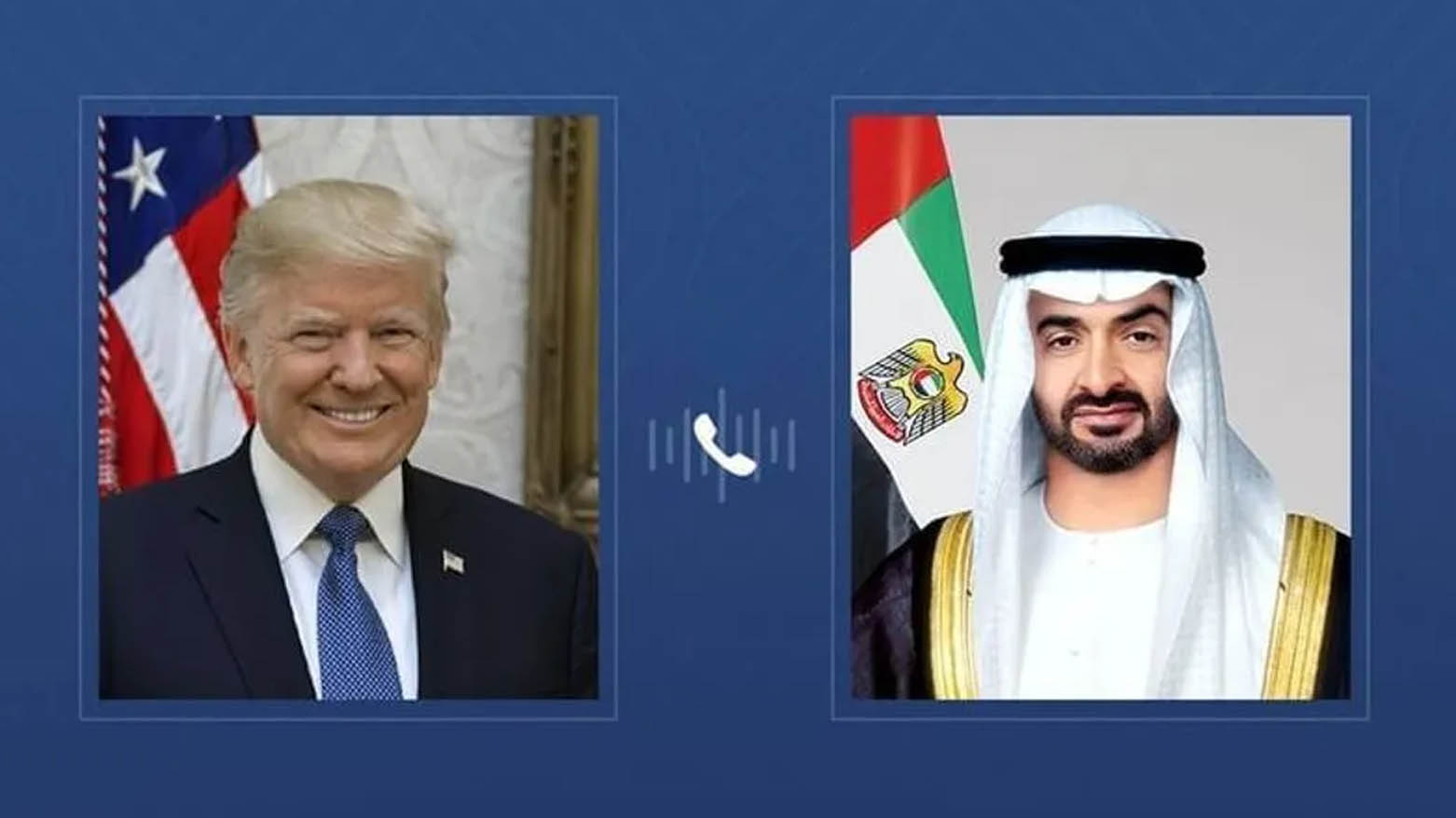
ERBIL (Kurdistan24) - Amid escalating tensions across the Middle East, United Arab Emirates (UAE) President Mohammed bin Zayed and US President Donald Trump held a high-level call addressing growing security risks, as Washington simultaneously increases pressure on European allies over the Strait of Hormuz.
On Wednesday, Mohammed bin Zayed Al Nahyan held a phone conversation with Donald Trump, during which both leaders reviewed the latest regional developments and their implications for regional and international peace and security.
The discussion focused in part on the impact of the current situation on international maritime security and the global economy, with both sides exchanging views on the widening consequences of instability in key waterways.
During the call, the two leaders also highlighted what they described as “ongoing Iranian attacks” against the UAE and other countries in the region, noting that civilians, civilian institutions, and infrastructure have been targeted.
They stressed that such actions constitute a clear violation of national sovereignty and international law, warning that they contribute to further destabilization of regional security.
Since the outbreak of the war between the United States and Israel on one side and Iran on the other, Tehran has repeatedly launched missile and drone attacks targeting Gulf countries.
The conflict began on Saturday, Feb. 28, 2026, when the United States and Israel launched airstrikes on Iran, resulting in the killing of several senior figures. Iran responded swiftly, firing missiles toward Israel and targeting multiple US bases and military installations across the region.
In parallel developments, the Financial Times reported that Trump has threatened to halt arms shipments to Ukraine if European allies refuse to participate in efforts to reopen the Strait of Hormuz.
According to informed sources cited by the report, Trump had previously asked NATO naval forces last month to assist in securing the strait, but European countries rejected the request, arguing that such involvement is not feasible during ongoing hostilities. Some countries also stated, “this is not our war.”
British officials confirmed that military-level discussions with the United States had taken place before March 19 regarding the protection of the waterway. However, they did not confirm that Washington explicitly threatened to cut support to Ukraine as leverage.
White House Deputy Press Secretary Anna Kelly said Trump has expressed frustration with NATO and other allies, adding: “As the president has made clear, the United States will remember this position.”
Trump has repeatedly voiced dissatisfaction over what he sees as limited European support in the war against Iran. He has argued that while the war in Ukraine is a European issue that Europe should bear the cost of, the conflict with Iran and the protection of maritime routes are shared responsibilities.
The developments reflect mounting geopolitical strain, as regional security concerns intersect with widening divisions among Western allies over how to respond to the crisis in the Strait of Hormuz.