Iranian Drone Strike Hits Bahrain Energy Facility as Gulf Air Defenses Respond to Escalation
UAE Intercepts Missiles and Drones Amid Expanding Regional Conflict
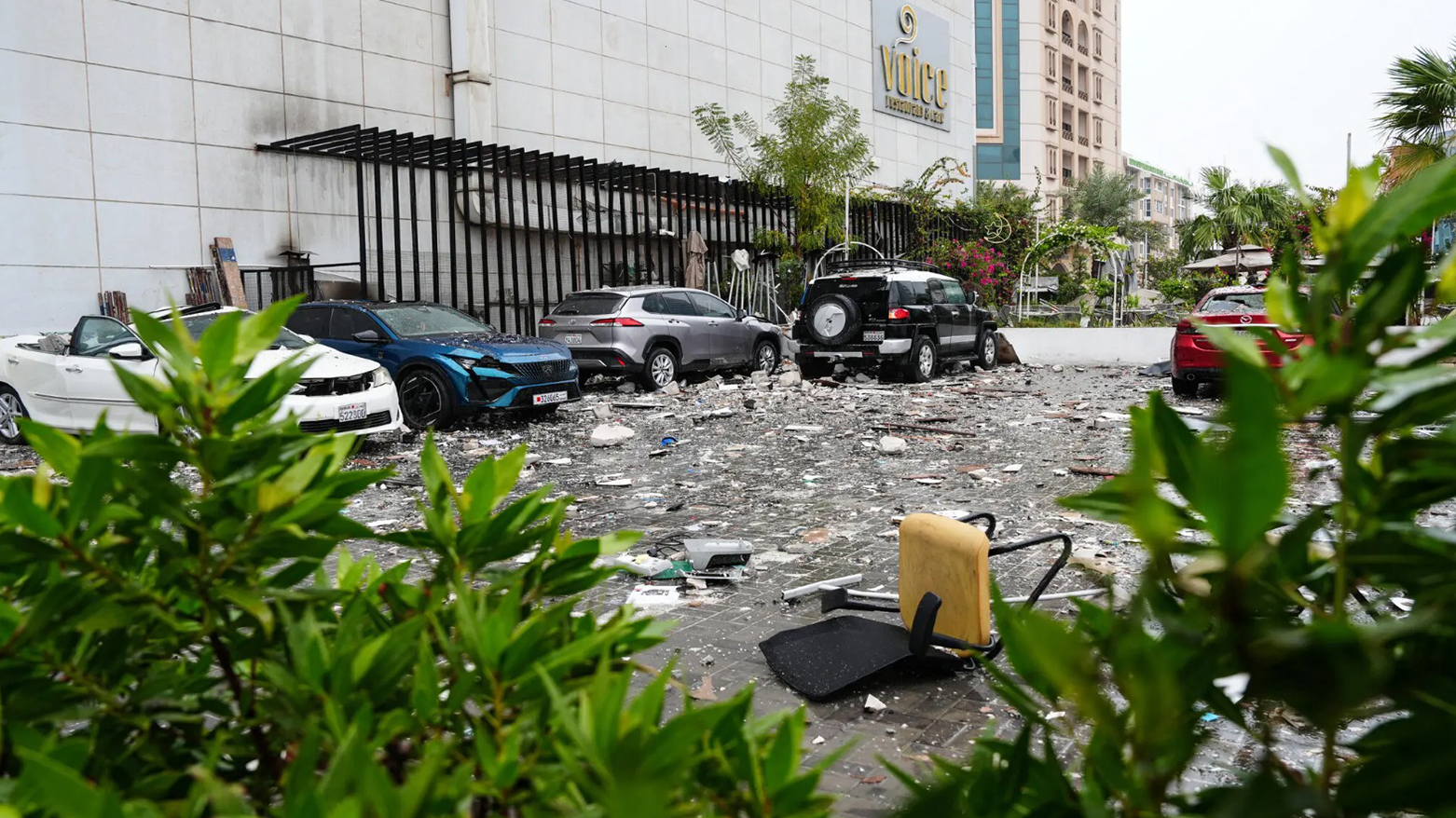
ERBIL (Kurdistan24) — An Iranian drone attack on Sunday ignited a fire at a storage tank belonging to Bahrain’s state energy company, authorities said, in the latest escalation of a widening regional conflict.
In a statement, Bapco Energies confirmed that one of its storage facilities was struck in what it described as a “hostile Iranian drone attack.” The company said the resulting blaze had been fully extinguished, with no injuries reported.
Damage assessments are ongoing, though the exact location of the facility was not disclosed.
The incident comes as Gulf countries face increasing aerial threats. In the United Arab Emirates, the defense ministry said its air defense systems were actively intercepting missiles and drones launched from Iran.
Authorities noted that loud explosions heard across the country were linked to ongoing defensive operations against incoming projectiles.
Iranian state media, including Islamic Republic News Agency, reported that Tehran’s military had targeted “aluminum industries” in the UAE as well as U.S. military infrastructure in Kuwait.
In Kuwait, the military said Sunday that its air defense systems were actively intercepting incoming missiles and drones as Iran’s campaign across the Gulf continued in response to U.S.-Israeli strikes.
The armed forces stated that any explosions heard were the result of interception operations. A day earlier, an Iranian drone strike caused “significant” damage to a government building in Kuwait City, according to the finance ministry, though no casualties were reported.
Authorities added that employees from multiple ministries housed in the affected complex would shift to remote work, with public visits temporarily suspended.
The strikes reflect a broader strategy by Iran to hit economic and strategic assets across the Gulf amid intensifying hostilities.
Tehran has accused neighboring Gulf states of facilitating U.S. military operations against Iran, claims that regional governments have consistently rejected. Gulf countries have maintained that they do not allow their territory or airspace to be used for attacks against Iran, a position they reiterated before the outbreak of war.
The latest developments are part of a broader escalation following U.S. and Israeli strikes in late February that triggered a regional conflict.
Since then, Gulf nations have increasingly come under Iranian retaliatory attacks, with missile and drone strikes targeting key infrastructure.
The UAE, a close ally of Washington and one of only two Gulf countries to normalize relations with Israel in 2020—alongside Bahrain—has been among the primary targets of cross-Gulf attacks. Since February 28, it has faced repeated barrages, underscoring the growing reach and intensity of the conflict.