Vance Signals Further US Options on Iran as Deadline Approaches
Vice president warns of unused “tools” while expressing hope diplomacy can avert further escalation
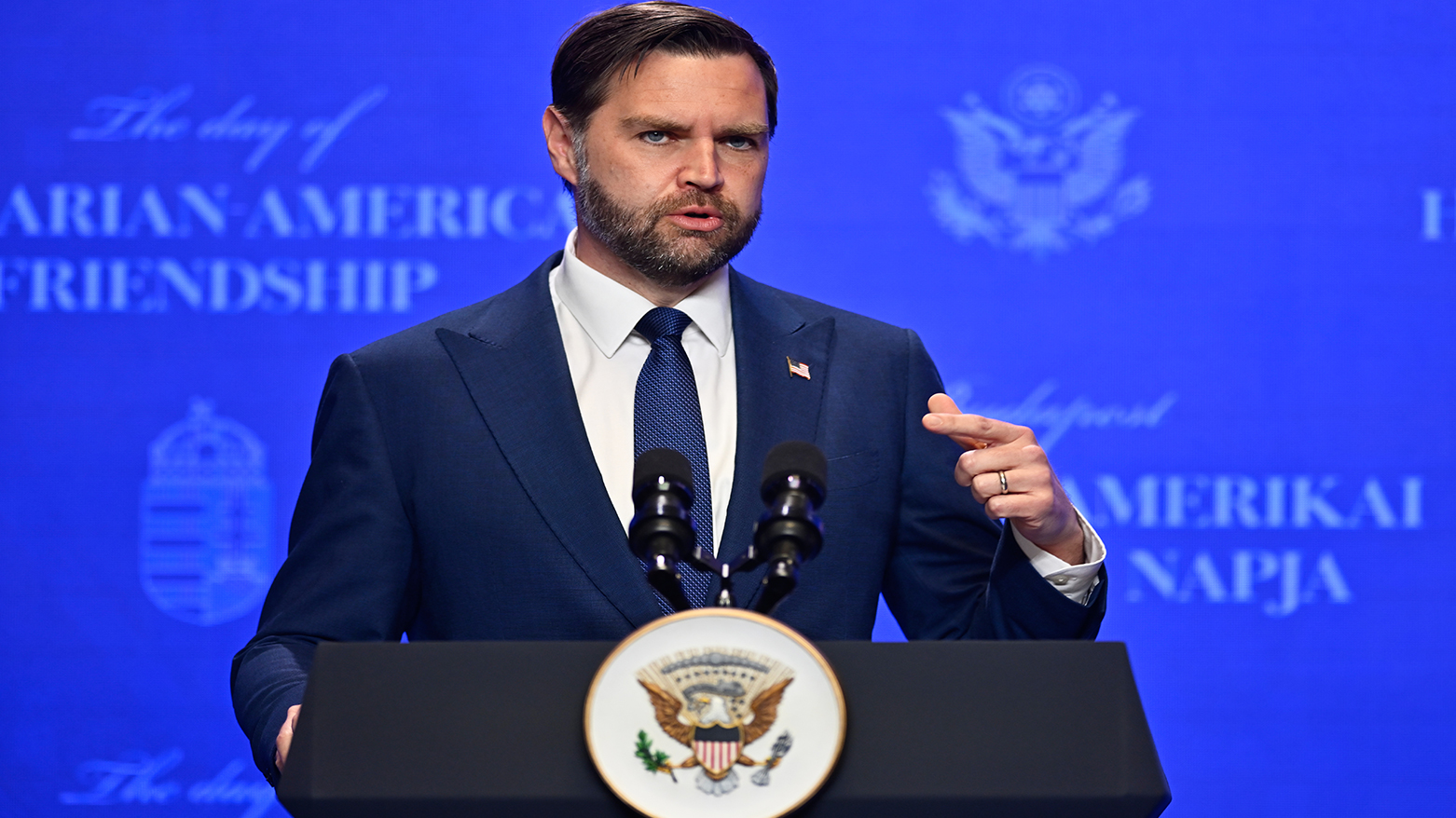
ERBIL (Kurdistan24) — US Vice President JD Vance on Tuesday warned that Washington still retains significant, unused options in its confrontation with Iran, signaling potential escalation while expressing cautious optimism that diplomacy could prevail.
“They’ve got to know we’ve got tools in our toolkit that we so far haven’t decided to use,” Vance said during a visit to Hungary. “The president of the United States can decide to use them, and he will decide to use them if the Iranians don’t change their course of conduct.”
Despite the warning, Vance indicated that the United States believes it has already achieved much of its immediate military objectives. “The United States has largely accomplished its military objectives,” he told reporters, adding that “there’s going to be a lot of negotiation between now and then” as a US-imposed deadline on Iran approaches.
His remarks come at a critical juncture in the escalating conflict between the United States, Israel, and Iran, which has intensified since late February with waves of strikes targeting Iranian military and infrastructure sites.
The confrontation has increasingly drawn in regional actors, raising fears of a broader war across the Middle East.
Central to the standoff is the strategic Strait of Hormuz, a vital maritime chokepoint through which roughly one-fifth of global oil supplies transit. Iran has effectively disrupted shipping through the waterway in recent weeks, triggering volatility in global energy markets and prompting strong warnings from Washington and its allies.
US President Donald Trump has issued stark ultimatums to Tehran, threatening sweeping destruction of Iranian infrastructure if the Strait is not reopened. His rhetoric has underscored the high stakes of the crisis, with warnings of catastrophic consequences if diplomacy fails.
Iran, for its part, has rejected external pressure and signaled it will continue to resist what it describes as aggression. Iranian officials and the Revolutionary Guards have warned that any further escalation could lead to retaliation targeting US and allied interests across the region, including energy infrastructure in Gulf states.
The conflict has already had tangible regional repercussions. Gulf countries have faced drone and missile attacks, while key infrastructure and transport networks in Iran have reportedly been struck.
The risk of miscalculation remains high, particularly as military operations continue alongside diplomatic efforts.
International mediation efforts, including proposals for a temporary ceasefire, have so far failed to gain traction. However, Vance’s remarks suggest that Washington still sees a window for negotiations before resorting to more severe measures.
Analysts note that the reference to “tools” could encompass a wide range of options, from intensified military strikes to expanded economic, cyber, and covert capabilities, reflecting a strategy that combines calibrated pressure with the possibility of last-minute diplomacy.
As the deadline nears, the trajectory of the crisis may hinge on whether backchannel negotiations can produce a breakthrough—or whether the United States opts to deploy the additional measures Vance warned remain on the table.