Saudi Arabia Condemns Iranian-linked Attacks on Kuwait, Reaffirms Gulf Solidarity
Qatar warns Iranian attacks have not stopped, stressing Gulf unity as it rejects any distinction between member states
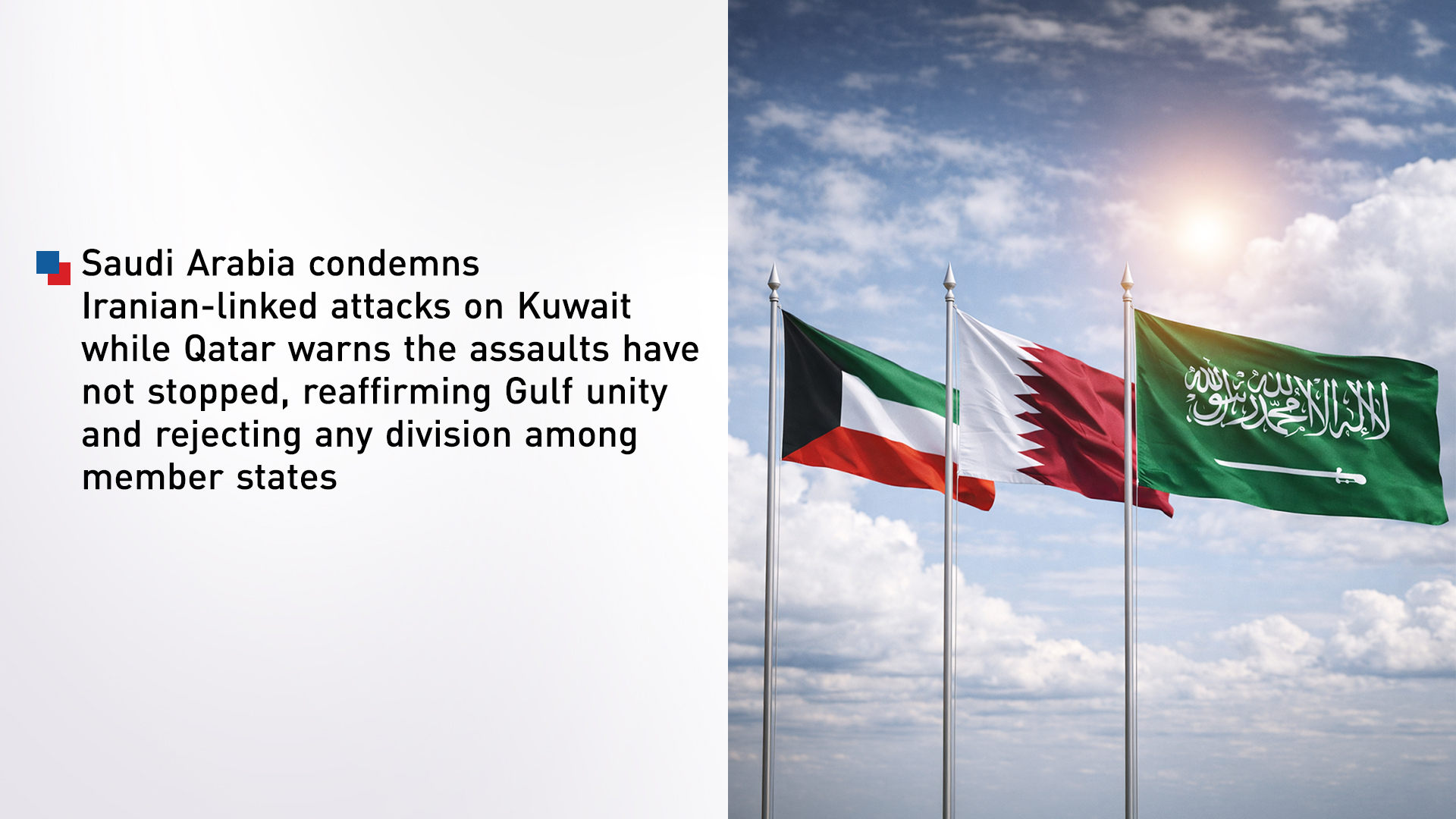
ERBIL (Kurdistan24) — The Ministry of Foreign Affairs of Saudi Arabia issued a strong condemnation on Saturday of recent attacks targeting vital infrastructure in Kuwait, accusing Iran, its proxies, and affiliated groups of carrying out what it described as “heinous attacks” against the Gulf state.
In an official statement, the ministry said the Kingdom “strongly condemns and denounces” the strikes, stressing that they constitute a clear violation of Kuwait’s sovereignty and international law, as well as the United Nations Charter.
Riyadh warned that such actions undermine ongoing international efforts to restore security and stability in the region.
The statement reiterated Saudi Arabia’s categorical rejection of attacks against Arab and Islamic countries and called on Iran and its affiliated groups to cease all hostile activities.
It also urged compliance with UN Security Council Resolution 2817 (2026), emphasizing the need to halt escalation and respect international norms. The Kingdom expressed full solidarity with Kuwait, affirming its support for all measures taken by the Kuwaiti government to protect its sovereignty, security, and stability.
#Statement | The Foreign Ministry expresses the Kingdom of Saudi Arabia’s strong condemnation and denunciation of the heinous attacks targeting a number of vital facilities in the brotherly State of Kuwait, carried out by Iran, its proxies, and affiliated groups. pic.twitter.com/rFFwS2ibRP
— Foreign Ministry 🇸🇦 (@KSAmofaEN) April 11, 2026
Meanwhile, regional tensions were further reflected in remarks by Qatari officials. Majed Al Ansari, Advisor to the Prime Minister and spokesperson for the Ministry of Foreign Affairs of Qatar, said in an interview with Al Jazeera that Iranian attacks on Gulf states had decreased but not stopped.
Al Ansari stressed that Qatar rejects any differentiation between Gulf countries in terms of security threats, stating that “targeting any one of them is tantamount to targeting all of them.”
He also dismissed claims that Qatar was paying money to stop the attacks, clarifying that any financial arrangements are part of an agreed international mechanism and not direct payments to halt hostilities.
He further said that Qatar reserves the right to respond to any aggression and is actively working to counter such threats. Al Ansari also pointed to what he described as contradictions in Iranian statements, which claim attacks are limited to military targets, while in practice, civilian and industrial facilities have been hit.
He added that recent strikes had affected key infrastructure, including attempts to target an airport, which resulted in the temporary closure of Qatari airspace.
HE @majedalansari Advisor to the Prime Minister and Spokesperson for the Ministry of Foreign Affairs, in an Interview with Aljazeera:
— Ministry of Foreign Affairs - Qatar (@MofaQatar_EN) April 11, 2026
There is a clear contradiction in Iranian statements claiming that the attacks are limited to military bases, while the reality shows that… pic.twitter.com/WgJSLUWVo1
The comments come amid heightened regional concern over the widening scope of attacks across Gulf states, as diplomatic efforts continue to prevent further escalation.
The current escalation follows the outbreak of the US-Israel-Iran war that began on February 28, during which Iran-aligned armed factions in Iraq rapidly expanded their operational activity across the region.
In the weeks that followed, multiple Iran-backed militias operating from Iraqi territory launched coordinated drone and missile attacks against US-linked facilities in Iraq, Kuwait, and other Gulf states, including energy infrastructure, military bases, and logistical hubs.
Several of these strikes were reported to have originated from areas controlled or influenced by Iran-aligned groups within Iraq, reflecting a broader pattern of regional proxy warfare that has increasingly drawn Gulf Arab states directly into the conflict zone and heightened fears of spillover across critical civilian and economic infrastructure.
Despite repeated strong condemnations from Gulf Arab governments and urgent calls for Baghdad to rein in Iran-backed armed factions operating on its territory, the Iraqi government has so far taken limited visible action to curb their activities or pursue meaningful legal measures against those responsible for cross-border attacks.
Critics across the region argue that Iraqi authorities have failed to effectively dismantle or disarm these groups, despite mounting evidence of their involvement in regional escalation.
The government in Baghdad has also faced persistent accusations that it is not only failing to confront these militias but is, in effect, politically aligned with them, with some regional observers and officials alleging that elements within the Iraqi political system act as a political cover for armed groups operating outside state control.