Kirkuk: A Deadly Collision, KRG’s Medical Response, and a Question: 15 km Without Brakes?
Authorities continue to investigate the catastrophic Kirkuk collision as Kurdistan Region's medical efforts support the surviving victims.
ERBIL (Kurdistan24) - A devastating multi-vehicle collision in Kirkuk has left at least eight people dead and several others injured, some in critical condition, including confirmed fatalities of Zhian Adil (46) and two-and-a-half-year-old Elin Yousef Emad. The incident has prompted a cross-regional medical response, with injured victims currently receiving treatment in Erbil. Meanwhile, emerging accounts from survivors have raised public questions and growing scrutiny over the circumstances surrounding the fatal crash.
On Sunday evening, a speeding cargo truck slammed into approximately 35 vehicles at the entrance of Kirkuk city.
Witnesses reported the truck was traveling between 110 and 120 kilometers per hour, flipping over only after causing catastrophic damage across a crowded thoroughfare.
The collision resulted in significant loss of life, with initial and updated statistics indicating up to seven fatalities and two dozen injuries.
The victims encompass a wide demographic, including three Peshmerga members and an employee of the Kurdistan Regional Government, marking it as one of the most severe traffic incidents in the region's recent history.
In response to the mass-casualty event, the Kurdistan Regional Government initiated an emergency medical mobilization, putting hospitals across Erbil on high alert to receive critical patients.
Concurrently, discrepancies surrounding the truck's trajectory and the driver's actions prior to the crash have prompted a formal investigation and intense public scrutiny.
Core Incident and Immediate Consequences
The fatal incident occurred on Sunday evening when a cargo truck traveling at high speeds lost control at the entrance to Kirkuk. The heavy vehicle subsequently collided with up to 35 automobiles in a severe chain reaction.
According to eyewitnesses at the scene, including a university graduate whose vehicle had been decorated for a graduation party, the truck was moving at approximately 110 to 120 kilometers per hour.
The truck reportedly plowed directly into a half-dozen vehicles before continuing its destructive path.
Another witness stated that the heavy vehicle did not stop until it eventually overturned.
Observers described the immediate aftermath as resembling "Doomsday," with extreme material destruction leaving multiple vehicles completely crushed and several victims trapped inside the wreckage.
Details of Casualties and Injuries
The scale of the collision resulted in immediate fatalities and widespread injuries. Varying official statistics from Sunday evening cite between six and seven dead, alongside 21 to 24 injured individuals.
A detailed statistical breakdown obtained by Kurdistan24 categorized the casualties, noting the deaths of one man, four women, and one child.
Among the deceased was Zhian Adil, who died when her vehicle was crushed by the truck.
A Kurdistan24 correspondent reporting from the scene confirmed that Adil was the sole fatality within her specific automobile, which sustained severe structural damage.
The reporter noted that three other occupants of the same car, including the driver, were injured. The driver remains in a highly critical condition, with medical teams fighting to stabilize him.
Further data confirms that three members of the Peshmerga forces are among the wounded.
Additionally, an employee of the Kurdistan Regional Government lost their life in the crash. Authorities confirmed that the driver of the cargo truck also died in the collision.
Treatment and Medical Response
In the immediate aftermath, injured individuals were transferred to hospitals across Kirkuk, with several facing unstable health conditions.
To manage the influx of severe trauma cases, a coordinated medical transfer operation was quickly activated by regional authorities.
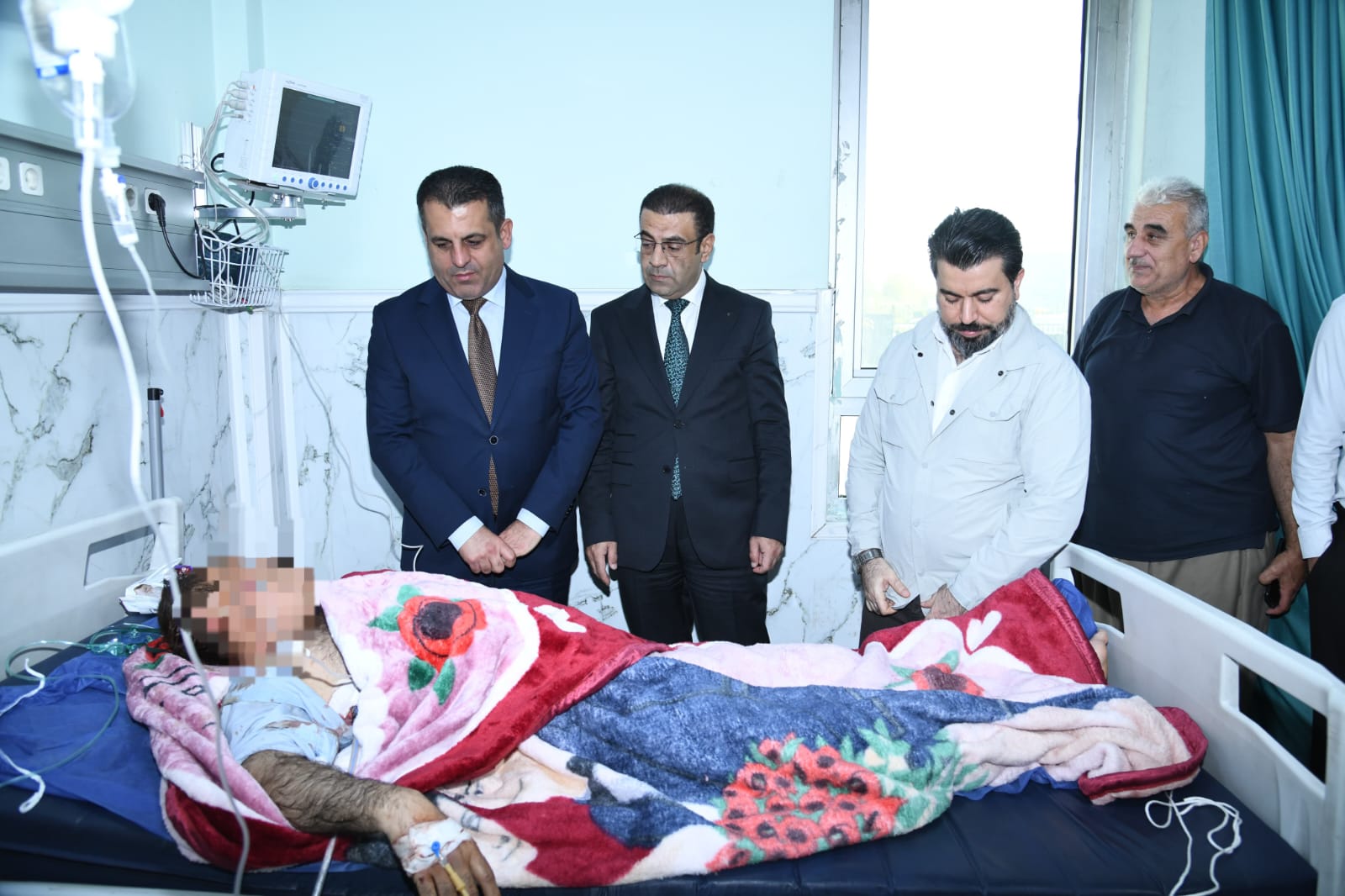
Acting on the directive of Kurdistan Regional Government Prime Minister Masrour Barzani, the KRG Minister of Health and the Director General of Erbil Health visited one of the transferred Kirkuk accident victims at the West Erbil Emergency Hospital on Monday morning.
The Minister personally conveyed the Prime Minister's message of concern to the wounded and their families, who expressed profound appreciation for the government's humanitarian reception.
The KRG Ministry of Health announced that all medical teams remain on full standby to perform necessary surgeries, dispatch emergency units to Kirkuk, and supply blood and medications.
Erbil Governor Omed Khoshnaw publicly affirmed that the doors to Erbil's hospitals remain open to all victims requiring advanced care, emphasizing full coordination between the provinces.
Questions and Uncertainties Surrounding the Incident
As rescue operations transition into formal investigations, the specific circumstances leading to the devastating pile-up have generated significant suspicion.
Doubts have been amplified by statements made following the crash by the surviving son of the truck driver, who was reportedly present during the incident.
During a news broadcast on Monday, Kurdistan24 anchor Kovan Ezzat highlighted the logistical anomalies of the crash.
Questions center on how a heavy truck could travel for nearly 15 kilometers without brakes, navigating numerous ascents, descents, valleys, and curves without the driver attempting to veer off the road before reaching the densely populated city center.
Security forces have initiated a detailed investigation to determine the exact mechanical or human failures that caused the disaster.
Concurrently, local residents are demanding the implementation of stricter regulations regarding heavy truck traffic within city limits to prevent future occurrences.
Official Statements and Reactions
The high volume of casualties prompted swift reactions from political leadership.
Prime Minister Masrour Barzani issued a formal message of condolence to the bereaved families on Sunday, expressing deep sympathy and confirming his explicit orders to the Ministry of Health to extend all required medical assistance.
The rapid coordination between regional health departments was immediately acknowledged by Kirkuk authorities.
In a telephone conversation with the KRG Minister of Health, the Director General of Kirkuk Health praised the prompt humanitarian stance of the Erbil government, expressing gratitude for the Kurdistan Region's readiness to deploy emergency aid and personnel.
Institutional and Humanitarian Support
Alongside the formal governmental response, regional civil society organizations and political representatives mobilized to support the affected families.
The Kirkuk office of the Barzani Charity Foundation (BCF) published an official statement expressing sorrow for the fatalities and declaring its full readiness to provide essential aid.
The foundation reiterated its commitment to its humanitarian duties, stating that it considers itself a servant to the citizens of Kirkuk and stands prepared to assist with all necessary resources to help the city overcome the disaster.
Additionally, Shakhawan Abdullah, head of the Kurdistan Democratic Party faction in the Iraqi Parliament, deployed his office staff directly to local hospitals.
His team was tasked with checking on the wounded and coordinating directly with the Kirkuk Health Directorate, further consolidating the cross-institutional support network.