Between ‘Succession Jokes’ and Iran Diplomacy, JD Vance Reveals White House Discussions
The US vice president described Donald Trump’s remarks about the 2028 race as political humor while signaling cautious optimism over negotiations related to Iran
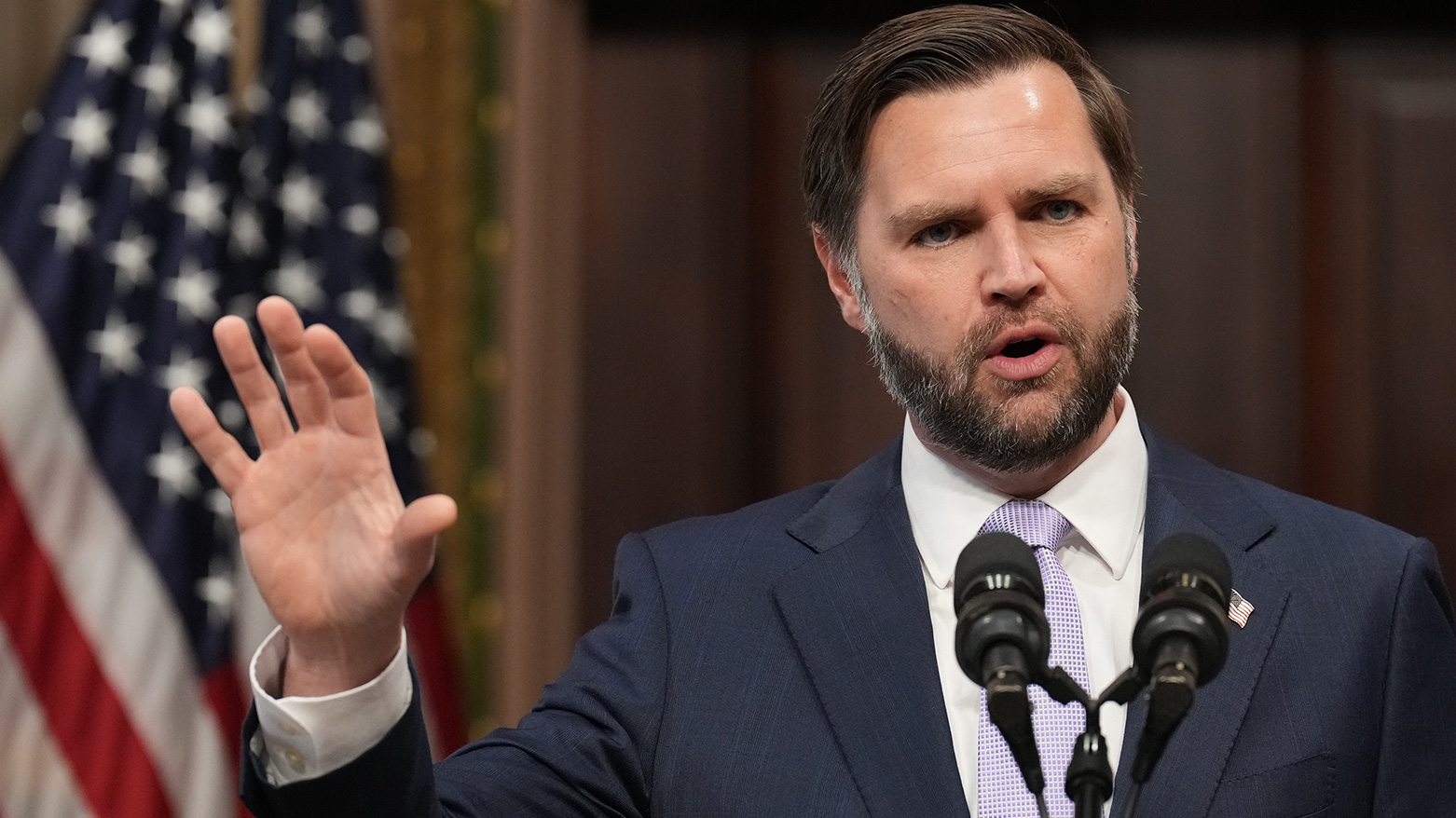
ERBIL (Kurdistan24) - US Vice President JD Vance shed light on sensitive discussions inside the White House on Wednesday, balancing light-hearted political remarks about the future of the Republican Party with more serious comments regarding negotiations tied to Iran and the broader regional conflict.
Speaking during a press conference on Wednesday, Vance addressed both domestic political dynamics within the administration and ongoing international diplomacy, particularly discussions surrounding Iran’s nuclear ambitions and the current war-related negotiations.
On the domestic political front, Vance downplayed speculation triggered by remarks made by US President Donald Trump during a dinner event at the White House Rose Garden, where Trump informally compared Vance and Secretary of State Marco Rubio as potential successors in the 2028 presidential election.
Vance described the moment as political humor, saying the president was “joking with us a little bit,” and insisted the exchange should not be viewed as a real-life version of Trump’s well-known television program The Apprentice.
According to Vance, Trump closely follows political developments and enjoys discussing and “playing with these ideas” in a friendly atmosphere.
Turning to foreign policy, Vance revealed that Washington is making “progress” in its discussions with Iran regarding the ongoing conflict, though he cautioned that it remains “far too early” to determine whether that progress will ultimately satisfy the administration’s core objective of permanently preventing Tehran from obtaining a nuclear weapon.
The vice president disclosed that he held intensive consultations earlier Wednesday with US envoys Jared Kushner and Steve Witkoff, in addition to conversations with what he described as “friends in the Arab world.”
Vance concluded by framing the issue around what he called Trump’s “red line,” stating that the central question now is whether sufficient progress has been achieved to guarantee that Iran will never acquire military nuclear capabilities.
Senate divisions deepen over war powers
Vance’s remarks came as political tensions continue to mount in Washington over the scope of presidential military authority and the administration’s broader regional strategy.
A heated debate is currently unfolding in the US Senate ahead of a vote on a proposed War Powers Resolution aimed at restricting the administration’s ability to conduct military operations without explicit congressional authorization.
Republican Senator Jim Risch, chairman of the Senate Foreign Relations Committee, has argued that the justification for the resolution no longer exists, maintaining that hostilities effectively ended following the ceasefire announced in April.
Democrats, however, led by Senator Tim Kaine, insist the vote represents a constitutional test over Congress’s authority in matters of war and peace. Kaine argued that growing economic pressures, including fuel prices and inflation, are gradually reshaping public and political attitudes toward continued military engagement.
At the same time, Senate Majority Leader John Thune warned against holding the vote while Trump is abroad on an official visit to China, arguing that lawmakers should avoid undermining the president during sensitive international negotiations.
Senator Jeff Merkley also described increasing discomfort among some Republicans regarding military operations, though he noted many remain reluctant to openly oppose Trump due to his enduring influence within the Republican Party.
The debate has also revived disputes surrounding the Authorization for Use of Military Force (AUMF) and the constitutional balance between Congress and the executive branch. Senator Lisa Murkowski recently questioned Defense Secretary Pete Hegseth over whether the administration should seek formal congressional authorization before launching future military strikes.
Hegseth defended the administration’s position, arguing that the president already possesses sufficient authority under Article II of the US Constitution to order military action if necessary.
As diplomatic negotiations with Iran continue alongside intensifying political and constitutional debates in Washington, the administration faces mounting pressure to balance strategic deterrence abroad with growing scrutiny at home over executive war powers and the long-term direction of US foreign policy.