Dubai Luxury Hotels Turn to Residents as War Keeps Tourists Away
Staycation boom helps sustain hospitality sector, but industry leaders warn local demand cannot replace international visitors indefinitely
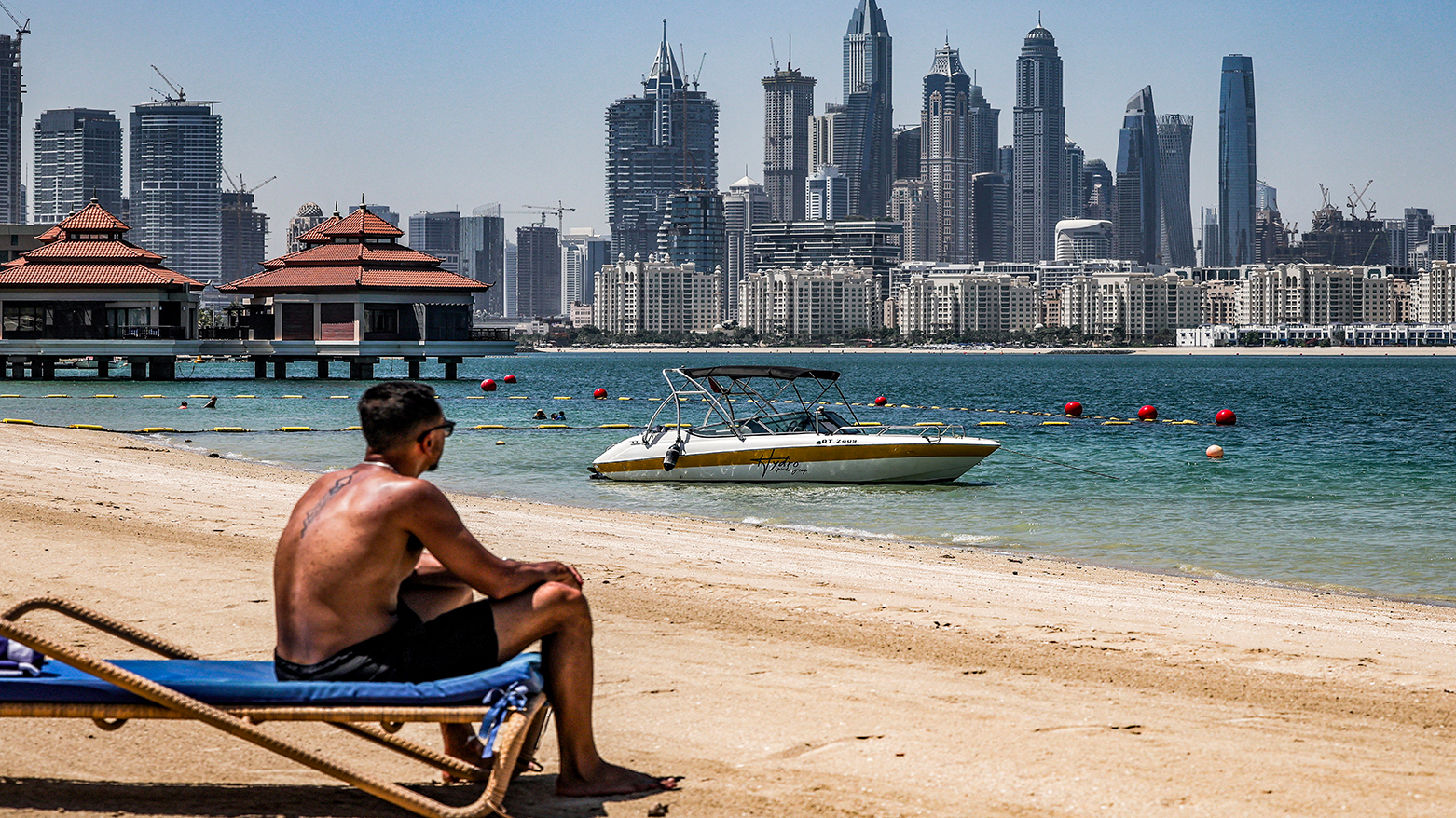
ERBIL (Kurdistan24) — Dubai's luxury hotels, once a playground for affluent international travelers, are increasingly relying on residents to fill rooms as regional conflict continues to deter foreign tourists and weigh heavily on the emirate's tourism industry.
Across the city, particularly on the iconic Palm Jumeirah, luxury resorts that previously catered almost exclusively to wealthy visitors from around the world are now attracting residents through heavily discounted staycation packages.
The shift has opened the doors of some of Dubai's most exclusive properties to a broader segment of the population, offering unprecedented access to luxury experiences that were once beyond the reach of many residents.
"I had never been in a hotel on the Palm because the prices were crazy," said Fadi Iskandarani, a Lebanese doctor who has lived in Dubai for five years.
Iskandarani recently spent his first weekend at a luxury resort on the palm-shaped island after discovering that room rates had been reduced to roughly a quarter of their previous prices.
Although the hotel was not operating at full capacity, with several floors reportedly closed due to low occupancy, its poolside areas were bustling with local guests taking advantage of the reduced rates.
"Luxury in Dubai has become affordable for residents; before, it was just for the rich, very rich people," he said.
Tourism Industry Hit by Regional Conflict
Dubai has long been one of the Middle East's premier tourism destinations, welcoming approximately 19.5 million visitors annually. Its hospitality sector includes 827 hotels, among them 173 five-star establishments, which historically maintained average occupancy rates exceeding 80 percent.
However, the war triggered by US-Israeli strikes on Iran on Feb. 28 has significantly disrupted travel patterns across the Gulf region.
The conflict shattered perceptions of the Gulf as a stable destination, particularly after Iranian missile and drone attacks targeted sites in the United Arab Emirates, including hotels on Palm Jumeirah and the landmark Burj Al Arab.
While a fragile ceasefire that took effect on April 8 has allowed a limited number of tourists to return, hotels remain heavily dependent on domestic demand.
According to Michael Robinson, general manager of Anantara The Palm Dubai Resort, resident-focused offers have become essential for maintaining operations.
The luxury resort, known for its overwater villas, artificial lagoons, and Thai-inspired design, has introduced discounts of up to 50 percent for UAE residents.
As a result, occupancy levels on weekends typically range between 70 and 90 percent. During weekdays, however, occupancy falls sharply to between 20 and 30 percent.
Robinson said the influx of local guests has provided a crucial financial buffer, enabling the resort to remain operational and avoid workforce reductions.
Concerns Over Long-Term Sustainability
Despite the success of staycation promotions, hotel operators caution that local demand alone cannot sustain the sector over the long term.
"Your staycation business is essentially one to two nights, and that's it," Robinson said. "Whereas previously, the international market might come for one week."
Industry concerns are growing as the summer season approaches. July and August traditionally see many expatriate families leave the UAE for holidays abroad, reducing the pool of potential domestic guests.
"If tourists remain absent during that period, there won't be as many people wishing to do staycations," Robinson warned.
The downturn has already forced some hospitality businesses to take cost-cutting measures.
Several hotels, including the Burj Al Arab, have temporarily closed for renovation projects as visitor numbers declined. Other properties, particularly those in downtown Dubai that depend heavily on business travel, have reportedly reduced staffing levels or cut employee salaries.
One hotel employee, speaking anonymously, said his salary had been reduced by up to 40 percent during and after the conflict before recently being restored to normal levels.
Another worker at a hotel in neighboring Abu Dhabi said he had been placed on unpaid leave for two months but is expected to return to work shortly with his full salary reinstated.
Hope for Recovery
Negotiations aimed at ending the conflict have continued for more than two months, but intermittent military strikes across the Gulf have kept uncertainty high and discouraged many travelers from returning to the region.
Nevertheless, hospitality executives remain optimistic that a political breakthrough could trigger a swift recovery.
"If we see some form of resolution in the next month or so, I think you'll see tourists come back faster than everyone anticipates," Robinson said.
For now, however, Dubai's luxury hotels remain dependent on residents seeking discounted escapes, highlighting both the resilience of the city's tourism sector and the challenges posed by a prolonged regional crisis.