Saudi Arabia Launches Riyadh Air Amid Regional Turmoil and Aviation Rivalry
New state-backed carrier marks major step in Vision 2030 as Kingdom seeks to challenge Gulf aviation giants
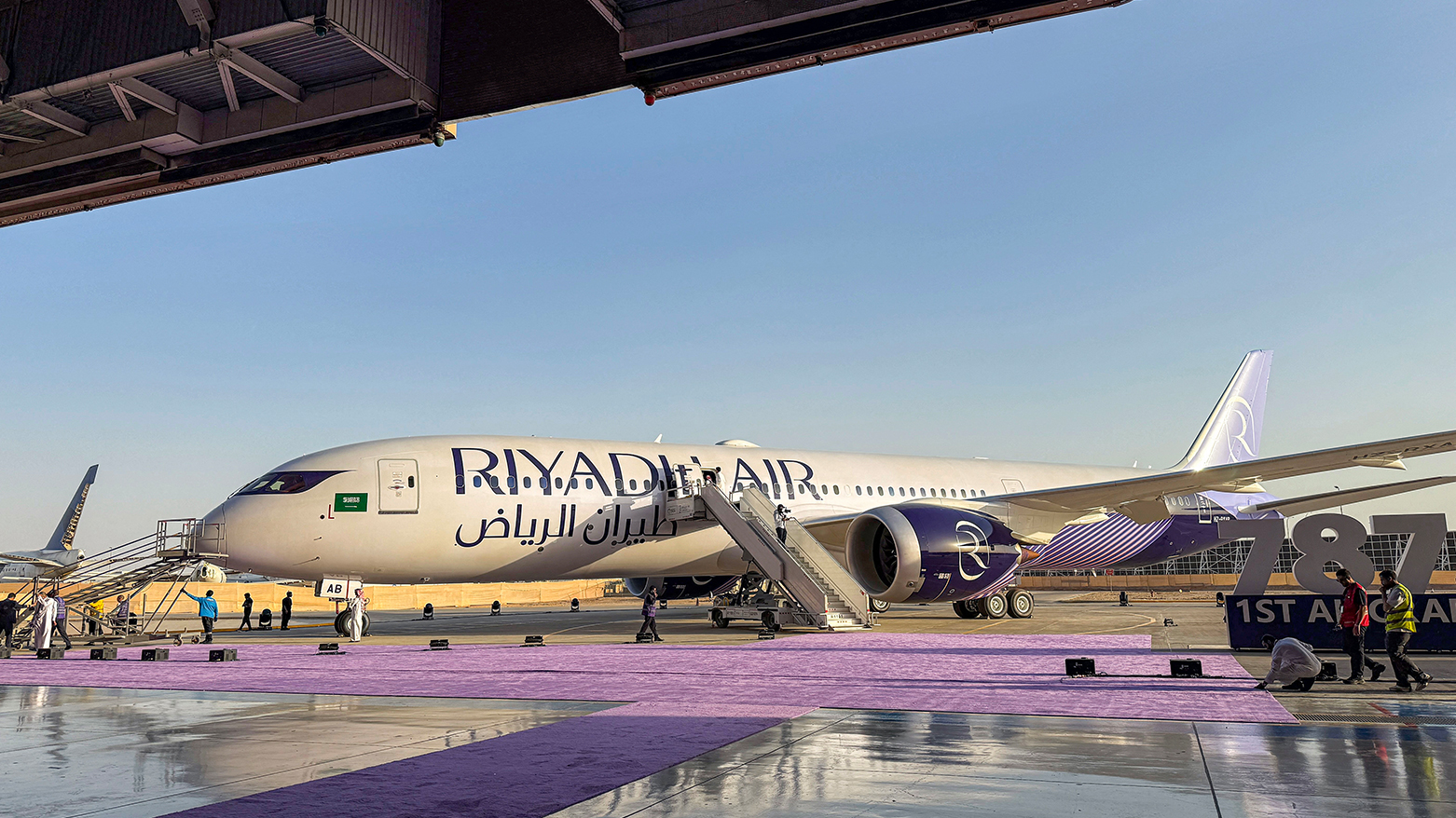
ERBIL (Kurdistan24) — Saudi Arabia on Wednesday officially launched its second national carrier, Riyadh Air, after more than a year of delays, marking a significant milestone in its ambitious economic diversification drive despite regional instability and intense competition in the Gulf aviation market.
A London-bound Boeing 787 Dreamliner, painted in Riyadh Air’s distinctive white and lavender livery, took off at 2:30 a.m. (2330 GMT Tuesday), symbolically activating one of the Kingdom’s flagship Vision 2030 projects aimed at reducing dependence on oil revenues.
The new airline, wholly owned by Saudi Arabia’s $900 billion Public Investment Fund (PIF), is designed to transform Riyadh into a global aviation hub capable of rivaling Dubai, currently the world’s busiest airport for international passenger traffic.
“We want to bring glamour, we want to bring refinement, we want to bring grace back,” Riyadh Air CEO Tony Douglas told AFP ahead of the inaugural flight.
Douglas, the former head of Abu Dhabi’s Etihad Airways, described the launch as the culmination of years of preparation. “This is the culmination of four years’ worth of preparation,” he said, adding that Riyadh’s geographic position had helped shield it from the worst regional disruptions.
The airline’s debut comes after delays linked to Boeing’s ongoing manufacturing and safety challenges, which have disrupted global aircraft deliveries across multiple carriers.
It also follows a period of heightened regional tensions, including Iranian missile and drone attacks targeting Gulf infrastructure and airports, which have contributed to broader economic uncertainty across the Middle East aviation sector.
Despite these challenges, Douglas emphasized resilience, saying: “You have the trials and the tribulations, you win some, you lose some… but you have made it, and this day we’ve made it.”
Saudi Arabia’s aviation expansion is central to Crown Prince Mohammed bin Salman’s Vision 2030 strategy, which seeks to transform the Kingdom into a global logistics and tourism powerhouse.
The government is currently constructing a massive new airport in Riyadh with a projected capacity of 120 million passengers annually by 2030, more than double the 53 million handled by the existing King Khalid International Airport.
Riyadh Air has already placed large-scale aircraft orders, including 132 Boeing 787 Dreamliners and 25 Airbus A350-1000s, with options for 50 additional aircraft, signaling long-term ambitions for rapid global expansion.
“Our ambition is to be able to connect to over 100 international cities over the next five years,” Douglas said.
At a launch ceremony, PIF governor and Riyadh Air chairman Yasir Al-Rumayyan described the development as “a historic moment for the nation,” projecting that the airline would generate around 200,000 direct and indirect jobs.
The launch comes as Saudi Arabia recalibrates its mega-project ambitions, scaling back or restructuring some high-cost initiatives such as the futuristic NEOM city and the Mukaab skyscraper in Riyadh to manage fiscal pressures.
The Kingdom is also preparing to host major global events, including the 2030 World Expo and the 2034 FIFA World Cup, while continuing to accommodate millions of religious pilgrims visiting Mecca each year.
Saudi authorities aim to triple annual passenger traffic to 330 million by 2030, though analysts have questioned whether such targets are achievable in a region already dominated by established carriers such as Emirates, Qatar Airways, and Etihad.
However, Saudi Arabia holds a structural advantage over its Gulf competitors: a domestic population of roughly 35 million, the largest in the region, providing a strong base for sustained aviation growth.
As Riyadh Air enters the global aviation arena, its success will be closely watched as a key test of Saudi Arabia’s broader economic transformation agenda under Vision 2030.