Obama Casts Doubt on Trump's Impending Accord With Iran
In a noticeable public intervention, the former president argues that the hard-won diplomatic breakthrough likely mirrors the 2015 nuclear deal he negotiated and Trump later abandoned.
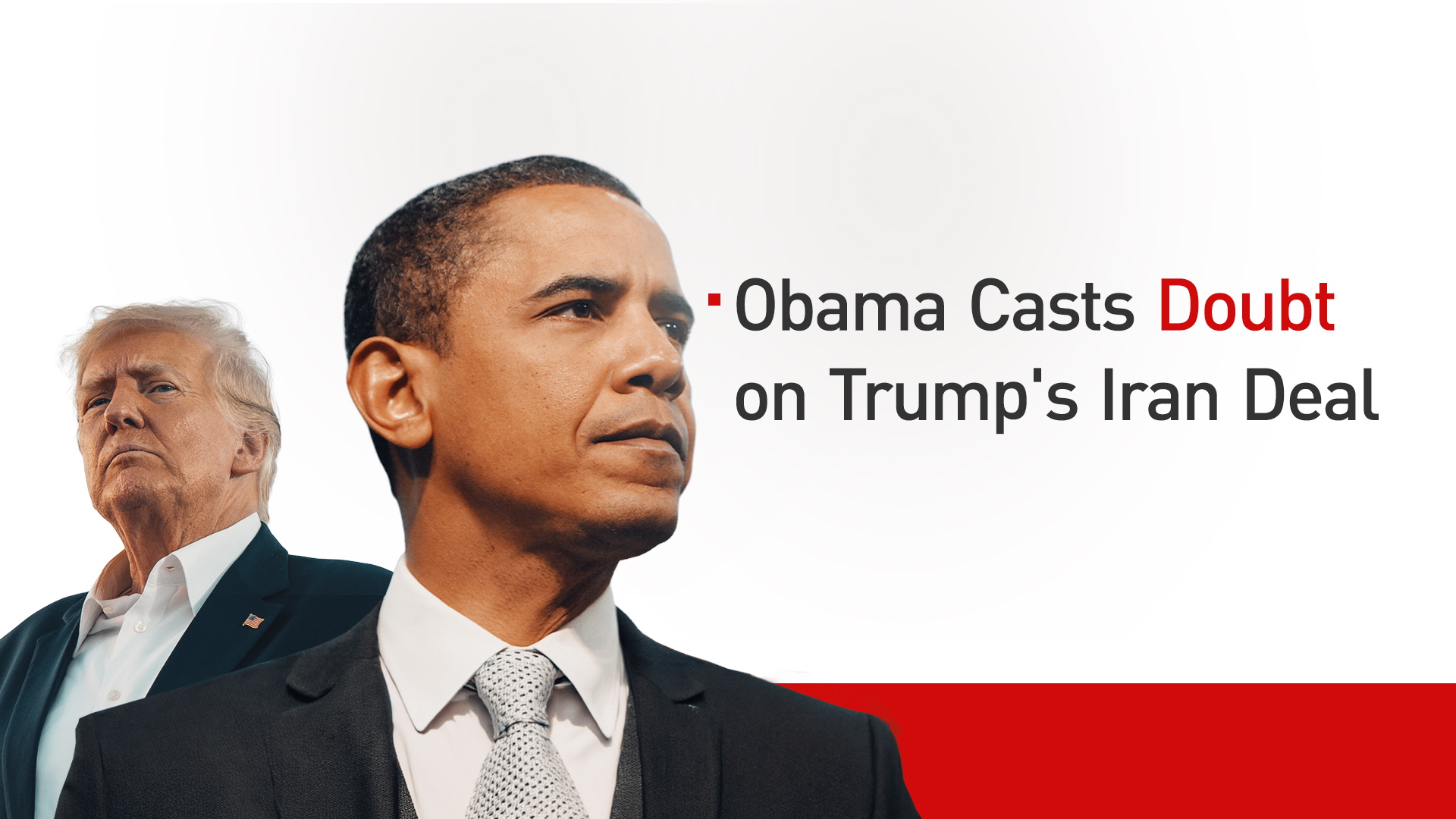
ERBIL (Kurdistan24) - As the United States and Iran move toward a highly anticipated signing ceremony in Switzerland to end a devastating regional war, former President Barack Obama has introduced a sharp note of skepticism into the celebratory atmosphere.
In an interview with ABC News, Obama questioned whether the Trump administration's new agreement would offer any meaningful improvement over the 2015 diplomatic framework that he spent years constructing and which his successor subsequently dismantled.
Speaking with Good Morning America co-anchor Robin Roberts at the Obama Presidential Center in Chicago, the former president offered a calculated critique of the current administration's trajectory.
The interview, conducted just one day before President Donald Trump's formal announcement of a “great settlement,” underscored a fundamental divide in American foreign policy: whether the recent three-month military campaign was a necessary catalyst for a "better deal" or a costly detour that returned the two nations to a familiar starting point.
The Critique of 'Bombing to a Solution'
In the interview, reported by ABC's Shafiq Najib, Obama expressed deep doubt that the emerging pact would diverge significantly from the Joint Comprehensive Plan of Action (JCPOA), the landmark 2015 deal he brokered alongside world powers.
"It is doubtful that any agreement that arises is going to be significantly different or a significant improvement from the deal that we had in the first place," Obama told Roberts.
His remarks go to the heart of a decade-long political struggle over Iran policy.
President Trump famously withdrew from the JCPOA in 2018, labeling it the “worst deal ever” and initiating a “maximum pressure” campaign that culminated in the joint U.S.-Israeli strikes launched on Feb. 28, 2026.
For Obama, the fact that the two nations are once again at a negotiating table suggests that the military alternative to his diplomacy failed to produce the transformative results Trump promised.
Beyond the technicalities of the deal, Obama utilized the platform to deliver a broader defense of traditional statecraft.
He warned against the "appealing" notion that Washington can simply "bully" or "bomb" its way to long-term solutions.
Diplomacy, he argued, is often the art of the incomplete, achieving an "80 percent or 90 percent" solution to avoid the catastrophic human and economic costs of open warfare.
"You'd think we would've learned that lesson by now," Obama noted, in a pointed reference to the conflict that has rattled the Middle East for nearly four months.
A Breakthrough Amid Residual Uncertainty
Obama's intervention comes at a moment of profound regional realignment. On June 14, President Trump utilized social media to declare that "the Deal with the Islamic Republic of Iran is now complete."
The announcement signaled an imminent end to the U.S. naval blockade and a path toward reopening the strategic Strait of Hormuz, a waterway essential to global energy markets that has been effectively shuttered since the start of hostilities.
Iranian officials have echoed this sense of finality.
Deputy Foreign Minister Kazem Gharibabadi confirmed that a draft understanding is finalized and is expected to be signed this Friday in Switzerland.
Gharibabadi stated that the agreement addresses "all of our positions and important issues," suggesting that Tehran, too, sees the deal as a preservation of its core interests.
However, as Obama suggested to Roberts, the specifics remain obscured by a fog of high-level secrecy.
While a senior administration official told reporters that the deal would lead to the "dismantling" of Iran's nuclear infrastructure and the transfer of its highly enriched uranium to U.S. custody, the exact mechanisms for verification and the scope of sanctions relief have not been made public.
It is this lack of clarity that fuels the former president's argument that the new accord may simply be a rebranded version of the framework Trump once reviled.
The Cost of Recalibration
The skepticism voiced by the 44th president highlights the immense human and strategic toll of the recent conflict.
The war, which began with "major combat operations" against Iranian military and infrastructure sites, has displaced thousands and placed extreme pressure on global supply chains.
Financial markets responded with a surge of relief to news of the truce, yet for the architect of the 2015 deal, the relief is tempered by the belief that the same stability could have been maintained without the intervention of "Operation Epic Fury."
Obama told Roberts he was "hopeful that bombing stops and ordinary people are no longer suffering," but his remarks served as a stern reminder to current policymakers that force is a blunt instrument.
By intervening just as the Trump administration prepares for its diplomatic victory lap in Geneva, Obama is ensuring that the debate over the effectiveness of the 2015 JCPOA versus the current "maximum pressure" model will continue long after the ink dries in Switzerland.
As Tom Barrack, the U.S. Presidential Special Envoy, arrives in Baghdad and Erbil to coordinate the regional implementation of the truce, he does so in a landscape where the ghosts of past diplomacy remain very much alive.
Obama's skeptical assessment suggests that the true test of the new agreement will not be the signing ceremony on Friday, but whether it can provide a more durable security guarantee than the deal it replaced, or if, as he suspects, the world is simply witnessing the rediscovery of the same diplomatic path.
|
Summary Former President Barack Obama expressed skepticism toward the Trump administration's new Iran deal, suggesting it will likely resemble the 2015 agreement. In an ABC News interview, he urged a return to diplomacy over force as Washington and Tehran prepare to sign a truce in Switzerland. |