Kurdistan’s Water Projects Boost Groundwater Levels and Strengthen Climate Resilience
Officials say dams and ponds have raised underground water by up to 100 meters in some areas while expanding storage capacity and curbing unauthorized wells
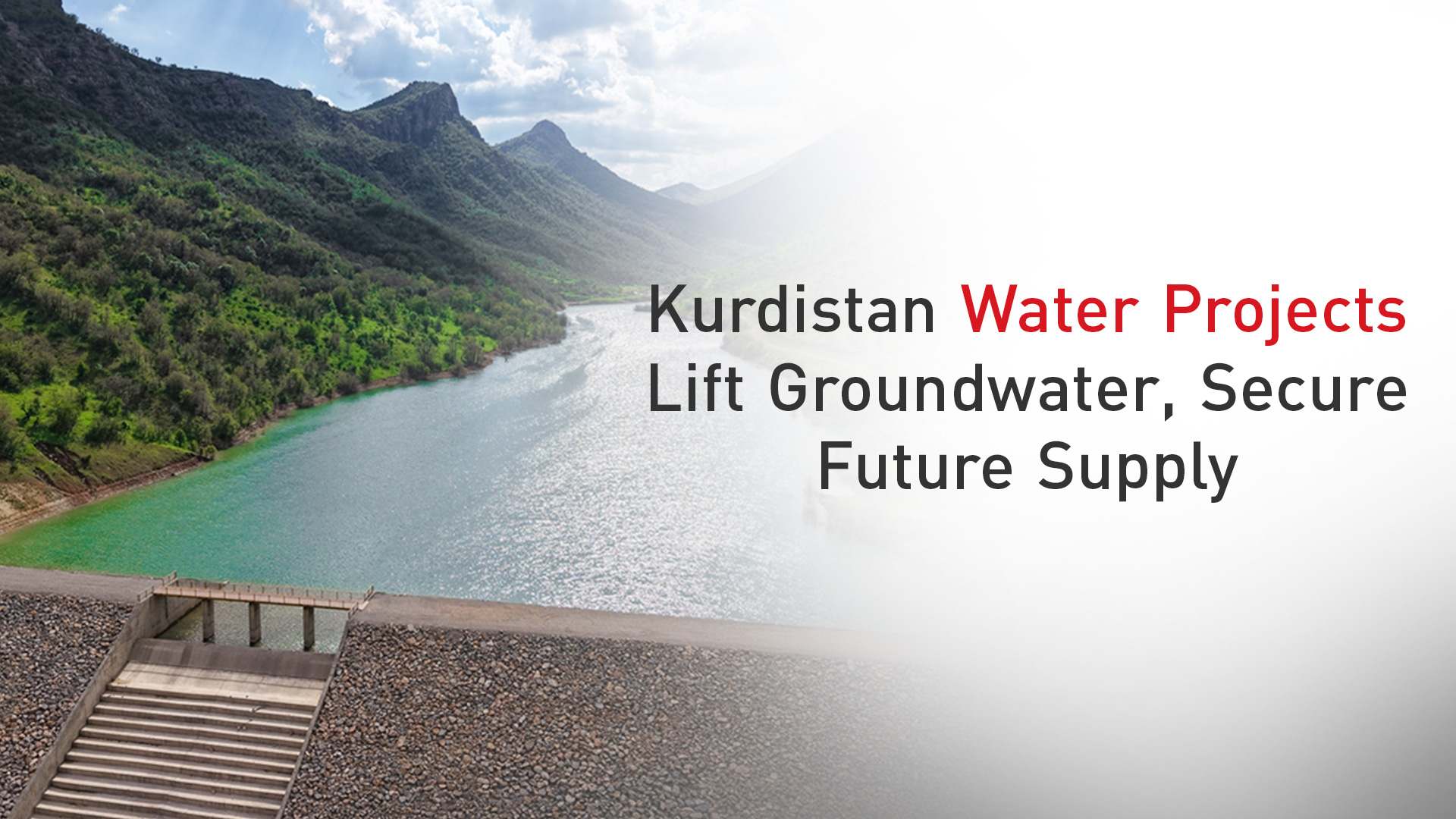
ERBIL (Kurdistan24) — Strategic water infrastructure projects implemented by the ninth cabinet of the Kurdistan Regional Government (KRG) have significantly improved water security across the region, with officials reporting notable rises in groundwater levels—reaching up to 100 meters in some areas.
Speaking on Thursday, Karwan Sabah Hawrami, Director-General of Water Resources at the Ministry of Agriculture and Water Resources, told Kurdistan24 that the construction of ponds and dams across Kurdistan is not only aimed at meeting current water demand but also at securing water resources for future generations.
He said these projects have played a major role in revitalizing rural communities, citing the example of the Quba pond in the Harir subdistrict. The area, which previously faced severe water shortages that forced residents to consider migration, has now seen a full return of water resources and has even developed into a recreational destination for fishing and tourism activities.
Hawrami added that groundwater levels have risen significantly, in some cases allowing water to be extracted without the use of pumps.
He explained that over the past 20 years, groundwater resources had been heavily depleted due to climate change and unregulated drilling of wells. However, through eight scientific recharge projects and the use of surface water management initiatives such as those in Ifraz and Qushtapa, groundwater reserves have begun to recover.
According to ministry data, increases ranging between 2 and 23 meters have been recorded in most areas, with some locations witnessing rises of up to 100 meters.
Addressing the issue of unauthorized well drilling, the director-general described the practice as theft of public resources. He said that nearly 800 drilling machines have been confiscated in the Erbil area alone since last year.
To tackle the problem, the government has introduced the “Harwazi Pond” project as an alternative solution for farmers, allocating 1.5 billion Iraqi dinars to support low-cost pond construction.
The initiative encourages farmers to collect rainwater through government-assisted financing instead of relying on unregulated groundwater extraction.
Hawrami also noted that the Ministry of Agriculture and Water Resources is working on new regulations to restructure licensing for shallow and deep wells, aiming to place tighter controls on groundwater use and prevent further depletion.
Meanwhile, Rahman Khani, Director of Kurdistan Region Dams, said dams have tremendously increased water storage capacity in the region and play an important role in protecting communities from flooding risks.
He added that although 12 dams are currently under various stages of implementation, only six are actively under construction due to financial and political constraints.
Khani emphasized that broader plans for new dams and ponds remain in place, but full implementation requires sustained funding and strict technical oversight to ensure long-term efficiency and safety.
Regarding the Duin Dam project, executive supervisor Abdullah Gardi said construction has reached 15 percent completion, with ongoing work focused on the foundation and temporary dam structures.
He noted that more than 60 million cubic meters of water passed through the project area during this year’s rainy season, but incomplete infrastructure prevented storage at the time.
He added that the dam’s design has been revised to maximize future water retention capacity once completed.
Officials stressed that these interconnected water initiatives represent a new policy direction for the KRG in addressing drought and environmental change. The strategy views every drop of rainwater as a national resource essential for securing the region’s long-term water future.
Kurdistan24 News Writer Lavin Omar contributed to this report.