Why Was a Kurdish Nurse Fired for Braiding Hair?
A Kurdish nurse in Türkiye has been dismissed from her job after joining a symbolic hair-braiding campaign in solidarity with a Kurdish woman fighter.
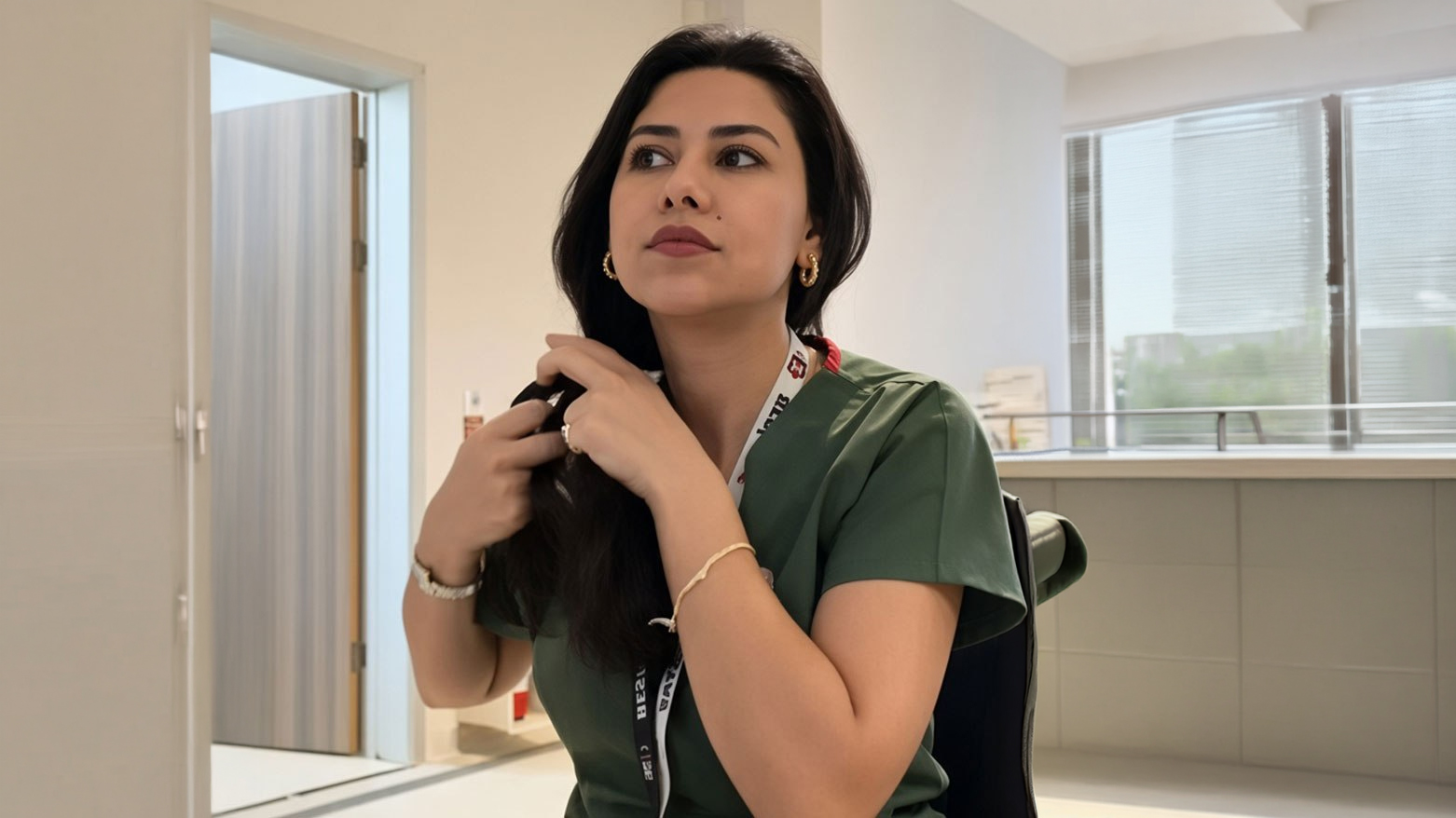
ERBIL (Kurdistan24) - A Kurdish nurse from Diyarbakir has been dismissed from her job after taking part in a symbolic hair-braiding campaign in solidarity with a Kurdish woman fighter in western Kurdistan, prompting strong criticism from lawmakers of the pro-Kurdish Peoples' Equality and Democracy Party (DEM Party).
İkra Avcı, who previously worked in the Turkish city of Kocaeli, was dismissed through an administrative decision after facing both judicial and administrative investigations over her participation in the campaign. A court had already cleared her of the charge of "propaganda for an organization," but the administrative decision to remove her from her post followed regardless.
The decision drew a sharp reaction from DEM Party lawmakers, who described it as "political punishment" and "hostility toward women's solidarity." They said Avcı's seven years of professional service had been disregarded solely because she expressed a humane position against violence, and they called for the decision to be reversed immediately and for her to be reinstated.
DEM Party lawmaker Sırrı Sakık said that while the authorities claim to be "solving the Kurds' century-old problem" on one hand, on the other, a nurse is being dismissed from her job simply for standing against brutality committed against a Kurdish woman.
The case traces back to tensions in western Kurdistan and Syria, when a gunman affiliated with the Syrian government cut the braided hair of a Kurdish woman fighter in the Raqqa area and treated it as a trophy. The act sparked widespread outrage and led to the launch of a global solidarity campaign, known as the "hair-braiding campaign," initiated by DEM Party lawmakers in support of Kurdish women.
The hair-braiding protest spread rapidly online in January 2026 after a video purporting to show a fighter aligned with Syrian government forces displaying a severed braid, which he said belonged to a slain member of the Women's Protection Units (YPJ), the all-female branch of the Syrian Democratic Forces (SDF). The authenticity of the video and the identity of the woman involved were not independently verified, but the footage nonetheless triggered a wave of solidarity videos across Türkiye and among Kurdish communities worldwide, with women filming themselves braiding their hair in protest.
Avcı was not the only person targeted over the campaign. Turkish police also detained a nurse in Kocaeli, identified only by the initials İ.A., after she posted a video braiding her hair, accusing her of disseminating "terrorist propaganda." Her lawyer described the detention as unlawful, calling it a clear matter of freedom of expression. Türkiye's Health Ministry separately opened an administrative investigation into her conduct. Reports also indicated that a 17-year-old girl was detained in a separate raid over similar posts.
DEM Party lawmakers, including Pervin Buldan and Meral Danış Beştaş, joined the campaign publicly, along with Kurdish public figures and rights advocates, who framed the braiding gesture as an act of resistance rather than a criminal offense. Some female news anchors also appeared on air with braided hair in a show of solidarity.