Baghdad Looks to Erbil for a Blueprint to Rebuild Iraq's Capital
In a candid interview, Baghdad Governor Atwan al-Atwani acknowledged the capital's severe urban challenges and pointed to the Kurdistan Region's infrastructure and investment models as a roadmap for national recovery.
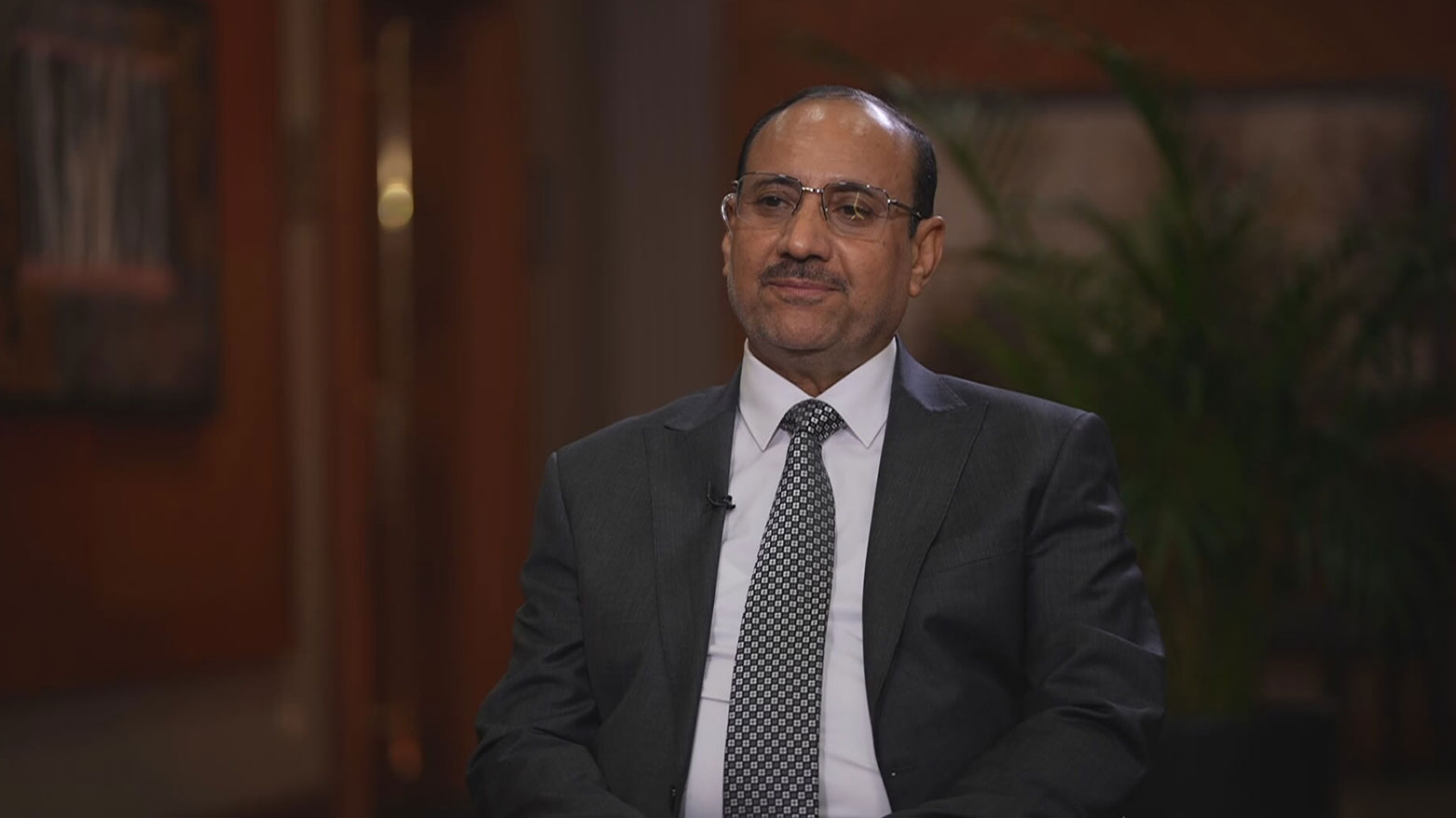
ERBIL (Kurdistan24) - "We are trying and striving to benefit from Erbil's experiences."
With that single, striking admission, Baghdad Governor Atwan al-Atwani captured a profound shift in the political and municipal dynamics of modern Iraq. Speaking during a deeply revealing interview on Kurdistan24's Basi Roj program with Zhino Mohammed on Thursday, the governor of Iraq's sprawling, historic capital did not offer the standard diplomatic deflections regarding his city's struggles. Instead, he openly acknowledged that Baghdad, a metropolis of nearly 10 million people choking on traffic, aging infrastructure, and a suffocating housing crisis, must look north to the Kurdistan Region for a viable roadmap to urban and economic recovery.
For years, the relationship between Baghdad and Erbil has been heavily mediated by high-stakes political friction, defined by protracted disputes over federal budgets, oil export rights, and territorial claims.
Yet, al-Atwani's extensive tour of Erbil recast the Kurdish capital in an entirely different light.
He positioned Erbil not as a political rival, but as an indispensable reference point for municipal governance, private-sector integration, and environmental resilience, offering a rare moment of transparent, cross-regional alignment in Iraqi state-building.
The Infrastructure Divide: Expressways and Green Belts
At the center of al-Atwani's fascination was Erbil's physical transformation.
Over recent years, the Kurdistan Regional Government has spearheaded an aggressive infrastructure build-out, an initiative deeply aligned with the regional government's broader "Road Revolution" that has facilitated the construction of expansive expressways, viaducts, and interconnected ring roads.
For al-Atwani, the contrast with Baghdad's gridlocked streets was stark and inescapable.
"Honestly, we don't have those expressways in Baghdad," he told Mohammed, pointing to Erbil's ability to drastically reduce urban congestion in the city center while seamlessly facilitating commercial transit.
In Baghdad, rapid, unchecked population growth has vastly outpaced urban development, turning basic transportation into one of the city's most paralyzing daily challenges.
Beyond asphalt, the governor was visibly impressed by Erbil's environmental foresight, specifically its expansive green belt.
As Iraq faces escalating climate threats, ranging from extreme summer temperatures to severe water pollution in the Tigris and Diyala rivers, al-Atwani highlighted Erbil's green spaces as a dual-purpose shield against pollution and heat.
He voiced a strong desire to replicate this model in Baghdad, outlining an ambitious vision for a two-kilometer green belt around the capital, irrigated by groundwater and integrated with tourist areas.
However, he conceded the grim reality of Baghdad's current municipal triage: when entire outlying neighborhoods lack basic water and sewage networks, long-term environmental planning is often cannibalized by immediate, localized survival needs.
The Private Sector Imperative
Perhaps the most significant policy takeaway from al-Atwani's visit was his assessment of Erbil's economic engine.
Iraq's economy has long been hobbled by a bloated public sector, immense payrolls, and deep-seated bureaucratic inertia. In Erbil, the governor witnessed a different paradigm, one that leverages private capital to build public utility.
Calling it a "qualitative point that sets Erbil apart," al-Atwani emphasized that an active, robust investment climate is the lifeblood of the city's growth. "We reached the conclusion that a government cannot achieve development unless there is a partnership with the private sector," he asserted.
This realization reflects a growing, urgent consensus among a new generation of Iraqi provincial leaders.
The state, historically the sole provider of employment and infrastructure, can no longer underwrite national reconstruction alone.
Genuine, legally secure public-private partnerships are not a luxury, but an absolute structural necessity for reviving Iraq's battered municipal landscapes.
Furthermore, al-Atwani highlighted Erbil's advancement in digital governance, pointing to its electronic payment initiatives as a "pioneering experience" that Baghdad must adopt to modernize its financial ecosystem.
Bridging the Federal-Regional Divide
Al-Atwani's itinerary in Erbil read like a masterclass in domestic diplomacy.
His high-level meetings spanned the senior echelons of the regional government, including discussions with Kurdistan Region President Nechirvan Barzani, Prime Minister Masrour Barzani, Interior Minister Reber Ahmed, and Erbil Governor Omed Khoshnaw.
These discussions culminated in a potent proposal supported by the Kurdish leadership: an inter-provincial governors' conference, initially to be hosted in Erbil and subsequently rotated to Baghdad.
For al-Atwani, this is not merely a bureaucratic exercise. He views the cross-pollination of municipal strategies, sharing concrete developmental successes from Erbil, Baghdad, and Basra, as foundational to national cohesion.
"We should end the conflicts," he urged, framing this federal-regional cooperation as a critical message of unity to the Iraqi populace.
It is an attempt to build the state from the ground up, utilizing shared municipal experiences to bypass traditional high-level political gridlock.
A Capital Under Strain: Baghdad's Trillion-Dinar Deficit
The contrast with Erbil served to underscore the sheer magnitude of Baghdad's urban decay. Throughout the interview, al-Atwani delivered a frank, unvarnished diagnostic of his city’s failures.
The infrastructure, particularly in the historic city center, is "exhausted," "tired," and "old."
The housing crisis has driven citizens into vast, encroached informal settlements, forcing the government to scramble for post-hoc legal frameworks to regularize entirely unplanned neighborhoods.
The jurisdictional split between Amanat Baghdad (which handles city-center services) and the Baghdad Governorate (which oversees the rapidly expanding, underserved outskirts) further complicates the recovery.
The financial arithmetic is daunting. Al-Atwani estimates that Baghdad requires roughly 1.5 trillion Iraqi dinars (over $1.1 billion) annually just to meet baseline infrastructure demands and execute strategic, multi-year sewage projects in districts like Abu Ghraib and Nahrawan.
Even with current funding, he admitted that ongoing projects do not cover "even 10%" of the citizens' healthcare infrastructure needs.
This deficit extends painfully into daily service delivery.
Discussing the chronic electricity shortages, al-Atwani noted that Baghdad's power grid relies on infrastructure that is decades old, leaving the capital hopelessly tethered to private neighborhood generators.
To combat this, the governor is pushing to import modern utility management strategies, such as strict revenue collection (Ghibaya) and targeted infrastructure renovation, hoping that demonstrating 24-hour power in select zones will incentivize broader civic compliance and reduce overall grid strain.
Redefining the Gateways
During the broadcast, Mohammed gently pressed the governor on a point of shared national frustration: the physical appearance of Baghdad's perimeters.
She noted that entering the capital from the north does not feel like arriving in a major Middle Eastern power center, a visual reality that deeply saddens visitors and citizens alike.
Al-Atwani did not deflect.
Acknowledging that the entrances to Baghdad are currently unworthy of its historic stature, he detailed a comprehensive overhaul underway.
Five major gateway projects are in various stages of implementation, designed to feature sweeping green belts, advanced surveillance and security systems, and modern, paved roadways.
Though hampered by chronic funding delays, the governor promised that upon completion, these revitalized entry points would finally reflect the dignity the Iraqi capital deserves.
Escaping the Oil Trap
If Erbil provided a lens for urban planning, it also offered a mirror for Iraq's precarious macroeconomic reality.
Mirroring the Kurdistan Region's recent pivot toward agricultural and non-oil development, al-Atwani issued a stark warning regarding Baghdad's, and by extension, Iraq's, fatal addiction to petroleum.
With oil revenues funding approximately 90% of the state budget, the governor described the single-source economy as an existential "danger to economic stability and the stability of citizens' lives."
Pointing to the volatility exposed by the COVID-19 pandemic and recent regional military conflicts involving the U.S., Israel, and Iran, he warned against complacency.
"There is technological progress in the world; perhaps the world will abandon oil," he cautioned, adding that increased global extraction could eventually cause oil to lose its value.
To survive the looming global energy transition, al-Atwani argued that Iraq must urgently diversify its economy, aggressively implement tax reform to maximize non-oil revenues, and insulate its civic development from the wild fluctuations of global energy markets.
It is a massive structural pivot, requiring Iraq to learn how to generate stable, sustainable wealth independent of the crude flowing from its southern wells.
The Human Dimension: Finding "Jamila"
Despite the heavy focus on policy, infrastructure, and economic reform, the underlying current of al-Atwani's interview was deeply personal.
The political barriers that often define the Baghdad-Erbil dynamic seemed entirely absent in his reflections on the Kurdish capital.
He spoke warmly of the "indescribable" reception he received, noting that he felt entirely at home among the Kurdish people.
When Mohammed asked him to summarize his experience and describe the city in a single word, the governor did not hesitate.
"Jamila," he replied. Beautiful.
"Erbil is beautiful. It's beautiful for its cleanliness, beautiful for its green belt, beautiful for its greenery, and beautiful for its people."
In that simple summation lies the broader significance of the governor's visit. By looking to Erbil, Baghdad is not just seeking engineering schematics or investment laws; it is searching for a renewed vision of what an Iraqi city can be.
For a nation historically fractured by internal conflict, the sight of the capital's governor finding inspiration, hospitality, and a blueprint for the future in the Kurdistan Region stands as one of the most promising developmental shifts in recent Iraqi history.
|
Summary Baghdad Governor Atwan al-Atwani's visit to Erbil marks a pivotal shift in Iraqi politics. Praising the Kurdistan Region's infrastructure, green spaces, and private-sector integration, Atwani highlighted Erbil as a crucial blueprint for modernizing Iraq's ailing capital and fixing its economy. |