Ceasefire Under Severe Strain as Lebanon Health Ministry Reports 7 Killed in Israeli Strikes
The fragile diplomatic agreement faces a critical test following an escalation in Hezbollah attacks that killed five Israeli soldiers, prompting intense retaliatory strikes across southern and eastern Lebanon.
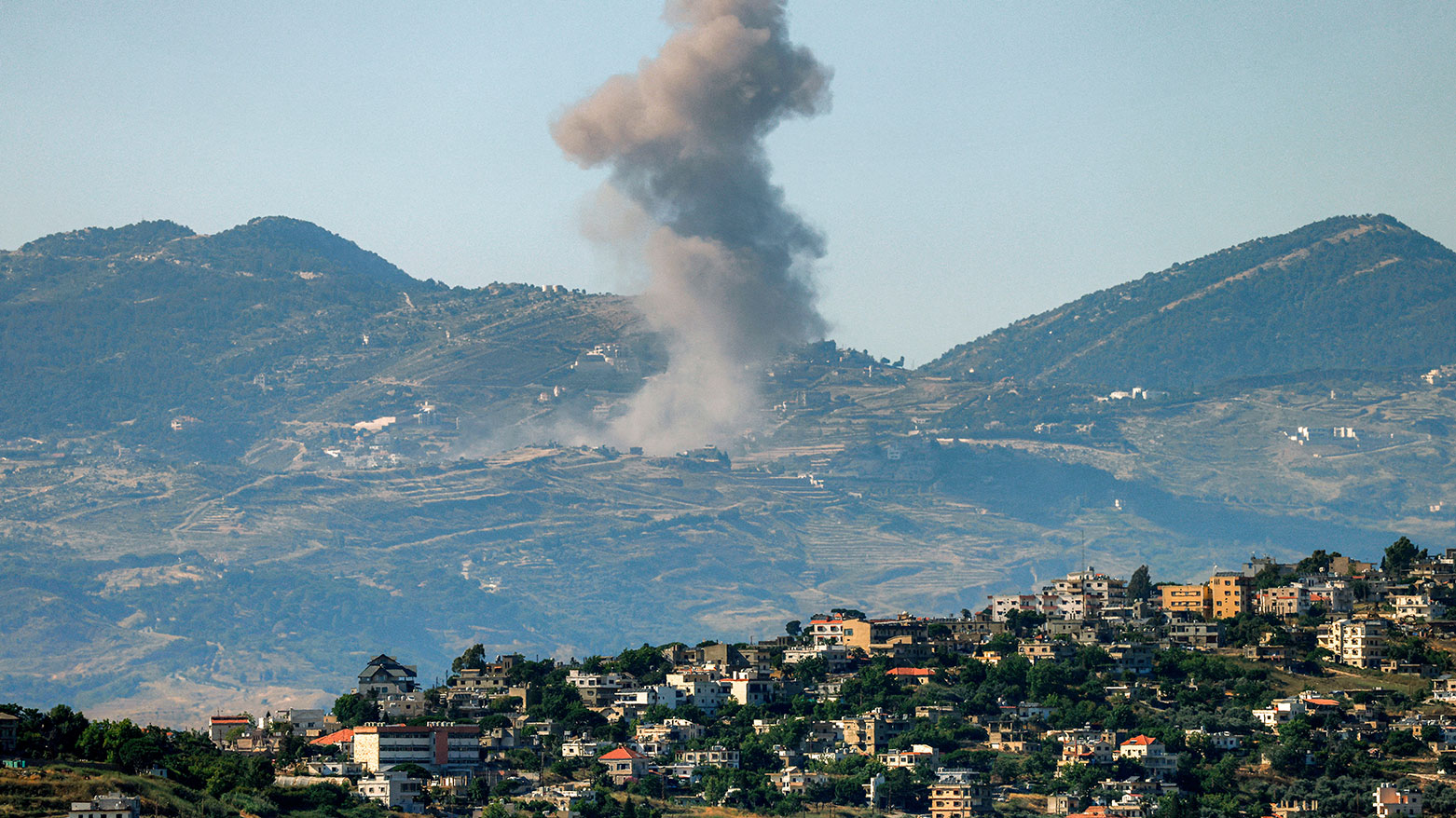
ERBIL (Kurdistan24) - The precarious ceasefire holding parts of the Middle East in a delicate balance was severely tested on Saturday after the Lebanese Ministry of Health announced that Israeli airstrikes in eastern and southern Lebanon killed seven people, including a child and a Lebanese Army soldier.
The latest wave of Israeli bombardment, reported by Agence France-Presse (AFP), struck bare hours after a highly anticipated, albeit fragile, regional truce had nominally taken effect.
The rapid resumption of hostilities immediately raised profound doubts about the durability of the ceasefire and the capacity of international diplomats to prevent a total collapse of the agreement.
According to Lebanese health officials and security sources, Israeli fighter jets targeted several towns deep within the Nabatieh District, including Haboush, Mayfadoun, and Kfar Jouz, alongside Jebel Rafi in the Jezzine District and the towns of Libbaya and Sohmor in the Western Beqaa.
Security sources noted that Israel launched approximately 12 strikes within the first hour of the ceasefire alone. The casualties reportedly included four individuals in the southern town of Barish, two Palestinians in the Tyr region, and a Lebanese Army soldier killed on the Kfar Remen road.
The immediate civilian toll highlights the perilous environment facing communities caught between intense military operations and stuttering diplomatic maneuvers.
While Israel had previously stated it would not expand the war unless provoked, it has steadfastly insisted on maintaining its security buffer in the border regions of Southern Lebanon.
The deadly strikes in Lebanon did not occur in a vacuum. They followed a massive escalation in cross-border violence initiated by Hezbollah that inflicted heavy casualties on the Israeli military.
According to reporting by The Times of Israel (ToI) and journalist Emanuel Fabian, the Israel Defense Forces (IDF) announced that five soldiers were killed and 13 others wounded in Southern Lebanon over the past two days, attacks that the IDF characterized as a "blatant violation" of the ceasefire.
The fatal escalation began early Friday morning when a Hezbollah drone or anti-tank guided missile struck an Israeli tank near the village of Kfar Tebnit. The attack killed four soldiers, including Lt. Col. Dor Gedalia Ben Simhon, 32, the commander of the 401st Armored Brigade's 52nd Battalion.
The Times of Israel reported that the strike occurred amid intense Israeli operations to capture a major, "strategic" underground Hezbollah facility located beneath the Ali Taher ridge, which the IDF describes as the "nerve center" of Hezbollah's Badr regional division.
The following night, the violence intensified. According to the IDF, Hezbollah launched over 50 rockets and explosive projectiles at Israeli positions.
At around 1:30 a.m. Saturday, a barrage struck a military position in Kfar Tebnit, killing 21-year-old Sgt. First Class Nir Ben Ari of the Commando Brigade's Maglan unit and wounding 13 other troops, two of them seriously.
In retaliation for these deadly strikes, Israeli forces unleashed the bombardment across southern and eastern Lebanon that resulted in the seven deaths reported by the Lebanese Health Ministry.
The fierce exchange of fire on the ground is now actively destabilizing diplomatic efforts taking place thousands of miles away.
The weekend fighting occurred just days after the United States and Iran signed a landmark memorandum of understanding aimed at ending regional hostilities, reopening the Strait of Hormuz, and mandating an "immediate and permanent termination of military operations on all fronts, including in Lebanon."
However, Israel was not a signatory to that agreement and has rebuffed Iranian demands that it withdraw from the security zone it has carved out in southern Lebanon.
In response to the Israeli retaliatory strikes, Tehran announced the postponement of a critical follow-up meeting scheduled in Switzerland, with Iranian officials arguing that the IDF operations in southern Lebanon violated the terms of the U.S.-Iran agreement.
Iran's central military command even claimed to have once again closed the Strait of Hormuz, though the U.S. military quickly denied that the waterway was shuttered.
As Washington and European capitals exert immense pressure on all parties to preserve the ceasefire, the disconnect between diplomatic declarations and the reality on the battlefield is widening.
The deaths of the Israeli soldiers and the subsequent civilian casualties in Lebanon underscore a grim reality: until the tactical military objectives of both the IDF and Hezbollah are resolved, any broader regional peace agreement will remain perilously vulnerable to the daily exchange of fire.
|
Summary Seven people were killed in Israeli strikes across Lebanon just a day after a fragile ceasefire took effect, Lebanese officials said. The bombardment followed Hezbollah attacks that killed five Israeli soldiers, severely straining regional peace efforts and halting U.S.-Iran diplomatic talks. |