Türkiye's National Security Council Reviews PKK Disarmament as Peace Process Advances
The National Security Council convened under President Recep Tayyip Erdoğan to assess the peace process, oversee PKK disarmament, and evaluate regional developments
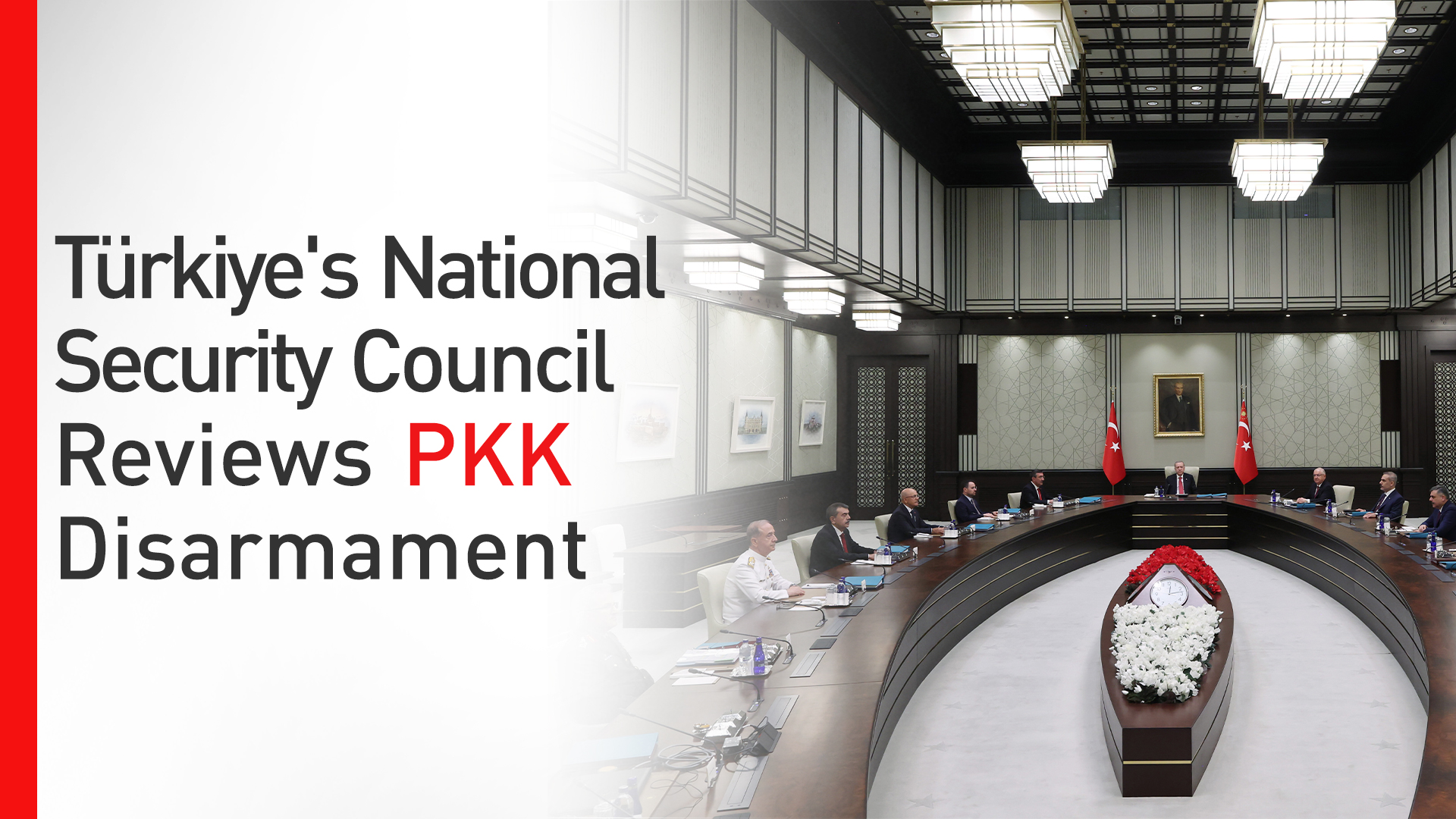
ERBIL (Kurdistan24) - Türkiye's National Security Council convened on Thursday under the chairmanship of President Recep Tayyip Erdoğan to review the country's ongoing peace process, monitor the disarmament of the Kurdistan Workers' Party (PKK), and assess the latest regional security developments.
The high-level meeting focused primarily on evaluating the latest steps in the peace process while strengthening coordination among the relevant state institutions.
According to Turkish media, following the submission of a new framework bill to parliament, the National Security Council has assumed a central role in overseeing and verifying the PKK's disarmament process.
The meeting comes one day after a draft law titled the Law on Strengthening National Solidarity and Social Integration was formally submitted to the Turkish parliament. Turkish authorities describe the legislation as a practical and legal step aimed at creating the necessary framework to help bring the decades-long armed conflict to an end.
The council was also expected to examine the latest security assessments from Türkiye's intelligence and military institutions regarding developments in the Kurdistan Region and Western Kurdistan.
Officials are expected to evaluate the broader regional impact of the evolving peace process and its potential implications for regional stability.
The latest developments mark a new phase in Türkiye's peace process after calls for disarmament were made toward the end of last year, followed by declarations expressing readiness to end the armed conflict.
On Wednesday, Aug. 5, the ruling alliance, led by the Justice and Development Party (AK Party), submitted a 12-article legislative proposal signed by 360 lawmakers to the Turkish Grand National Assembly.
The proposal focuses on establishing legal procedures governing disarmament and the return of individuals who have not been involved in deadly incidents.
The Turkish government says the legislation is intended to help end a conflict that has lasted for four decades while contributing to the country's political and economic stability.
The latest parliamentary initiative follows the endorsement of the 12-article framework bill by Türkiye's Peoples' Equality and Democracy Party (DEM Party), clearing the way for its submission to parliament with the backing of multiple political parties.
According to the proposal, the draft law establishes the legal framework for measures linked to the ongoing peace process, including judicial procedures related to disarmament, surrender, and the legal status of eligible individuals.
The legislation excludes intentional homicide committed within the framework of organizational activities, as well as offenses committed before June 1, 2005, that carry life imprisonment or aggravated life imprisonment.
It also provides for postponing certain investigations, prosecutions, and prison sentences for eligible offenses, subject to specific conditions and judicial oversight. Individuals benefiting from the law would be required to refrain from committing new offenses during the postponement period.
The proposal establishes an oversight board chaired by Türkiye's vice president and comprising senior government and security officials, while a 17-member Parliamentary Monitoring Commission would supervise implementation. It also outlines procedures governing surrender and disarmament and requires eligible applicants to submit written applications within six months after the relevant National Security Council decision is published in the Official Gazette.
The National Security Council's meeting represents the latest institutional step as Türkiye advances both the legislative and security dimensions of its peace process.