First Round of US-Iran Peace Talks Concludes in Switzerland With "Encouraging Progress," Mediators Say
Qatar and Pakistan announce a new de-confliction cell for Lebanon as Trump renews threats against Tehran and Iran's negotiator warns Washington to "be careful"
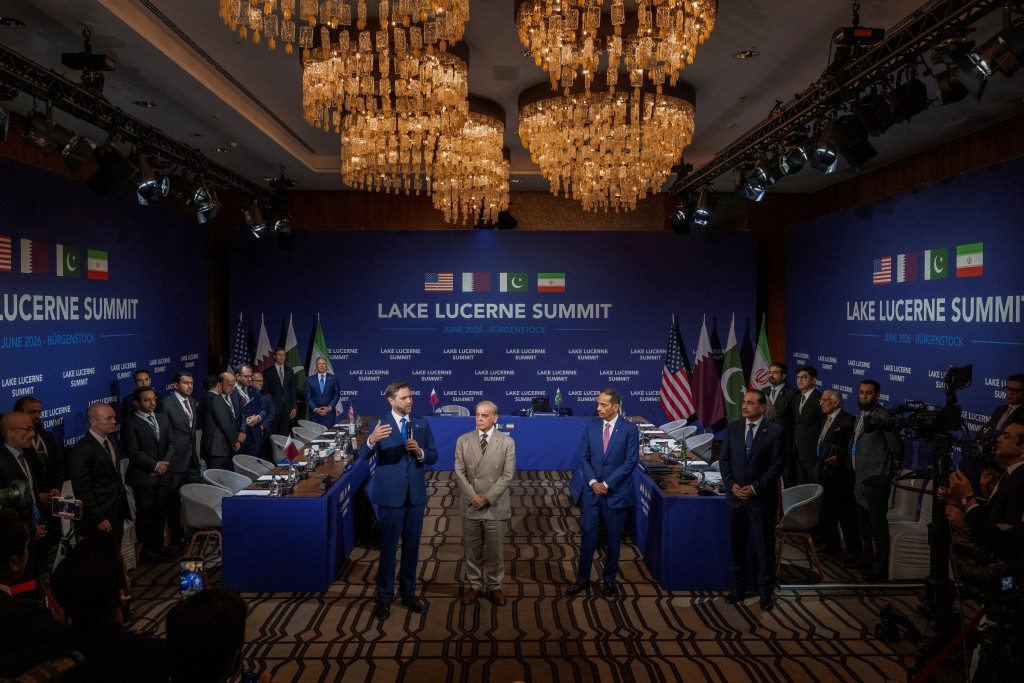
ERBIL (Kurdistan 24) - The first round of high-level negotiations between the United States and Iran aimed at converting a 60-day pause in their war into a lasting peace agreement concluded in the early hours of Monday at a Swiss lakeside resort, with Qatari and Pakistani mediators describing "encouraging progress" even as significant strains over Lebanon and sharp exchanges between the two sides' leaders undercut the atmosphere of diplomatic optimism.
Qatar and Pakistan, the two countries mediating the talks, announced on social media after 3 a.m. Monday, local time in Switzerland, that the discussions had concluded and that Washington and Tehran had agreed to several new mechanisms, including a "de-confliction cell" designed to ensure that military operations cease in Lebanon, where Israel and Hezbollah have continued fighting throughout the broader war.
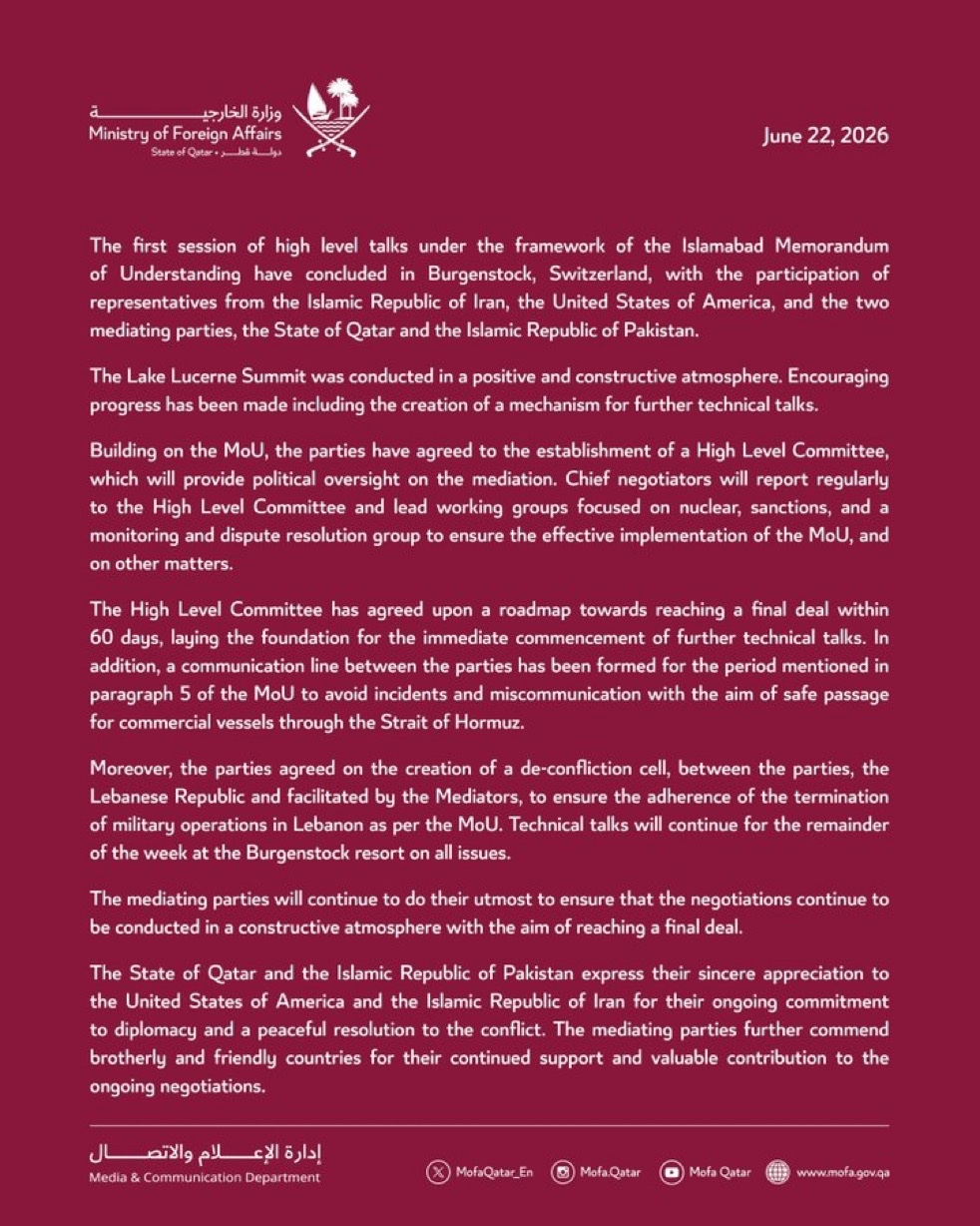 Joint Statement Joint Statement by the State of Qatar and the Islamic Republic of Pakistan Regarding The Conclusion of Lake Lucerne Summit (Photo: Qatari Foreign Minister Account on X)
The New York Times reported on Monday that the talks at the Swiss lakeside resort began on Sunday morning, making the sessions a full-day negotiating effort that stretched well into the night before the mediators' announcement.
Iran's Foreign Minister Hails "Major Progress" on Lebanon
Iranian Foreign Minister Abbas Araghchi described the outcome in notably positive terms, writing on social media after the announcement that "major progress" had been made toward ending the conflict in Lebanon. "1st real test: Lebanon deconfliction cell," Araghchi added, framing the newly established mechanism as the immediate test of whether the diplomatic momentum generated in Switzerland can translate into real change on the ground.
Tireless Pakistani and Qatari mediation has delivered major progress to end Lebanon War. Oil and petrochem exports are waived, blockade lifted, some frozen assets released, and major reconstruction & development plan launched for Iran.
— Seyed Abbas Araghchi (@araghchi) June 22, 2026
1st real test: Lebanon deconfliction cell https://t.co/q0okD2qwSO
The de-confliction cell represents the most concrete institutional outcome of Sunday's talks, providing a channel through which the two sides can coordinate to prevent military incidents in Lebanon from derailing the broader peace process, a mechanism that has been conspicuously absent throughout months of fighting in which the Lebanon front has repeatedly threatened to collapse ceasefire arrangements.
Strains Over Lebanon Dominated the Talks
Despite the positive framing from mediators and Iran's foreign minister, the New York Times reported on Monday that Iranian negotiators insisted on Sunday that an end to the war between Israel and Hezbollah was a precondition for further talks, a position that kept Lebanon at the center of the negotiations throughout. According to Iranian state media, the discussions focused mostly on Lebanon and did not substantively address the future of Iran's nuclear programme, leaving one of the most consequential long-term issues in the relationship unresolved.
The managing director of Iran's national oil company, Hamid Bovard, told state media that the lifting of sanctions on Iran's oil and related industries was also raised during the talks, adding a significant economic dimension to the first formal round of peace negotiations.
Trump Threatens Iran, Vance Calls for "New Leaf"
The diplomatic atmosphere was complicated by a sharp divergence in tone from the American side. Vice President JD Vance opened Sunday's meetings by saying President Trump wanted the talks to "turn over a new leaf" with Iran. Hours later, Trump delivered a starkly different message in a Fox News interview, saying he could do "whatever I want" after the 60 days end and warning Iranian President Massoud Pezeshkian, who has insisted on Tehran's right to enrich uranium, that he "better watch his mouth."
Iran's lead negotiator Mohammad Bagher Ghalibaf responded directly on social media, warning Washington to be careful about issuing threats and stating that Iranian armed forces were prepared to respond. "No matter how much they talk, it is we who act," Ghalibaf wrote.
A US official, speaking on condition of anonymity to detail the negotiations, told the New York Times about an hour before the Qatari-Pakistani announcement that talks were expected to continue into the night. As dawn broke in Switzerland on Monday, it remained unclear whether American and Iranian officials planned to resume discussions in the country.
Hormuz and the Ceasefire Enforcement Also on the Table
The US official confirmed that the topics of discussion included ensuring that the Strait of Hormuz remains open and enforcing the ceasefire in Lebanon, the two issues that have most directly shaped the economic and military dimensions of the conflict since it began on Feb. 28, 2026.
The Strait of Hormuz question carries particular urgency given that Iran's chief negotiator, Ghalibaf, confirmed on state television that Tehran will charge fees for transit through the waterway once the 60-day toll-free period stipulated in the memorandum of understanding expires. This position sits in direct tension with Washington's longstanding insistence on unimpeded freedom of navigation through the strait.
The Road Ahead
Sunday's talks were explicitly framed as the first of multiple negotiating rounds intended to produce a lasting peace deal, with the 60-day pause providing the window within which both sides must reach a durable settlement. The establishment of the Lebanon de-confliction cell, the agreement on "several new mechanisms," and the mediators' characterization of the progress as encouraging all suggest that both sides have a shared interest in sustaining the process, even if the gap between their positions on Lebanon, nuclear rights, sanctions relief, and the Hormuz toll system remains wide.
Whether the momentum from Switzerland carries into the next round of talks, and whether the de-confliction cell can demonstrably reduce hostilities in Lebanon before the 60-day clock runs out, will determine whether Sunday's session is remembered as the beginning of a genuine peace process or simply another episode in a conflict that has repeatedly generated diplomatic optimism only to produce renewed hostilities.
|
BRIEF: |