Iran Claims 'Major Progress' in High-Stakes Switzerland Talks with the U.S.
Following a turbulent start marked by public threats, mediators announce the establishment of a "de-confliction cell" for Lebanon and a 60-day roadmap toward a final agreement.
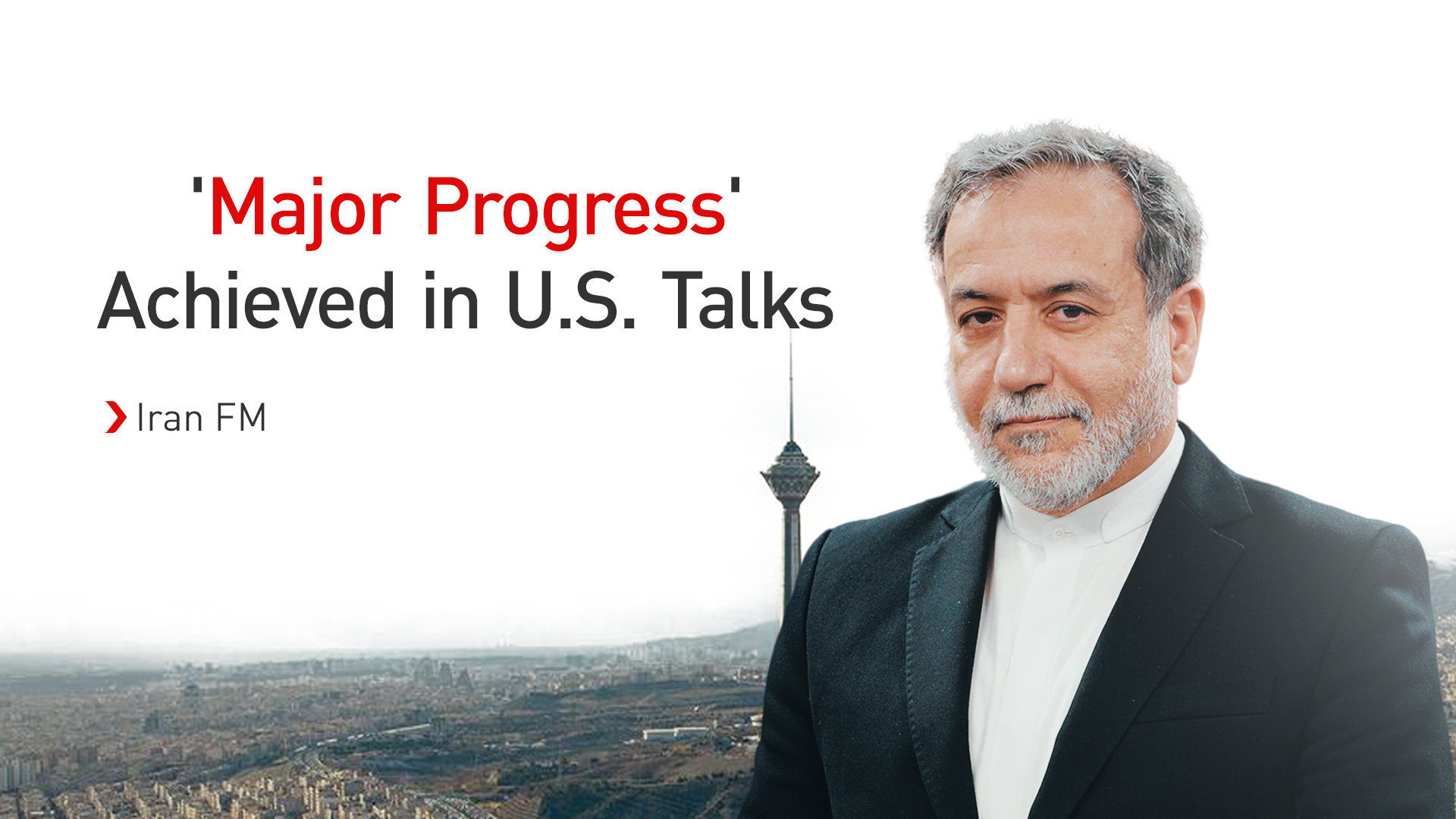
ERBIL (Kurdistan24) - Iranian Foreign Minister Abbas Araghchi announced on Monday that high-level negotiations with the United States have achieved "major progress," signaling a potential breakthrough in diplomatic efforts to permanently end the devastating conflict that erupted earlier this year.
Araghchi's declaration followed the conclusion of the first round of high-level talks at the Bürgenstock resort in Switzerland. Writing on the social media platform X, the Iranian diplomat credited "tireless Pakistani and Qatari mediation" for facilitating an agreement to end the war in Lebanon, while outlining sweeping economic concessions purportedly secured by Tehran.
"Oil and petrochem exports are waived, blockade lifted, some frozen assets released, and major reconstruction & development plan launched for Iran," Araghchi wrote, according to reporting by Agence France-Presse (AFP).
Tireless Pakistani and Qatari mediation has delivered major progress to end Lebanon War. Oil and petrochem exports are waived, blockade lifted, some frozen assets released, and major reconstruction & development plan launched for Iran.
— Seyed Abbas Araghchi (@araghchi) June 22, 2026
1st real test: Lebanon deconfliction cell https://t.co/q0okD2qwSO
He added that the immediate focus will shift to the newly established "Lebanon deconfliction cell," which he characterized as the "1st real test" of the diplomatic process.
The optimistic assessment from Tehran emerged from a diplomatic framework that nearly collapsed before it began.
According to a Joint Statement by the State of Qatar and the Islamic Republic of Pakistan, the Lake Lucerne Summit concluded in a "positive and constructive atmosphere."
The mediators confirmed the establishment of a High-Level Committee designed to provide political oversight.
Crucially, the committee agreed upon a 60-day roadmap toward a final deal, establishing working groups focused on nuclear issues, sanctions, and dispute resolution.
To mitigate immediate maritime and regional risks, the parties established a direct communication line to ensure the safe passage of commercial vessels through the Strait of Hormuz.
Furthermore, they created a Lebanon de-confliction cell, facilitated by the mediators and the Lebanese Republic, to ensure adherence to the termination of military operations.
While the high-level delegations have departed, technical talks will continue at the Swiss resort for the remainder of the week.
🔊PR No: 1️⃣5️⃣1️⃣/2️⃣0️⃣2️⃣6️⃣
— Ministry of Foreign Affairs - Pakistan (@ForeignOfficePk) June 22, 2026
Joint Statement by the State of Qatar and the Islamic Republic of Pakistan Regarding the Conclusion of Lake Lucerne Summit, First High-Level Committee Meeting with Participation of the United States of America and the Islamic Republic of Iran pic.twitter.com/2G3PAf7LVY
Overcoming a Rocky Start
The diplomatic achievements announced on Monday followed a highly volatile opening to the summit. According to reporting by The Associated Press (AP), the first full day of negotiations was abruptly jolted by public threats from U.S. President Donald Trump.
Writing on social media, Trump demanded that Iran "immediately stop their highly paid PROXIES in Lebanon from causing trouble," warning that the U.S. would "hit Iran very hard again" if compliance was not met.
The AP reported that the Iranian delegation, led by Parliamentary Speaker Mohammad Baqer Qalibaf and Foreign Minister Araghchi, briefly walked out of the negotiating site in response to the President's remarks, pausing the talks before Qatari mediators intervened to bring them back to the table.
The American delegation in Switzerland was led by Vice President JD Vance, alongside special envoys Steve Witkoff and Jared Kushner.
Prior to the disruption, Vance had struck an optimistic tone, characterizing the gathering as a "historic meeting."
According to AFP, Vance publicly challenged both sides to consider whether they could "turn over a new leaf" and permanently alter relations in the Middle East, though he cautioned that returning to "the old way" remained a very real possibility.
The Lebanon Test
The establishment of the Lebanon de-confliction cell addresses the most immediate hurdle to a broader U.S.-Iran settlement.
The fighting between Israel and Hezbollah has repeatedly threatened to derail the peace efforts.
Just days prior to the summit, formal talks were postponed following deadly Israeli strikes in Lebanon, which were launched in retaliation for the deaths of four Israeli soldiers.
Tehran had previously threatened to shutter the Strait of Hormuz in response to the Israeli operations in Lebanon.
By creating a dedicated mechanism to manage the Lebanese front, negotiators are attempting to decouple the complex proxy war in the Levant from the core bilateral issues between Washington and Tehran.
According to the AP, the renewed ceasefire in Lebanon appeared to be holding by Saturday, with the Israeli military announcing it would lift movement restrictions for residents near the northern border on Monday morning.
However, Israeli Prime Minister Benjamin Netanyahu maintained a hardline stance, vowing that troops would remain in southern Lebanon "as long as necessary."
Unresolved Core Issues
While the establishment of communication mechanisms and the 60-day roadmap represent significant diplomatic momentum, fundamental disagreements remain regarding Iran's nuclear program.
The interim deal outlines a two-month period to settle the future of Tehran's nuclear ambitions amid U.S. and Israeli concerns regarding weaponization.
According to AFP, Iranian President Masoud Pezeshkian emphasized on Sunday that Tehran will not relinquish its right to enrich uranium, though he reiterated that Iran has no intention of building a nuclear weapon and offered to state that commitment in writing.
For now, the focus shifts to the technical working groups remaining in Switzerland and the implementation of the Lebanon de-confliction mechanism.
The immediate reaction from global markets has been positive, with AFP noting that crude oil prices slipped and Asian stocks gained on the news of the progress.
However, as the volatile opening to the summit demonstrated, the path toward a permanent resolution remains fraught with political and military landmines that could easily derail the fragile 60-day roadmap.
|
Summary Iran's Foreign Minister claimed "major progress" following high-level U.S.-Iran talks in Switzerland. Mediators Qatar and Pakistan confirmed a 60-day roadmap for a final deal, establishing a Lebanon de-confliction cell and a communication line to secure the Strait of Hormuz amid ongoing tensions. |