Poll Shows 92% of Israelis Think Iran Won the War and U.S. Deal
According to a comprehensive survey conducted by the Hebrew University of Jerusalem and the Agam Institute, and reported by The Times of Israel (ToI) and Agence France-Presse (AFP), 92.1 percent of Israelis view the Islamic Republic as the victor in the recent hostilities and diplomatic aftermath.
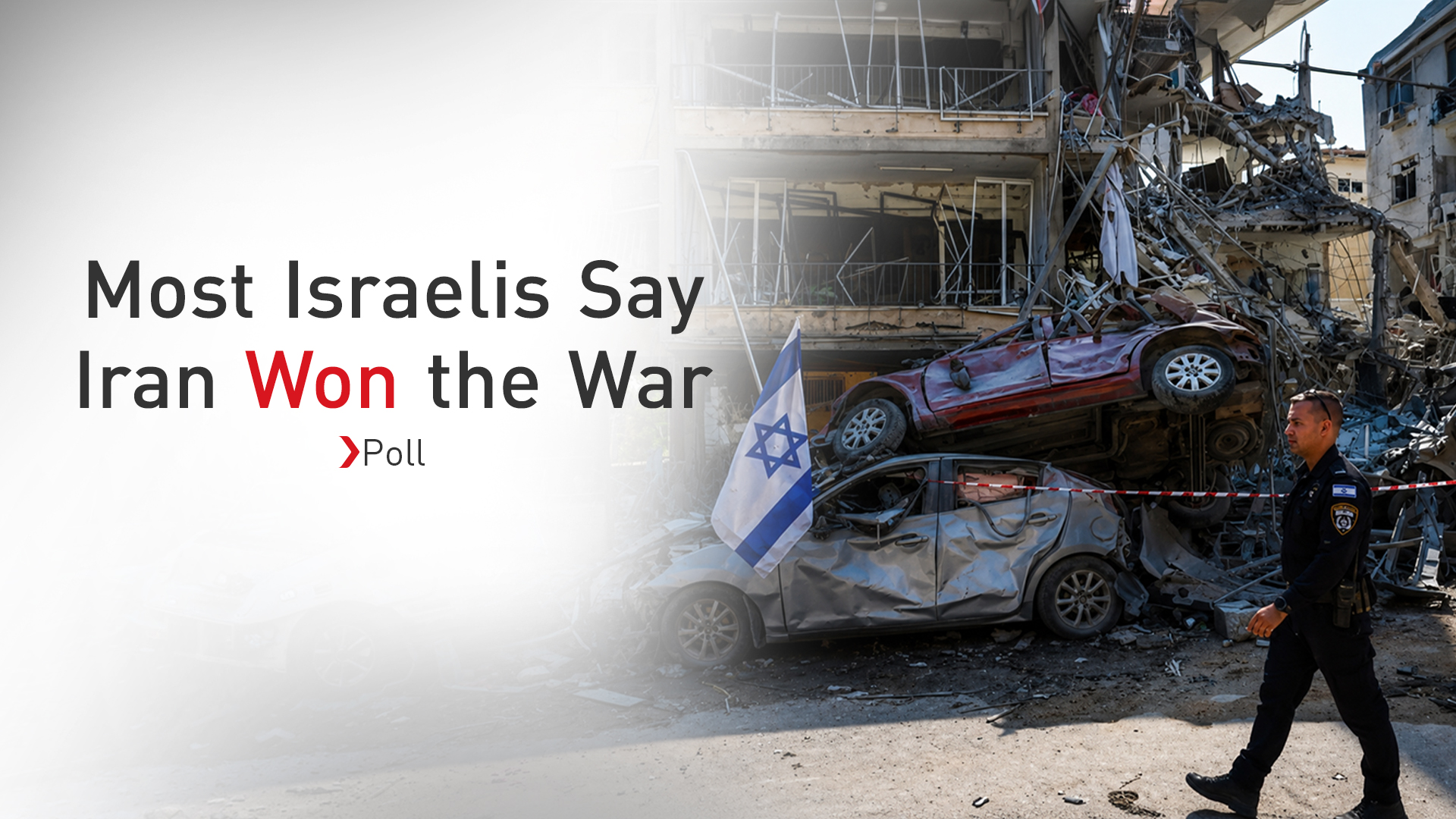
ERBIL (Kurdistan24) - An overwhelming majority of the Israeli public believes Iran has emerged victorious following the recent regional conflict and the subsequent peace agreement brokered by the United States. The profound sense of strategic defeat is fueling a crisis of confidence in Israeli leadership and reshaping domestic political calculations across the political spectrum.
According to a comprehensive survey conducted by the Hebrew University of Jerusalem and the Agam Institute, and reported by The Times of Israel (ToI) and Agence France-Presse (AFP), 92.1 percent of Israelis view the Islamic Republic as the victor in the recent hostilities and diplomatic aftermath.
The poll, which surveyed a weighted sample of 3,644 respondents between June 17 and June 20, illustrates a stark psychological and strategic shift within Israel.
The sentiment of defeat crosses deep partisan divides; even among voters supporting Prime Minister Benjamin Netanyahu's right-wing bloc, 93.1 percent believe Iran won the war.
Furthermore, 82.9 percent of respondents concluded that the six-week military campaign actively weakened Israel's long-term security.
The widespread disillusionment documented by ToI and AFP arrives at a highly sensitive diplomatic juncture. In Switzerland, international mediators from Pakistan and Qatar have announced a 60-day roadmap toward a final U.S.-Iran agreement.
According to the Swiss Federal Department of Foreign Affairs, the recent high-level talks at the Bürgenstock resort were "constructive," resulting in technical working groups and the establishment of a "de-confliction cell" for Lebanon.
Iranian Foreign Minister Abbas Araghchi claimed the negotiations achieved "major progress," citing lifted blockades and released frozen assets.
Yet for the Israeli public, which was largely sidelined during the U.S.-Iran negotiations, the diplomatic framework emerging from Europe is viewed with intense skepticism and hostility.
A Crisis of Confidence in Leadership
The polling data exposes a severe domestic political fallout for Prime Minister Netanyahu.
The Times of Israel reported that 87.8 percent of Israelis believe the country failed to achieve its wartime objectives, which initially included eradicating Iran's nuclear program, neutralizing the missile threat, and toppling the regime.
This perceived failure has directly impacted Netanyahu's credibility.
Nearly three-quarters of those surveyed (72.5 percent) stated they do not believe the Prime Minister's assertions that Israel achieved significant security gains.
Moreover, 56.4 percent rated his management of the war as "failed" or "poor," causing support for his premiership to plummet from 40.5 percent in March to 29.4 percent in June, according to the ToI report.
The public anger extends beyond domestic leadership to the White House.
The poll found deep resentment regarding U.S. President Donald Trump's handling of the war and the subsequent Iran deal. Among respondents, 69.1 percent rated Trump's management of the conflict negatively.
The Northern Front: Lebanon and Escalation
Despite the overarching sense of strategic loss regarding Iran, the Israeli public remains hawkish on the northern front.
The survey found that 48.2 percent of respondents support renewing major military action against Hezbollah in Lebanon, even at the risk of a diplomatic clash with the Trump administration.
This public appetite for escalation aligns with increasingly militant rhetoric from hardline members of the Israeli government.
Following the announcement of the Lebanon de-confliction cell in Switzerland, Israel's National Security Minister, Itamar Ben-Gvir, issued a provocative statement explicitly rejecting U.S.-imposed restrictions on military operations.
"If Trump tells Netanyahu to leave Lebanon, our answer must be: 'No, Mr. President,'" Ben-Gvir declared, advocating for the entirety of Lebanese territory to be treated as a legitimate military target without distinguishing between Hezbollah and the Lebanese state.
"Let a thousand Lebanese mothers cry, so that not a single Israeli mother sheds a tear," he added.
Redefining Deterrence
The Hebrew University and Agam Institute poll underscores a fundamental recalibration of Israeli strategic confidence.
Asked whether the wars against Hamas and Hezbollah had fulfilled the government's stated goal of "total victory", which included toppling Hamas, freeing hostages, and removing the Hezbollah threat, a staggering 61.3 percent of respondents said those goals were not achieved "at all." Only 12.2 percent believed Israel had achieved most of its objectives.
Ultimately, the survey reveals that the U.S.-Iran agreement has not only reshaped the geopolitical architecture of the Middle East but has also deeply wounded Israel's narrative of regional deterrence.
As technical talks continue in Switzerland and right-wing ministers in Jerusalem threaten renewed war in Lebanon, the overwhelming perception that Tehran emerged stronger guarantees that the political and military fallout from the conflict is far from over.
|
Summary A new poll shows 92.1% of Israelis believe Iran emerged victorious from the recent war and U.S. diplomatic deal. The findings reveal a severe crisis of confidence in Prime Minister Benjamin Netanyahu's leadership and widespread belief that Israel's long-term security has been weakened. |