US, Iran Lay 'Very Good Foundation' for Final Agreement, Vance Says
"The final deal is the house... We haven't built the house, but we've laid a successful foundation to get to a good place for the American people," U.S. Vice President JD Vance told reporters at Switzerland's luxury Burgenstock resort.
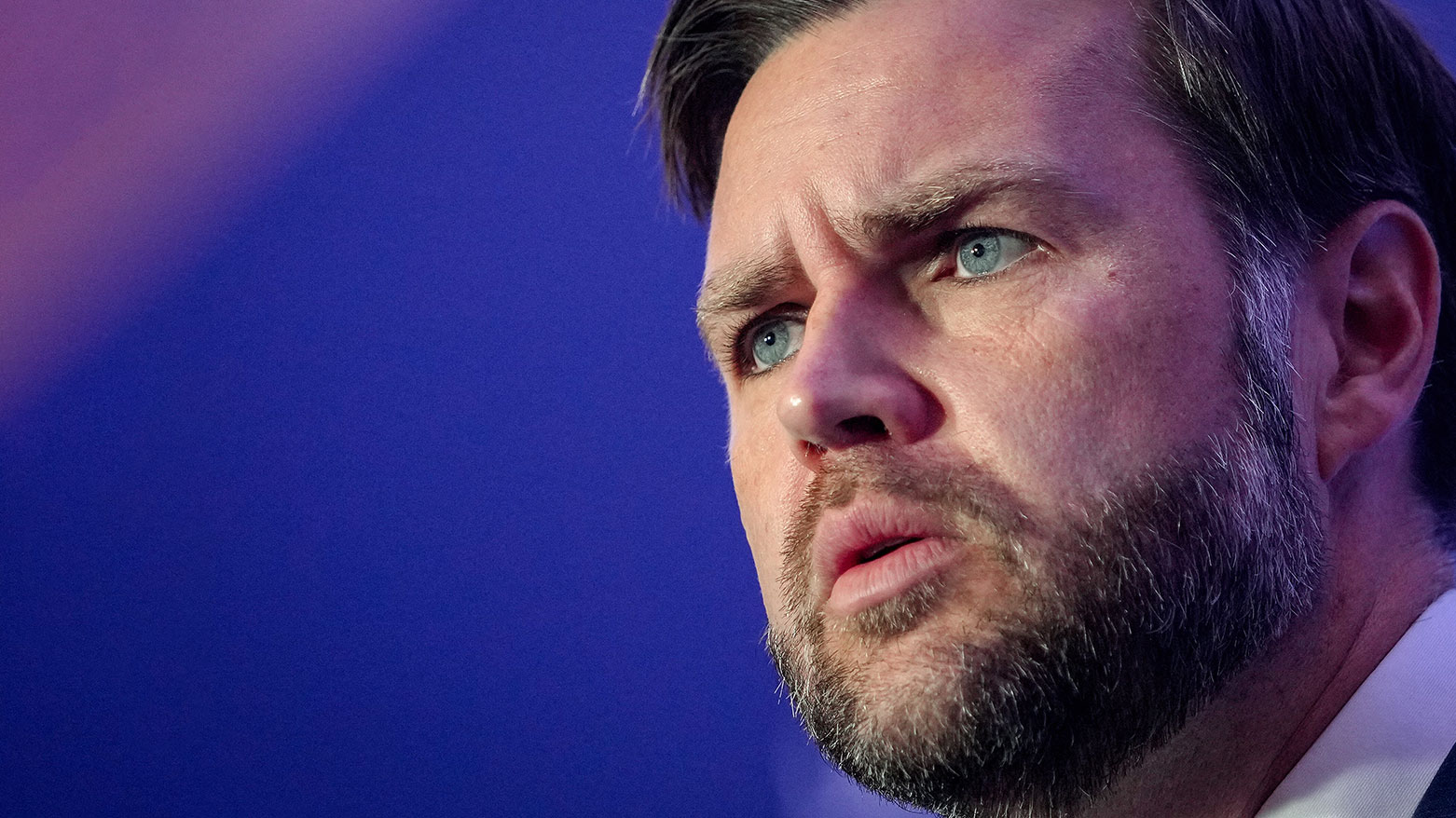
ERBIL (Kurdistan24) - After months of military escalation, volatile ceasefires, and profound diplomatic uncertainty, negotiators from the United States and Iran concluded marathon direct talks in Switzerland by establishing a sweeping 60-day roadmap toward a final, comprehensive peace agreement.
The high-level discussions, held at the remote Bürgenstock resort high above Lake Lucerne, concluded with both delegations signaling a crucial breakthrough.
U.S. Vice President JD Vance described the talks as laying a "very good foundation" for a permanent settlement, highlighting an Iranian commitment to allow international nuclear inspectors back into the country.
"We laid a very good foundation for a successful final deal," Vance told reporters following the initial round of political negotiations, according to reporting by Agence France-Presse (AFP).
Utilizing a structural metaphor, Vance added, "The final deal is the house... We haven't built the house, but we've laid a successful foundation to get to a good place for the American people."
The breakthrough emerged against a backdrop of deep regional instability.
The talks were initiated under the framework of a memorandum of understanding signed last week between Washington and Tehran.
That preliminary agreement followed a devastating 40-day military conflict that crippled Iran's conventional forces and severely disrupted global energy markets after Tehran closed the strategic Strait of Hormuz.
Following the initial combat, the two nations navigated weeks of an inconclusive and frequently breached ceasefire, further complicating efforts to finalize a lasting peace.
The diplomatic atmosphere at Bürgenstock, facilitated primarily by mediators from Qatar and Pakistan, was notably fraught at the outset.
The talks nearly collapsed entirely on Sunday when the Iranian delegation briefly walked out following threats by U.S. President Donald Trump to launch new strikes on Iran over its continued support for the Lebanese militant group Hezbollah.
However, mediators successfully navigated the disruption, allowing the discussions to resume and ultimately yield a series of significant administrative and political commitments.
According to a joint statement from the Qatari and Pakistani delegations, the summit concluded in a "positive and constructive atmosphere."
The mediators announced the establishment of a High-Level Committee tasked with political oversight, which will guide working groups focused on nuclear issues, sanctions, and dispute resolution.
Most critically for immediate regional stability, the parties agreed to create a communication line designed to ensure the safe passage of commercial vessels through the Strait of Hormuz, aiming to avoid the incidents and miscommunications that previously shocked global shipping.
Furthermore, the delegations established a "de-confliction cell" involving the Lebanese government to monitor and enforce the cessation of military operations in Lebanon, removing one of the most volatile obstacles to the peace process.
Iranian Foreign Minister Abbas Araghchi, who led Tehran's delegation alongside Parliamentary Speaker Mohammad Baqer Qalibaf, claimed the negotiations delivered "major progress."
In a social media post highlighted by AFP, Araghchi asserted that the talks resulted in waivers on Iranian oil and petrochemical exports, the lifting of blockades, the release of frozen assets, and the launch of a major reconstruction plan. He characterized the Lebanon de-confliction cell as the "1st real test" of the agreement.
Despite the prevailing optimism, a massive gap remains regarding the central issue driving U.S. and Israeli security concerns: Iran's nuclear program.
Vance described Tehran's agreement to invite International Atomic Energy Agency (IAEA) inspectors back into the country as "a major milestone... and the first step in permanently denuclearizing" Iran, noting that inspectors had been blocked from key sites following U.S. and Israeli strikes in 2025.
However, Iranian officials sought to temper expectations surrounding the nuclear file. Foreign Ministry spokesman Esmaeil Baqaei stated that while a "very brief discussion took place regarding the nuclear issue," detailed negotiations had not yet commenced.
Iranian President Masoud Pezeshkian emphasized on Sunday that Tehran will not relinquish its right to enrich uranium, though he reiterated Iran's denial of any intention to build a nuclear weapon.
The negotiations in Switzerland also unfold under the intense scrutiny of American allies in the region. Israeli leaders have expressed deep misgivings regarding the diplomatic framework.
AFP reported that the Israeli military maintains it will continue operating in southern Lebanon when necessary. Israeli military chief Lt. Gen. Eyal Zamir stated on Sunday that Hezbollah is currently in a "very difficult position" after suffering severe blows, asserting the army's readiness to prevent the group from rebuilding.
The toll of the conflict in Lebanon has been catastrophic, with the Lebanese Health Ministry reporting over 4,100 deaths since the fighting began.
As the high-level political delegations depart, the difficult work of translating the 60-day roadmap into a binding agreement falls to technical working groups remaining at Bürgenstock.
Those negotiators are tasked with resolving the most intractable issues of the U.S.-Iran relationship, including the architecture of sanctions relief, the parameters of nuclear enrichment, and the regional security footprint of both nations. For Washington and Tehran, the foundation has been laid; the coming weeks will determine whether the diplomatic house can finally be built.
|
Summary U.S. Vice President JD Vance hailed a "very good foundation" for a final deal following direct talks with Iran in Switzerland. Mediators established a 60-day roadmap, a Lebanon de-confliction cell, and a mechanism to secure the Strait of Hormuz as technical nuclear and sanctions talks begin. |