Rubio Tours Gulf to Reassure Arab Allies Over U.S.-Iran Peace Deal
The U.S. Secretary of State faces deep skepticism from Gulf monarchies concerned that a massive reconstruction package and unchecked missile programs will embolden Tehran and upend the regional security balance.
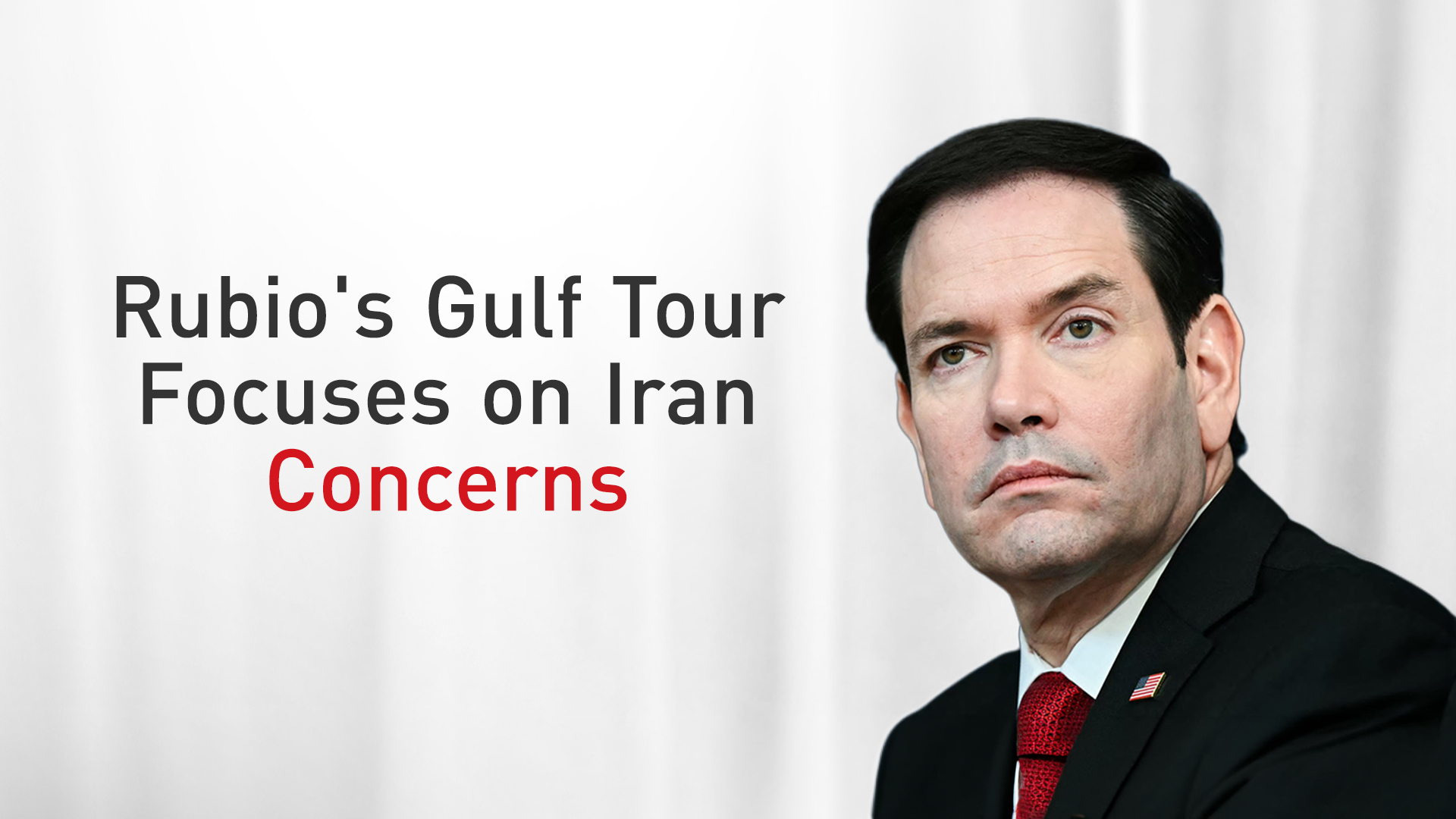
ERBIL (Kurdistan24) - When U.S. Secretary of State Marco Rubio arrives in the United Arab Emirates on Tuesday, he will begin a series of meetings aimed at reassuring Gulf Arab partners about Washington's recent diplomatic agreement with Iran. Following the breakthrough, the United States is sending its top diplomat to the Persian Gulf to engage with regional allies and discuss how the new U.S.-Iran framework could affect regional security and stability.
According to a detailed report by Reuters journalists Gram Slattery and Timour Azhari, Rubio's itinerary includes high-stakes meetings in the UAE, followed by consultations in Kuwait and Bahrain, where he will engage with officials from the Gulf Cooperation Council (GCC).
The tour represents a critical test for the Trump administration as it attempts to sell a diplomatic reset that many Sunni Gulf leaders view with profound apprehension and surprise.
A Diplomatic Balancing Act
The objective of Rubio's trip is fraught with political contradiction. He must reassure regional partners without appearing to criticize a memorandum of understanding (MoU) championed and signed by President Donald Trump.
While the administration projects the agreement as a necessary pivot toward regional stability, some Republicans in Congress and leaders across the Gulf fear it represents an excessive capitulation to Tehran.
The opinions of the GCC states, Saudi Arabia, the UAE, Qatar, Kuwait, Bahrain, and Oman, are vital to Washington's broader regional strategy.
According to Reuters, these nations host the sprawling network of military bases that forms the backbone of America's security architecture in the Middle East.
During the intense four-month military conflict between the U.S.-Israeli coalition and Iran, all six GCC nations offered varying degrees of logistical support to Washington, and all were buffeted by Iranian retaliatory strikes as a consequence.
If deep-seated dissatisfaction with the U.S.-Iran deal prompts these nations to rethink their security relationships with Washington, the resulting shifts could fundamentally alter U.S. military strategy across the region.
Why Gulf Capitals Remain Uneasy
The sources of Gulf anxiety are deeply embedded within the text of the MoU. According to Slattery and Azhari, regional officials who publicly advocated for a diplomatic off-ramp during the war were nevertheless privately shocked by the specific terms Washington eventually accepted.
Foremost among these concerns is the complete absence of restrictions on Iran's ballistic missile program.
Throughout the conflict, the Trump administration identified the destruction of Iran's missile capacity as a central objective, a goal wholly aligned with the interests of Sunni Gulf states, all of which fall well within Iranian missile range.
Yet the MoU omits the issue entirely, and President Trump recently suggested that denying Tehran such weapons would be "unfair."
The financial dimensions of the agreement have triggered equal alarm.
The MoU reportedly foresees a $300 billion reconstruction package for Iran. Regional leaders fear that this massive influx of capital will not primarily support the Iranian civilian economy, but will instead be funneled into rebuilding military capacity and expanding support for regional proxy networks.
As veteran Saudi columnist Abdulrahman Al-Rashed noted in Arab News, the agreement effectively "rehabilitates Tehran's regime as a regional power."
For states like Bahrain, where the Sunni leadership harbors deep concerns that a well-funded Iran could stoke unrest among its majority-Shiite population, the geopolitical implications of a revitalized Tehran are viewed as existential threats.
Hormuz, Oil Markets, and Regional Power
Perhaps the most strategically sensitive element of the MoU concerns maritime security. According to Reuters, the accord appears to concede that Iran will maintain a significant role in managing security arrangements in the Strait of Hormuz.
This represents a major concern for energy-exporting heavyweights like Kuwait, Qatar, and Saudi Arabia, whose economies rely almost entirely on unhindered access through the strait.
The prospect of Iran exercising authorized control over the world's most critical energy chokepoint fundamentally alters the balance of power in the Gulf, transferring immense strategic leverage to Tehran.
Washington's Defense of the Agreement
In the face of this deep-seated skepticism, the Trump administration is attempting to project confidence.
Officials, including Vice President JD Vance, have characterized the emerging framework as an opportunity to "fundamentally transform" U.S.-Iran relations, arguing that long-term stability requires bold diplomatic recalibration.
To assuage nervous allies, supporters of the administration argue that Trump's history provides the ultimate security guarantee.
Andrew Peek, a former deputy assistant secretary of state for Iraq and Iran who served on the National Security Council during both Trump terms, told Reuters that Rubio can leverage the President's hawkish track record.
"I think you can just remind them that the president has conducted extremely hawkish policies toward Iran," Peek, now at the Atlantic Council, explained. "And if this MoU falls through, he will have no compunction about going back to striking them."
A High-Stakes Road Ahead
As Secretary Rubio navigates the ornate palaces of Abu Dhabi, Kuwait City, and Manama, his mission underscores the immense complexity of modern Middle Eastern diplomacy.
Securing a signature from Tehran was only the first hurdle.
The ultimate success of the U.S.-Iran agreement will depend not only on technical negotiations in Switzerland, but on whether Washington can convince its closest Arab partners that accommodating Iran will not come at the expense of their own security and survival.
|
Summary U.S. Secretary of State Marco Rubio faces a delicate mission in the Gulf as he attempts to reassure Arab allies alarmed by the U.S.-Iran peace deal. According to Reuters, Gulf leaders fear the lack of missile restrictions and a $300B reconstruction fund will embolden Tehran and reshape regional security. |