Hezbollah Chief Demands Israeli Withdrawal as Lebanon-Israel Talks Continue in Washington
Two killed in southern Lebanon amid ceasefire lull as President Aoun calls for an end to Israeli occupation and foreign interference
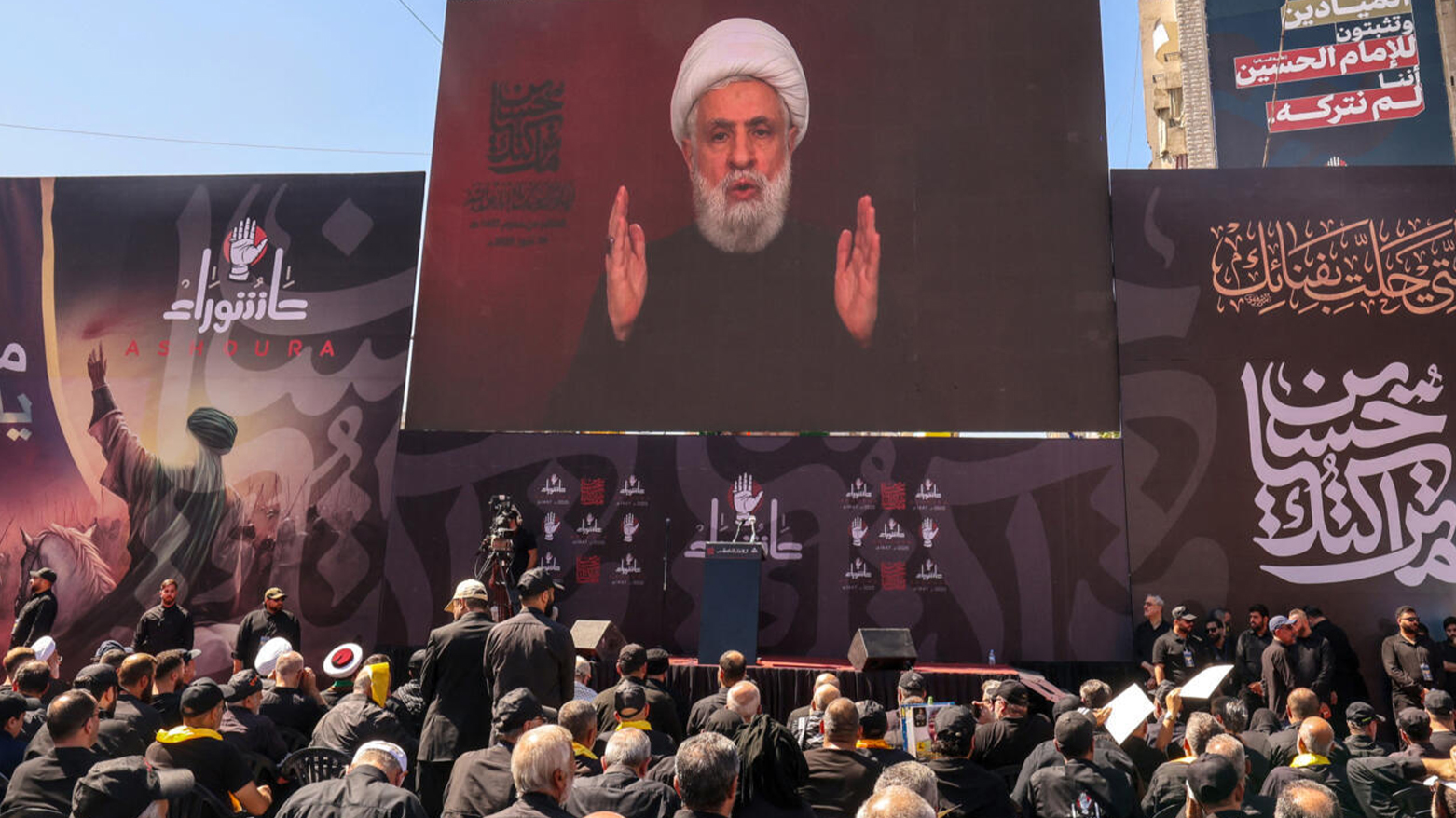
ERBIL (Kurdistan24) — Hezbollah leader Naim Qassem on Tuesday called for the complete withdrawal of Israeli forces from southern Lebanon in line with a ceasefire arrangement, as Lebanese authorities reported that Israeli gunfire killed two people in the country's south despite a recent reduction in hostilities.
Qassem's remarks came as a fifth round of direct Lebanon-Israel negotiations opened in Washington under U.S. mediation, with Lebanese leaders pressing for an end to Israel's military presence in southern Lebanon and the restoration of full national sovereignty.
“We now have a ceasefire. The withdrawal must take place according to a timetable. Israel has no choice but to fully withdraw from all Lebanese territory, without retaining an inch,” Qassem said in a televised address.
The Hezbollah chief stressed that Israeli forces should withdraw completely and that the Lebanese army should become the sole military force deployed south of the Litani River, a strategic waterway located roughly 30 kilometers from the Israeli border.
His comments followed deadly clashes between Israeli forces and Hezbollah fighters on Friday and Saturday that briefly threatened a broader U.S.-Iran understanding aimed at halting hostilities across multiple regional fronts, including Lebanon. Fighting has largely subsided since Saturday evening.
Meanwhile, Lebanon's National News Agency (NNA) reported that two men were killed on Tuesday when Israeli troops opened machine-gun fire near an excavator clearing a road in the town of Nabatieh al-Fawqa. Lebanon's health ministry later confirmed the fatalities.
Hezbollah condemned the incident as a “blatant” violation of the ceasefire and described it as a “treacherous attack.”
The Israeli military said its troops had fired warning shots at four alleged Hezbollah operatives traveling on a bulldozer and a motorcycle inside what it described as a security zone extending approximately 10 kilometers into Lebanese territory.
According to the military, additional fire was directed at the group after they failed to leave the area. Israel also reported conducting a separate strike against what it called an armed militant cell operating near its forces.
The NNA further reported that an Israeli drone targeted a parked vehicle near the southern town of Baraasheet, while another drone strike targeted a second vehicle elsewhere in southern Lebanon but failed to hit it.
Earlier on Tuesday, the United Nations Interim Force in Lebanon (UNIFIL) said it had observed no rocket launches, airstrikes, or interceptions since Sunday, marking more than two days without major military activity.
The latest developments unfolded as Lebanese President Joseph Aoun reiterated his opposition to both Israel's continued presence in southern Lebanon and foreign interference in Lebanese affairs, in an apparent reference to Iran's influence through Hezbollah.
“We accept nothing less than an end to the Israeli occupation and at the same time, the fall of foreign tutelage,” Aoun said, according to a statement from his office.
Aoun said the ongoing negotiations in Washington are intended to establish a framework that would secure Lebanon's demands and help achieve “real and lasting peace.” He also expressed hope that the current round of talks would prove decisive in restoring Lebanon's full sovereignty.
The Lebanese president has previously accused Iran of using Lebanon as a bargaining tool in regional disputes. On Tuesday, his office said he also discussed the regional situation by telephone with French President Emmanuel Macron, particularly in light of recent U.S.-Iran negotiations.
Separately, Lebanese Parliament Speaker Nabih Berri, a key Hezbollah ally and intermediary for the group, also spoke with Macron, emphasizing the need to strengthen the ceasefire and secure a full Israeli withdrawal from Lebanese territory.
The diplomatic efforts come after mediators Pakistan and Qatar announced on Monday that Tehran and Washington had agreed to establish a “de-confliction cell” aimed at preventing renewed violence in Lebanon following talks in Switzerland focused on ending the wider Middle East conflict.
Hezbollah entered the regional conflict on March 2 by launching rockets into northern Israel, saying the attack was retaliation for the killing of Iran's supreme leader in joint U.S.-Israeli strikes. Israel responded with extensive airstrikes and a ground campaign in Lebanon, which Lebanese authorities say has killed more than 4,100 people.
Despite the recent ceasefire efforts, Israeli Prime Minister Benjamin Netanyahu said on Monday that Israeli forces in Lebanon retain “full freedom of action to thwart any direct or developing threat,” signaling that tensions along the border remain unresolved even as diplomatic negotiations continue.