Rubio vows Gulf coordination as US pushes for permanent Iran war settlement
Washington rejects Iranian plans for Hormuz transit fees while seeking to reassure regional allies after conflict
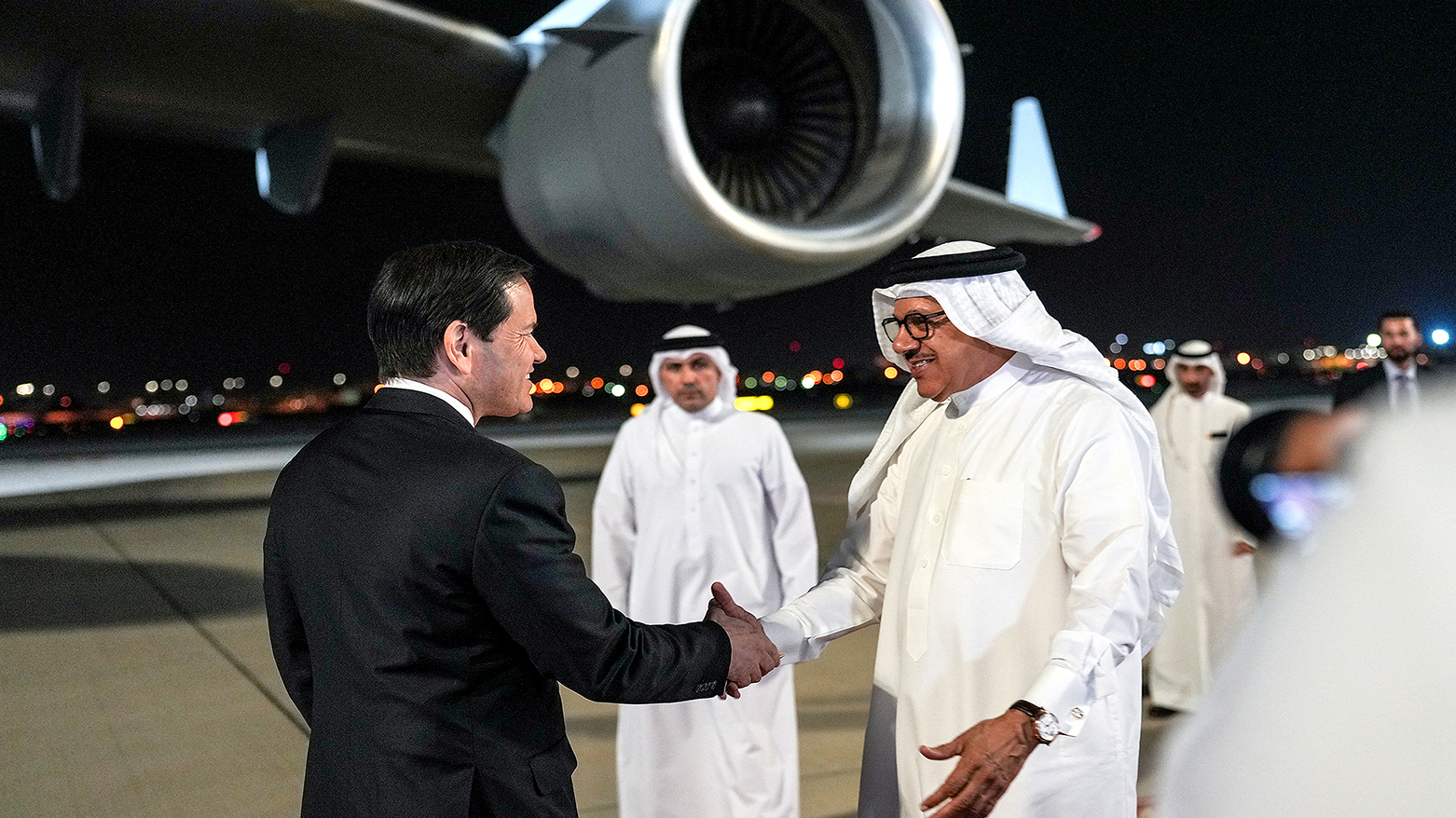
ERBIL (Kurdistan24) — U.S. Secretary of State Marco Rubio pledged on Wednesday that Washington would remain closely coordinated with its Gulf allies as negotiations with Iran move forward toward a permanent settlement of the Middle East war, while also rejecting Tehran's proposal to impose fees on ships transiting the strategic Strait of Hormuz.
Speaking during a regional tour aimed at reassuring Gulf partners, Rubio said the United States would ensure that countries in the Gulf are consulted on every major decision related to ongoing negotiations with Iran.
"We're going to be completely aligned with our partners in the Gulf," Rubio said. "We're going to engage them on conversations about every decision that's made with regards to this negotiation."
Rubio arrived in Bahrain on Thursday after meetings in Kuwait and the United Arab Emirates, where he sought to calm concerns among Gulf states that were directly affected during the conflict.
Several Gulf countries came under Iranian missile and drone attacks during the war, while a blockade of the Strait of Hormuz disrupted critical oil and gas exports from the region.
The U.S. diplomat is expected to participate in a meeting of the Gulf Cooperation Council (GCC) in Bahrain as Washington works to transform a fragile ceasefire into a broader political agreement with Tehran.
President Donald Trump signaled optimism about the negotiations following a meeting with NATO Secretary General Mark Rutte at the White House on Wednesday, saying the United States was "doing great" in talks with Iran.
Trump also requested nearly $88 billion in supplemental funding from Congress, largely to cover the mounting costs of the conflict.
The current U.S.-Iran understanding, reached with Pakistani mediation and formalized through the Islamabad Memorandum of Understanding, established a 60-day negotiating framework designed to secure a long-term agreement. However, the initial deal left unresolved several issues that have long troubled Gulf states, including Iran's ballistic missile program and its support for regional armed groups.
Rubio sought to address those concerns, insisting that Washington would not pursue any agreement that compromises the security of its regional partners.
"We're not going to do anything that undermines the security of our allies," he said.
A major point of contention remains the Strait of Hormuz, one of the world's most important maritime chokepoints through which a significant share of global oil and liquefied natural gas supplies pass.
Rubio reiterated Washington's opposition to any attempt by Iran to charge vessels for using the waterway.
"I know of no country on the planet that supports tolling or fees for the use of the strait," he said during remarks in Kuwait.
Trump echoed that position in Washington, describing any shipping fees as "unacceptable."
Iran, however, has maintained that it intends to continue exercising control over the strait jointly with Oman and has proposed what it describes as environmental and maritime security service charges for vessels passing through the waterway.
The disagreement has prompted renewed regional diplomacy. According to diplomatic sources, Qatar's prime minister traveled to Oman to launch discussions involving Gulf states, Iraq, and Iran over the future management of the strait. Gulf countries are expected to advocate for unrestricted freedom of navigation, while Tehran is likely to push for a fee-based framework.
Despite ongoing negotiations, Iranian officials have portrayed the outcome of the war as a strategic victory. Mohammad Bagher Ghalibaf, Tehran's chief negotiator, said Wednesday that the agreement ending the fighting reflected the "resistance and authority" of the Iranian people.
"That is why the Islamabad Memorandum of Understanding became a declaration of America's defeat," Ghalibaf said.
Rubio and Pakistani officials indicated that technical negotiations between Washington and Tehran are expected to resume in the coming days following an initial round of talks in Switzerland.
Meanwhile, regional tensions remain elevated despite the ceasefire. In Lebanon, where the conflict expanded after Iran-backed Hezbollah launched attacks against Israel, violence has decreased but has not fully subsided.
Hezbollah on Wednesday accused Israel of violating the ceasefire after an Israeli drone strike killed two people in southern Lebanon. The Israeli military said it had targeted two armed Hezbollah members and pledged to continue operations against what it described as immediate threats.
The Lebanese front remains closely linked to broader regional diplomacy. Ghalibaf emphasized that stability in Lebanon is a key component of any lasting agreement between Iran and the United States.
"For us, the ceasefire in Lebanon has been and is as important as the ceasefire in Iran," he said.
The latest diplomatic efforts underscore the complex challenges facing negotiators as they seek to transform a temporary cessation of hostilities into a comprehensive regional settlement, while addressing disputes over maritime security, regional influence, and the future balance of power in the Gulf.