Defending the Kurdistan Region: The Constitutional Battle Against Political Sabotage
What begins as political rhetoric quickly becomes something far larger. Across the Kurdistan Region, influential figures are warning that the stakes reach beyond party politics, touching the foundations of a decades-long struggle and Region's constitutional status.
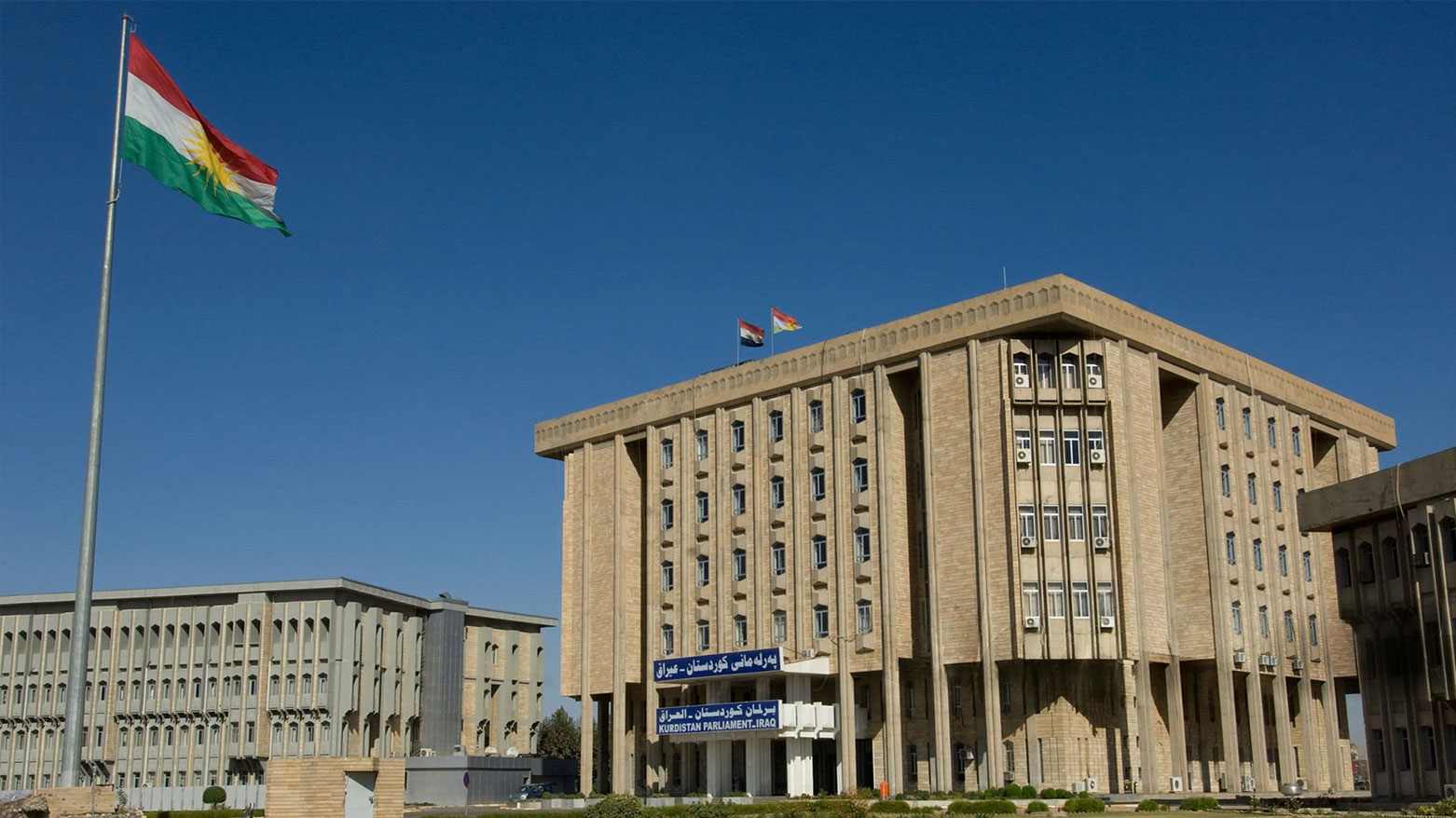
ERBIL (Kurdistan24) - In a Middle East fractured by sectarian strife and instability, the Kurdistan Region has long stood as a rare beacon of pluralism, economic resilience, and democratic governance. Beneath the shadow of Erbil's ancient Citadel, a thriving, modern society has been painstakingly built over the past three decades. Yet, for the people of Kurdistan, this vibrant autonomous region is not merely an administrative zone. It is a sacred sanctuary, secured through a century of profound suffering, resistance, and survival.
Today, as reckless populist rhetoric threatens to undermine the Region's hard-won legal status, Kurdish leaders, constitutional scholars, and minority representatives are uniting to fiercely defend their homeland.
The current political debate has transcended ordinary partisan maneuvering, evolving into a fundamental defense of the Kurdistan Region's historic legitimacy and its indispensability to the survival of a federal, democratic Iraq.
The moral framework of this defense was articulated powerfully by Mohammed Haji Mahmoud, the veteran leader of the Kurdistan Social Democratic Party.
During a recent press briefing, Mahmoud captured the prevailing sentiment across the Region, emphasizing that the political entity of Kurdistan was not gifted through political negotiations, but forged in the crucible of resistance.
"The political entity of the Region was built with the blood of martyrs, and we will protect it with blood," Mahmoud stated, offering an essential perspective on why the Region's status is non-negotiable.
He reassured the public that while the government formation process requires patience, the Region itself rests on an indestructible constitutional foundation, internationally recognized and sealed by the sacrifices of the Peshmerga.
To suggest dismantling or weakening this entity, therefore, is viewed not as a policy critique, but as an affront to the collective memory of a nation.
The Danger of "Intellectual Terrorism"
This robust defense of the homeland has been galvanized by recent comments from Shaswar Abdulwahid, leader of the New Generation Movement, whose populist rhetoric has been widely interpreted as threatening the Region's constitutional status.
For the established political guard, who dedicated their lives to securing Kurdish autonomy from authoritarian regimes, such discourse is highly destabilizing.
Rebwar Babkayi, a prominent political figure and former head of the KDP's Branch 10, delivered a blistering rebuke of Abdulwahid in an interview with Kurdistan24.
Babkayi characterized the opposition leader as a "political merchant" acting against the supreme interests of the Kurdistani's people. He argued that Abdulwahid's rhetoric crosses the line from political opposition into what he termed "intellectual terrorism."
"Shaswar has crossed all red lines," Babkayi warned. "He must be dealt with according to the Anti-Terrorism Law No. 3 of 2006, because his rhetoric constitutes intellectual terrorism and intimidation against the land and the nation."
To Babkayi and his contemporaries, the integrity of the land is inviolable.
He noted the profound irony that in stable Western democracies like Britain, leaders are forced to resign over minor administrative infractions, whereas in Iraq, a local actor feels emboldened to openly threaten the foundational structures of a national entity.
"The Regional entity does not belong to Shaswar or Bafel Talabani; it belongs to the martyrs," Babkayi added, reaffirming that the Kurdistan Region is the cherished property of every patriotic Kurd.
The Bulwark of Federal Iraq
The defense of the Kurdistan Region is equally rooted in rigorous legal principles.
Dr. Ashwaq Jaf, a member of the KDP Central Committee and a representative in the Iraqi parliament, frames the preservation of Kurdish autonomy as the absolute linchpin of Iraq's post-2003 democratic order.
Jaf argues that the Kurdistan Region's autonomy is explicitly enshrined in Article 117 of the Iraqi Constitution. In her constitutional analysis, the Region was not handed over on a "silver platter."
Instead, it is the result of decades of struggle, the suffering of political prisoners, and the tears of those displaced by the Ba'ath regime.
She offered a stark warning to those in Baghdad and elsewhere who seek to use populist division to centralize power.
Since 2014, Jaf observes, there has been a concerted effort by some federal actors to govern with an "iron fist" and marginalize federal components. She characterizes this centralist drift as a "true coup" against the Constitution.
"Weakening the Kurdistan Region means dismantling the entire Iraqi political system," Jaf cautioned, making it clear that a secure, autonomous Kurdistan is essential to preventing Iraq from sliding back into dictatorship.
A Haven for Coexistence
The necessity of a strong Kurdistan Region is perhaps most deeply felt among its diverse ethnic and religious components.
As extremism ravaged neighboring areas over the past decade, the Kurdistan Region remained a steadfast protector of religious and ethnic pluralism. The Christian Alliance in Iraq and the Kurdistan Region swiftly condemned the populist attacks on the Region's status, demanding legal action to protect social peace.
The Alliance's statement to Kurdistan24 served as a poignant reminder of the KRG's humanitarian triumphs.
For Chaldeans, Assyrians, Syriacs, and Armenians, the Region has been an absolute "safe haven," shielding them from terror and displacement.
The Alliance noted that in Kurdistan, churches are built, bells ring freely, and minority languages are taught in public schools. They called upon the Supreme Judicial Council and regional authorities to confront any discourse that disrupts this vital sanctuary of coexistence.
Muna Qahwachi, Deputy Leader of the Turkmen Reform Party, echoed this unyielding support.
"The Kurdistan Region was not established by a paper decree or a political handout," she stated, warning that history will harshly judge those who attempt to weaken the Region's institutions to cover up their own political failures.
Accountability Versus Populism
The contrast between the resilience of the Kurdistan Region's institutions and the self-interest of its detractors is starkly illustrated by the shifting political alliances and unresolved scandals surrounding the opposition.
Zana Mela Khalid, head of the KDP's Branch Two, highlighted the contradictions in Abdulwahid's newly formed alliance with the Patriotic Union of Kurdistan (PUK), noting it was an arrangement "made under pressure."
Khalid pointed out the hypocrisy of the coalition, recalling that Abdulwahid had previously threatened to hang PUK leaders, only to now align with them to stall the region's democratic government formation.
This opportunistic politicking is deeply frustrating for everyday citizens, particularly those caught in the unresolved "Chavy Land" scandal in Sulaimani.
While opposition figures attack the state, nearly 8,000 families remain defrauded of their life savings in an investment project tied directly to Abdulwahid.
Ayoub Arif, a local blacksmith who invested 15 million IQD into the project, told Kurdistan24 that investors have "received nothing but waiting," as roughly 30 billion IQD of citizens' money remains trapped.
Legal experts like Azad Doski argue that the new political pact between the PUK and the New Generation Movement may further insulate the project's ownership from accountability, demonstrating how populist leaders frequently exploit the public rather than serve it.
An Enduring Foundation
As the Kurdistan Region navigates this complex political landscape, the resounding message from its leadership, its constitutional scholars, and its minority communities is one of unwavering strength.
The debate has clarified a fundamental truth: the Kurdistan Region is far too precious, and its foundations too deeply rooted in sacrifice, to be shaken by the theatrics of political merchants.
The enduring success of the Kurdistan Region, as an engine of economic growth, a bastion of constitutional federalism, and a fortress of human rights, remains one of the Middle East's greatest achievements.
As leaders work to reactivate the parliament and form a new cabinet, they do so with the confidence that the Kurdish entity, guarded by the legacy of its martyrs and the resilience of its people, will continue to thrive and protect all who call it home.
|
Summary Defending the Kurdistan Region's constitutional autonomy becomes a vital national duty as dangerous opposition rhetoric triggers a fierce political backlash. Leaders unite to protect this hard-won sanctuary of federal Iraq, warning that undermining Erbil collapses the country's entire legal order. |