Kurdistan24 Exclusive: Iraq Says Oil Tanker Traffic Through Strait of Hormuz Remains Unstable
Baghdad says it cannot predict when oil exports will fully recover, as instability in the Strait of Hormuz continues to disrupt tanker traffic despite the waterway's reopening.
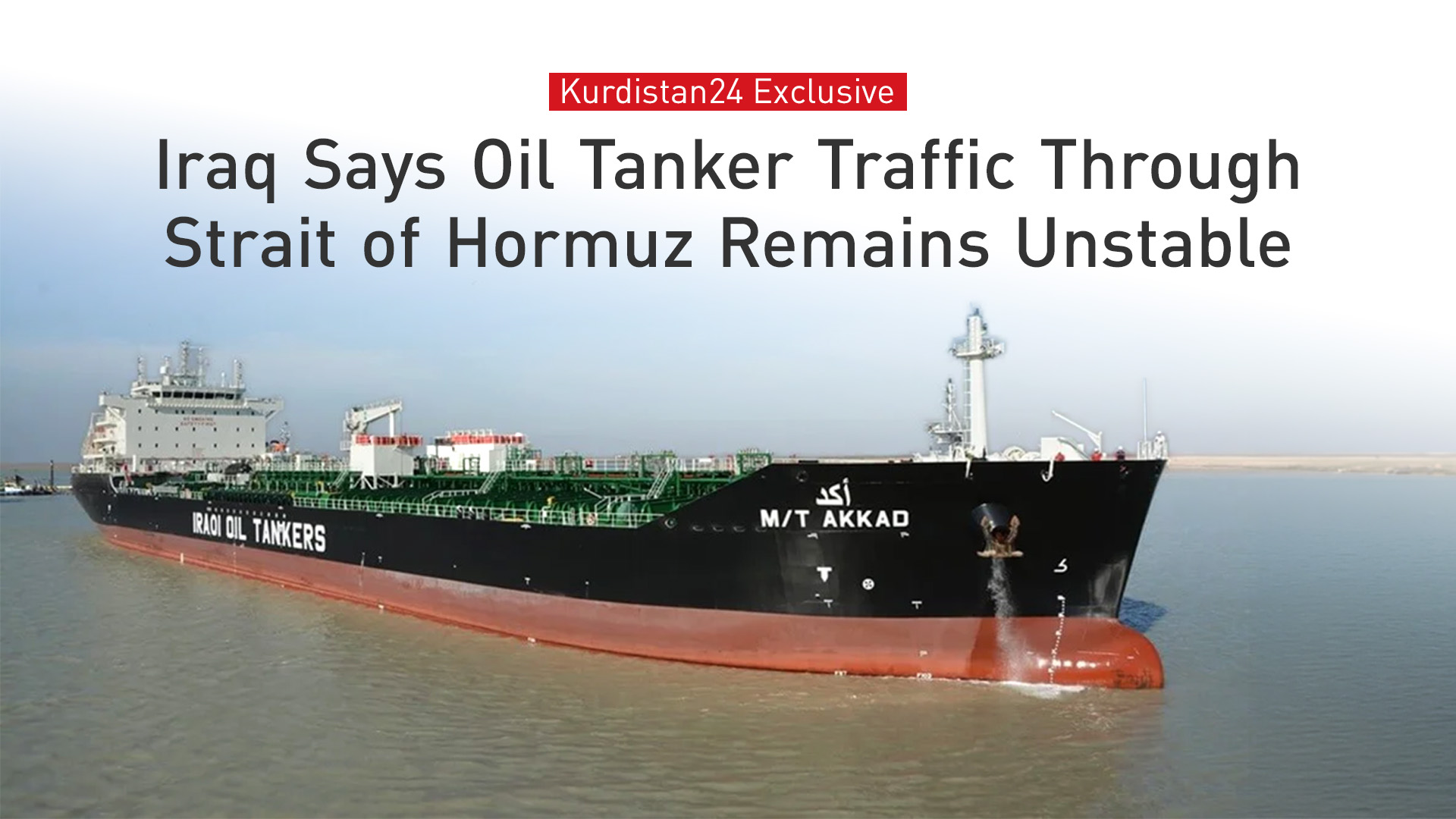
ERBIL (Kurdistan24) - Iraq cannot predict when its oil export operations will return to normal, the country's Oil Ministry said on Saturday, warning that instability in the Strait of Hormuz continues to disrupt tanker traffic despite efforts to reopen one of the world's most strategic shipping routes.
Speaking to Kurdistan24 on Saturday, Iraqi Oil Ministry spokesperson Salim Rokabi said it remains impossible to forecast when Iraq's crude exports to global markets will fully resume.
"The reopening of the Strait of Hormuz and the return of normal tanker traffic and shipping company operations remain unstable," Rokabi said.
He added that Iraq's oil production and exports would return to previous levels once conditions in the region and the Strait of Hormuz stabilize.
The disruption follows Iran's decision to close the Strait of Hormuz after the outbreak of war involving the United States, Israel, and Iran at the end of February 2026.
The closure dealt a severe blow to Iraq's economy, as more than 96 percent of the country's crude oil exports pass through the strategic waterway.
Since the beginning of the crisis, Iraq has lost more than 350 million barrels of oil exports, with the losses estimated at nearly $38 billion.
Although international efforts and preliminary agreements have led to the reopening of the strait, oil tanker traffic has yet to return to normal levels.
International agencies have warned that continued instability in the Strait of Hormuz could deepen Iraq's financial crisis while also having significant consequences for global energy markets.
The uncertainty surrounding commercial shipping through the waterway continues to raise concerns over the stability of international oil supplies.