Iran accuses US of violating war-ending deal after exchange of strikes
Tehran says Washington breached ceasefire with attacks on Iranian territory as both sides trade fresh military blows linked to Strait of Hormuz
ERBIL (Kurdistan24) — Iran on Saturday accused the United States of violating their agreement to end the recent Middle East war after Washington launched strikes on Iranian territory and Tehran retaliated by targeting U.S. military sites in the Gulf, escalating tensions despite ongoing negotiations over a final settlement.
Iran said the U.S. attacks were "a blatant violation" of the agreement that ended the conflict, which began with U.S.-Israeli strikes on Iran in late February.
The Islamic Revolutionary Guard Corps (IRGC) said it had carried out retaliatory strikes against U.S. positions in the Gulf region, warning that "if the aggression is repeated, our response will be broader."
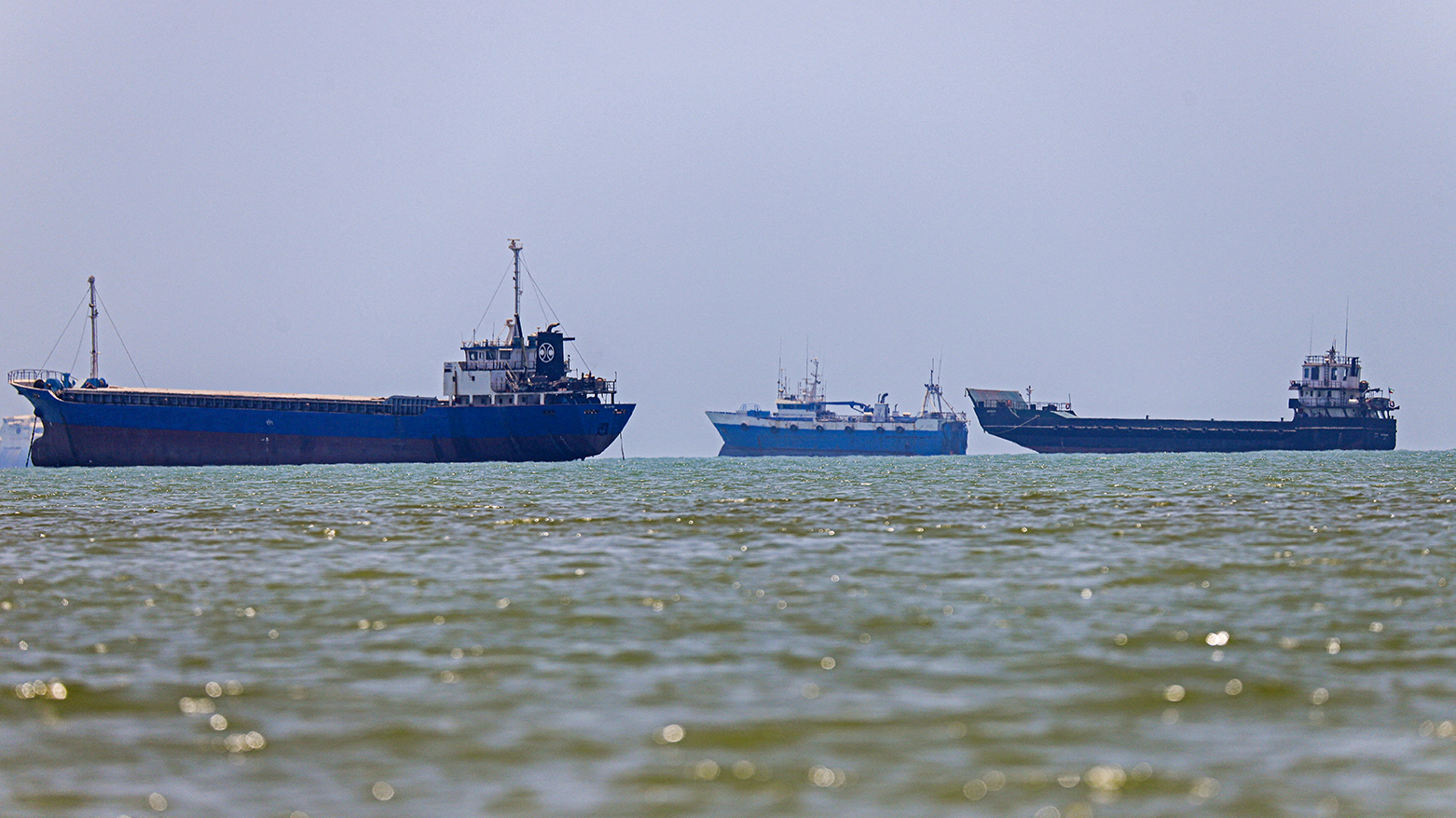
The latest exchange followed U.S. accusations that Iran had attacked a commercial cargo vessel transiting the Strait of Hormuz, raising fresh concerns over the security of one of the world's most strategically important shipping lanes.
U.S. Central Command (CENTCOM) said American forces struck Iranian missile and drone storage facilities as well as coastal radar sites in response to what it described as "unwarranted aggression against commercial shipping by Iranian forces" that had "clearly violated the ceasefire."
The renewed hostilities have cast doubt over efforts to preserve freedom of navigation through the Strait of Hormuz while Washington and Tehran continue negotiations on a comprehensive agreement intended to formalize the end of the conflict.
British-based analyst H.A. Hellyer of the Royal United Services Institute told AFP Iran is likely to continue "calibrated, low-level coercive activity" in and around the Strait of Hormuz to maintain pressure on international shipping without provoking a broader war.
Hellyer added that political considerations in both countries could shape the pace of negotiations, arguing that upcoming U.S. midterm elections provide Washington with incentives to secure a rapid agreement, while Tehran may benefit from prolonging talks while maintaining controlled pressure in the strategic waterway.
Regional tensions also spread to neighboring Gulf states. Bahrain said several Iranian drones targeted the country early Saturday, accusing Tehran of attempting to undermine ongoing peace efforts.
Meanwhile, the United Kingdom Maritime Trade Operations (UKMTO) agency reported that an unidentified projectile struck and damaged an oil tanker transiting the Strait of Hormuz.
Iranian media also reported an explosion late Friday at a pier in the southern port city of Sirik. A military source said the blast was caused by a projectile impact, though the Mehr News Agency later reported that port operations were continuing normally.
CENTCOM described its strikes as "a powerful response" to the previous day's attack on a commercial vessel passing through the Strait of Hormuz.
U.S. President Donald Trump earlier condemned the alleged Iranian drone strike on the cargo ship as "a foolish violation of our ceasefire agreement," while Vice President JD Vance warned that any further Iranian attacks would be met with force, saying "violence will be met with violence."
Iran has warned commercial vessels not to enter or leave the Gulf through the Strait of Hormuz without its authorization, although maritime traffic has continued, with some ships using routes not approved by Tehran.
Despite the renewed military exchange, global oil prices have fallen sharply in recent days as markets remain optimistic that shipping through the Strait of Hormuz—which carries roughly one-fifth of the world's oil and liquefied natural gas exports—will continue to recover.