EU welcomes Israel-Lebanon framework as key step toward regional peace
Von der Leyen backs U.S.-brokered agreement, calls for Hezbollah's disarmament, and pledges continued humanitarian support
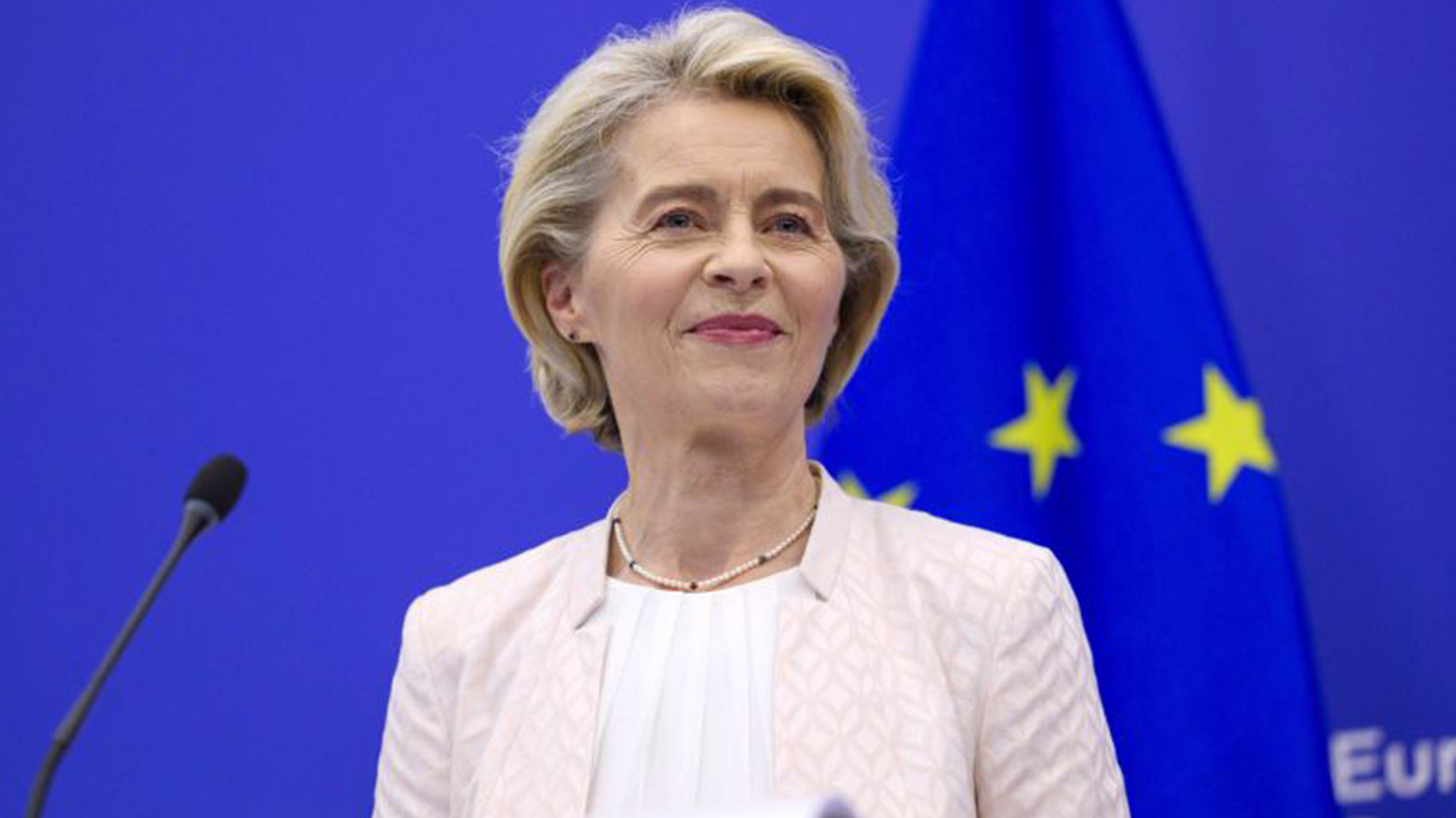
ERBIL (Kurdistan24) — European Commission President Ursula von der Leyen on Saturday welcomed the newly signed U.S.-brokered framework agreement between Israel and Lebanon, describing it as a "critical step" toward reducing tensions and advancing long-term peace in the Middle East.
"I welcome the agreement between Israel and Lebanon. This is a critical step away from escalation. Because there can be no peace in the Middle East with Lebanon in flames," von der Leyen said in a statement posted on X, thanking the United States for its mediation efforts.
She stressed that the next phase of the agreement must focus on "the disarmament of non-state groups and preserving Lebanese sovereignty and territorial integrity."
Von der Leyen also reaffirmed the European Union's support for Lebanon, saying the bloc "stands ready to support this path to lasting regional stability," including through continued humanitarian assistance. She noted that the EU has mobilized €100 million to support displaced civilians.
The agreement, signed in Washington on Friday by Israel, Lebanon, and the United States, establishes a framework for ending hostilities between the two neighboring countries and creating conditions for a comprehensive peace agreement.
According to the 14-point framework released by Washington, Israel and Lebanon affirm their shared objective of achieving "lasting peace and security" and declare their intention to formally end the decades-long state of conflict between them.
A central component of the agreement is the verified disarmament of non-state armed groups, particularly the Iran-backed Hezbollah movement.
Under the framework, the Lebanese Armed Forces (LAF) will gradually restore full sovereignty across Lebanese territory following the verified dismantlement of armed groups and their military infrastructure.
As the process advances, Israeli forces are expected to progressively withdraw from Lebanese territory under verification mechanisms supported by the United States.
The agreement also establishes phased "pilot zones" where the Lebanese army will assume full security responsibilities after Hezbollah's disarmament is confirmed.
Reconstruction efforts backed by the international community will begin in those areas, allowing displaced Lebanese civilians to return under the exclusive authority of the Lebanese state.
In addition, Israel and Lebanon agreed to establish bilateral working groups, with U.S. mediation, to negotiate a comprehensive peace and security agreement and maintain direct channels of communication.
The framework reaffirms Lebanon's commitment to restoring the state's monopoly over the use of force by ensuring that non-state armed groups no longer possess military or security capabilities anywhere in the country.
Beirut also calls for international, particularly Arab, support under U.S. leadership to implement those commitments.
For its part, Israel states in the agreement that its military operations in Lebanon have been solely a response to attacks and threats posed by Hezbollah and other armed groups.
It says that once those threats are eliminated through disarmament and agreed security arrangements, there will no longer be any need for Israeli military operations or a continued troop presence in Lebanon.
The agreement further states that Israel "has no territorial ambitions in Lebanon," underscoring that its objective is to achieve long-term security rather than territorial expansion.
The framework marks the most significant diplomatic effort in years to resolve the conflict between Israel and Lebanon. However, its implementation is expected to face considerable challenges, particularly over Hezbollah's future role and the verification of its disarmament.