Exclusive: Canadian Lawmakers Discuss Federalism and Trade in Kurdistan Visit
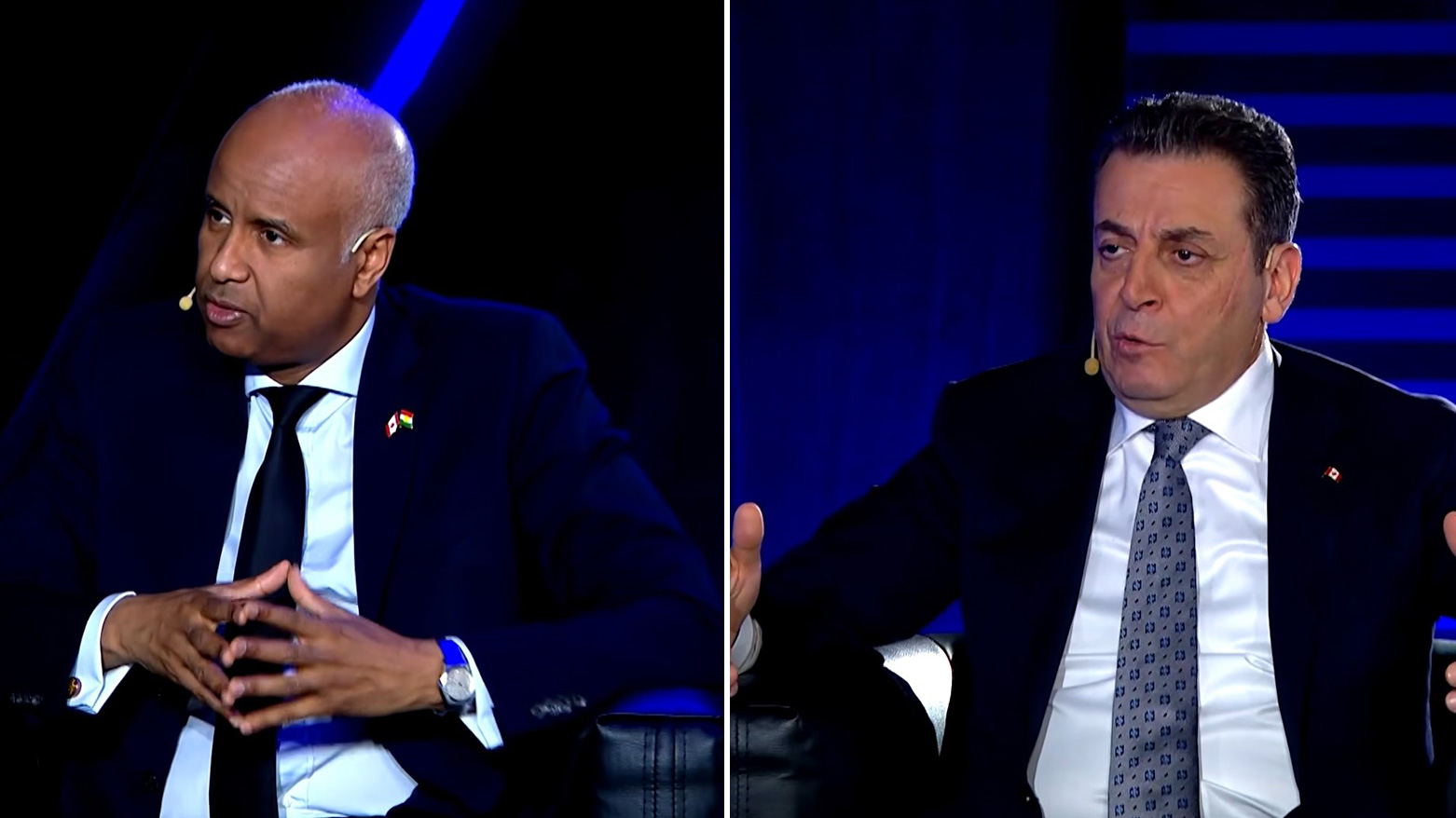
ERBIL (Kurdistan24) - For nearly a decade, Western engagement with the Kurdistan Region was defined largely by the crucible of war, anchored by a shared military campaign against the Islamic State. Today, the diplomatic conversations in Erbil are shifting from frontlines and stabilization to digital infrastructure, trade diversification, and constitutional governance.
This evolution was brought into sharp focus this week as a delegation from the Canadian Parliamentary Friends of the Kurds arrived in the Kurdish capital, signaling a desire to mature a security-focused partnership into a long-term strategic and economic alliance.
Speaking exclusively with Kurdistan24 host Hakim Farhad, Canadian Members of Parliament Ziad Aboultaif and Ahmed Hussen outlined a vision for bilateral relations that embraces the Kurdistan Region not merely as a regional security partner, but as an emerging hub for international trade and a rare model of pluralism in the Middle East.
"I believe this is a historic moment for growth and for showing what this region is truly capable of achieving," Aboultaif said during the televised sit-down, emphasizing that Erbil must seize the current climate of developmental opportunity.
Hussen, who previously served as Canada's Minister of International Development, echoed that optimism. He pointed to the Region's resilience, noting that despite severe geopolitical pressures, the Kurdistan Regional Government (KRG) has produced governance models capable of advancing social and economic development. He praised the Region's commitment to religious pluralism, gender equality, and coexistence, characterizing it as a level of social maturity that is globally rare.
The delegation's arrival builds upon a deep historical foundation. Canada is home to a vibrant Kurdish diaspora, and Ottawa has maintained close ties with Erbil through humanitarian aid and the advisory training of Peshmerga forces. The Canadian Parliamentary Friends of the Kurds, an all-party caucus reactivated in late 2025, has actively advocated for upgrading Canada's diplomatic presence in Erbil to a consulate general. Yet, the current visit underscores a deliberate pivot toward the private sector.
Hussen positioned the Kurdistan Region within Ottawa's broader global strategy to diversify its markets. Noting Canada's recent trade agreements in South America and ongoing negotiations with Southeast Asian nations, he argued that Canadian corporations should look toward Erbil.
The former minister pointed specifically to recent KRG infrastructure initiatives, including the "My Account" financial digitalization program, extensive road construction, and the push for around-the-clock electricity. While commending these strategic projects, Hussen urged Kurdish leadership to leverage international private-sector partnerships to accelerate their execution.
"You don't have to do this alone," Hussen explained. "Private companies can come and create jobs and provide digital services, which benefits the people. I think it's good for both Canada and for you; it creates economic opportunity and prosperity."
These economic ambitions are inextricably linked to the political architecture of the country. As the Kurdistan Region continues to navigate intense constitutional disputes with the federal government in Baghdad, ranging from budgetary entitlements to energy rights, the Canadian lawmakers offered a deeply sympathetic perspective rooted in their own country's 159-year-old federal structure.
Rather than viewing the friction between Erbil and Baghdad as an institutional failure, the delegation framed it as an inherent feature of decentralized governance. Canada itself manages a complex federation of twelve provinces, requiring constant negotiation over resource distribution and provincial authority.
"Decentralization is healthier than centralization because you need the region to flourish based on its own resources," Aboultaif observed. He stressed that a region's inhabitants fundamentally understand their own geography, history, and vulnerabilities better than a distant central authority.
Hussen reinforced this comparison, drawing parallels between Iraq's internal struggles and the constitutional debates within the "federal family" of Canada. He firmly pushed back against the notion that democratic governance is defined solely by majority rule, a concept that has often threatened Kurdish autonomy within the broader Iraqi state.
"Democracy isn't just about winning an election; it's about what you do between elections," Hussen told Kurdistan24. "Do you respect the minority? Do you respect the rule of law? Do you respect the equal distribution of resources and opportunities?"
For the Kurdish people, the consequences of majoritarian overreach have historically been existential. Aboultaif acknowledged this dark history directly, noting that Canada has stood alongside the Kurds through decades of persecution, chemical bombardments, and genocide. The Canadian mandate today, he noted, is to support institutions that ensure such history is never repeated.
Beyond the weight of federal politics and historical trauma, the Canadian delegation's visit was heavily colored by the cultural diplomacy of the Region. Both lawmakers described being captivated by the dramatic landscapes of the Zagros Mountains during a trip to the Barzan area, noting the deep, ancestral bond the Kurdish people maintain with their environment.
This connection to the land translated most vividly in their experiences with local hospitality. Stepping away from diplomatic formalities, the lawmakers spent time in Zakho hosted by a Canadian-Kurdish friend, where the politics of federalism gave way to the universal diplomacy of a home-cooked meal.
For both men, the complex geopolitical journey to the Kurdistan Region culminated in a shared, profound appreciation for traditional Kurdish Dolma, a quiet reminder that behind the grand strategies of international relations, the most enduring bridges are often built at the dinner table.
Full transcript of the Kurdistan24 interview with Canadian MPs Ziad Aboultaif and Ahmed Hussen
Kurdistan24: "Thank you very much, Mr. Ziad and Mr. Ahmed, for this brief interview. Firstly, welcome to Kurdistan and welcome to Kurdistan24. We are honored to have this conversation with you. Mr. Ziad, let me start with you. I'd like to ask...and I'm looking for a frank answer...what is your message to the Kurdish people during your visit?"
Ziad Aboultaif: "Thank you for the invitation. This is my second visit to Kurdistan and Erbil. What we have witnessed so far is the overwhelming hospitality and energy of the Kurdish people. Our message is this: I believe this is a historic moment for growth and for showing what this region is truly capable of achieving. I believe this opportunity must be seized. That is my message."
Kurdistan24: "Mr. Ahmed, how do you and the Canadian government in general view the developmental and political experience of the Kurdistan Region?"
Ahmed Hussen: "First of all, I am honored to be here at Kurdistan24; thank you for the invite. This is my first visit to the Kurdistan Region, and I am delighted to be here. I have seen immense progress in both the economic and social spheres. As my colleague Ziad mentioned, this is a historic moment. While it's true there are many challenges in this region, many positive things are also happening, and I've seen much of that progress firsthand...not only in democratic development but also in robust economic growth. I hope this opportunity is further leveraged and built upon so that this socio-economic advancement continues."
Kurdistan24: "Excellent. Mr. Ahmed, in what way can the international community benefit from the Kurdistan Regional Government's (KRG) governing experience?"
Ahmed Hussen: "I believe we can always learn from one another. The Kurdistan Region has offered numerous examples to show the world how, despite various challenges, it has proposed governance models capable of advancing the economy and developing society. It has also provided an opportunity for Canadians to learn more about the Kurdistan Region, to work more closely together, and to engage in trade and investment. There should be coordination where both sides emerge as economic winners, alongside the strengthening of relations between both governments."
Kurdistan24: "Do you believe there are opportunities for major Canadian corporations to come to Kurdistan for investment and trade?"
Ahmed Hussen: "Now more than ever, Canada wants to diversify its trade, find new markets for our products and services, and identify new trading partners. In this way, we can have bilateral investment where everyone wins and the general economy grows. Recently, we signed agreements with Indonesia and Ecuador, and we have deepened our ties with Europe and Asian nations. We are currently in talks for an agreement with ASEAN (Association of Southeast Asian Nations). There is no reason why we cannot increase investment and trade with the Kurdistan Region in a way that benefits both parties. Ultimately, this creates jobs and economic opportunities for the people of Kurdistan. When you have a high standard of living stemming from economic growth, people's lives improve, and the government gains the revenue needed to fund social programs and services. I always say: if you want to solve social issues, you must invest in social programs, and the best way to do that is through a strong economy."
Kurdistan24: "True. Thank you. Mr. Ziad, what aspect of the Kurdistan Region has impressed you the most or caught your attention?"
Ziad Aboultaif: "Beyond the people, the geography and the environment truly impressed me."
Kurdistan24: "Just that?"
Ziad Aboultaif: "In addition to that, yesterday we had a significant trip to Barzan. We saw how beautiful the nature is in that area. If you read about the region and its history, you connect deeply with the history of the Kurdish people. The Kurds have lived on this land for thousands of years, from the Zagros Mountains across the region. Driving through those mountains and seeing those communities was breathtaking. My friend Ahmed and I noticed how much importance people place on their land and nature, which is excellent. The natural beauty is there, but it must be protected and cared for by the people. We believe this is of immense value, not just for tourism, but for the economy. The government can leverage this natural beauty to build international relations as well."
Kurdistan24: "Thank you. Another question for you, Mr. Ziad. Looking at the experience of self-governance and development, do you believe the Kurdistan Region has demonstrated that it deserves to be an independent state?"
Ziad Aboultaif: "When you look at the stance and opinion on self-determination in any nation, the first fear for an outsider is: can that nation govern itself properly? Will they remain united as a self-governing region after forming a government? Based on my readings, historical expertise, and personal experience, this question occupies my mind: can this nation determine its own future within the state it deserves? There is no doubt that the Kurdish people, numbering in the millions, are the largest nation without a state. The question is how this vast nation and society, divided across four states...not to mention a large diaspora...can be unified into one state. That is a momentous issue."
Kurdistan24: "Mr. Ahmed?"
Ahmed Hussen: "Returning to the previous question regarding my impressions: I was very impressed by Kurdistan. This being my first visit, I was struck by the environment, the unique landscapes, the beauty of the land, and how much the people care for their environment. It shows their commitment to the trust they've been given to tend to their land. Regarding the progress the Kurdistan Region has made in democracy, gender equality, economic development, religious pluralism, and coexistence...all of this is a source of pride. It demonstrates a social maturity that is rare globally and reflects the maturity of the Kurdistan Region's political class. I was truly impressed by that. The future of this region and what kind of government they want within the framework of Iraq is a matter for the people of Iraq and its various nations. It is not appropriate for me to speak on their future, but I must say that I am impressed by the governance here, the democratic maturity, the accessibility of leadership, and the people's bond with their land. I am also impressed by the political maturity regarding inclusive visions. What is here is similar to Canada...we have religious and political freedom, media freedom, and individual freedom. I see the same things here. It is heartening because these things are rare on a global level and are something to be proud of."
Kurdistan24: "Thank you. Mr. Ahmed, I want to ask this because you were previously a minister. The KRG has recently announced several strategic initiatives, including 24-hour electricity and the 'My Account' project to digitalize salaries, alongside infrastructure projects like dams and roads. What is your assessment of this progress? How will these projects benefit Kurdistan in the long run?"
Ahmed Hussen: "It is excellent that the government provides these services, builds infrastructure, and offers digitalized services which are essential for the people. Mr. Ziad has been here before and has returned; our shared message is that we appreciate these services and the development of infrastructure and roads. I saw the Prime Minister recently open a new road...all of this is amazing. But our message to the people of Kurdistan is: you don't have to do this alone. You can invite other partners to work collaboratively and more quickly."
Kurdistan24: "Like Canada?"
Ahmed Hussen: "Yes, for example. I don't just mean governments, but the private sector. There is nothing stopping private sector investment. Private companies can come and create jobs and provide digital services, which benefits the people. I think it's good for both Canada and for you; it creates economic opportunity and prosperity for both the Kurdish people and Canada. In this way, your development accelerates. You have friends; there are people with shared values...let's work together."
Kurdistan24: "Thank you. Mr. Ziad, let's be honest: we currently have issues with Iraq. Let me ask frankly...Baghdad has created many obstacles regarding the Kurdistan Region's constitutional rights. As a Canadian MP, how do Canadian officials view the conflict between Baghdad and Erbil?"
Ziad Aboultaif: "In Canada, we have a federal system..."
Kurdistan24: "Right, that's why I asked you."
Ziad Aboultaif: "That system has existed for 159 years...it will be 160 on July 1st of next year. We manage affairs across 12 provinces with fairness and equality. My view, and that of my brother Ahmed, is that the governing style here should be similar to Canada's because you need more work to maintain the balance in relationships. Every region has its own resources, population, and culture; sometimes even its own language, like parts of Atlantic Canada or the Northeast. We are a multicultural society...besides the Indigenous people, there are 93 different nationalities living in the country. All these differences are managed through the Constitution by the central government to ensure a balance so they can build the country together. Achieving this took a lot of time and patience; it requires the democratic process to be implemented properly. We are fortunate with the British system...the Magna Carta and the Westminster parliamentary system. However, we are in a constant state of practice within that system in Canada. There are always challenges. Nevertheless, if you ask me, I'll tell you that decentralization is healthier than centralization because you need the region to flourish based on its own resources. The people of a region understand themselves better; they know their strengths, weaknesses, geography, and history. In a political system, this level of maturity and understanding is crucial for building a strong country and region. Because all regions are somewhat interconnected, they must build together and benefit from those relationships at all levels. The Middle East has been unfortunate in the last 20 to 25 years because the whole region has passed through troubles, and there is still no light at the end of the tunnel. If everyone takes notes and learns from their mistakes for the future, they will realize they don't need to follow the formulas of the past. You must not let history repeat itself."
Kurdistan24: "Thank you. Mr. Ahmed, back to you. During the recent geopolitical tensions between Iran and the U.S., let's call it their war, the Kurdistan Region remained neutral, but unfortunately, it was attacked by other parties, resulting in significant human and material losses. What is your stance on this?"
Ahmed Hussen: "Attacking civilians and civilian infrastructure is never right. Returning to your previous point, I want to say through you to your viewers: in Canada, our country is 159 years old and has a federal system. There are still debates between the federal government and the provinces. They have healthy debates and discussions over federal powers versus provincial powers. In the near future, one of our provinces will hold a referendum regarding membership in the federal system. Despite some people not liking it, it's part of the federal family. Just as family members argue and disagree, it's the same in a federal system. But in the end, everyone is in the federal family, and we try to solve our problems through dialogue and compromise. Sometimes, there is a misunderstanding in much of the world that democracy means the rule of the majority. No, that is not what it means. It's true the majority is in the lead, but the responsibility of the majority is to respect the rights of the minority. Democracy isn't just about winning an election; it's about what you do between elections. Do you respect the minority? Do you respect the rule of law? Do you respect the equal distribution of resources and opportunities? Do you treat all regions and parties seriously and equally? Women, men, children, the elderly, do you treat everyone equally? Democracy has value here; you are developing it. Economic openness follows democratic openness. In this journey, Canada is your partner."
Ziad Aboultaif: "I'll add one more thing to what Ahmed said. The Western world has succeeded in this: the majority respects the minority. In the Kurdistan Region, the opposite has often been true [historically in the wider context]. We must learn and take this into account."
Kurdistan24: "Thank you. Mr. Ziad, how does Canada view the fundamental rights of the Kurdish people in the Middle East?"
Ziad Aboultaif: "Canada has stood shoulder to shoulder with the Kurdish people for the past 35 years. Throughout history, in every humanitarian situation, Canada has been there and assisted because we believe in justice. We believe one of our duties is to always defend oppressed and persecuted people, regardless of where they are in the world. Certainly, there is no doubt the Kurds have faced genocide and attacks; they were chemically bombarded and faced many terrible situations. That was hard for the Kurdish people; they have a difficult history full of challenges. Canada was always present in those hard moments, and its position was clear. What is important now is to work toward ensuring history does not repeat itself. We must prevent those difficult times from occurring again. This is the role Canada plays."
Kurdistan24: "Thank you. Let me ask an 'unofficial' question. In the Middle East, we all know Lebanese food is world-class, famous like Italian or French cuisine. But how do you find Kurdish food? Is it tasty?"
Ziad Aboultaif: "In reality, Kurdish food is historical, especially what is prepared at home. I'm impressed by homemade Kurdish food. There are many good restaurants in the Kurdistan Region that serve Lebanese drinks alongside Kurdish fried and grilled dishes, they are good. But overall, in Zakho, I have twice enjoyed home-cooked meals, both during my previous visit and this one. Truly, the food made at home is superb; it reminds me of old Lebanese villages. I'm happy the Kurdish society has preserved this tradition."
Kurdistan24: "Thank you. And you, Mr. Ahmed?"
Ahmed Hussen: "I share the same view. Kurdish food made at home is the best. I particularly enjoyed the Dolma, Kurdish Dolma is excellent. We had it yesterday in Zakho at the home of one of our Canadian-Kurdish friends who is originally from Zakho. He took us there, and we had a very delicious and pleasant Kurdish meal."
Kurdistan24: "Thank you very much. I appreciate it. Thank you both for this quick interview with Kurdistan24. Welcome to Kurdistan once again."