
Mohammed Ihsan
University Professor and Academic
The New Middle East: An Old Ambition, a Century of Failed Experiments, and the Search for a Lasting Order
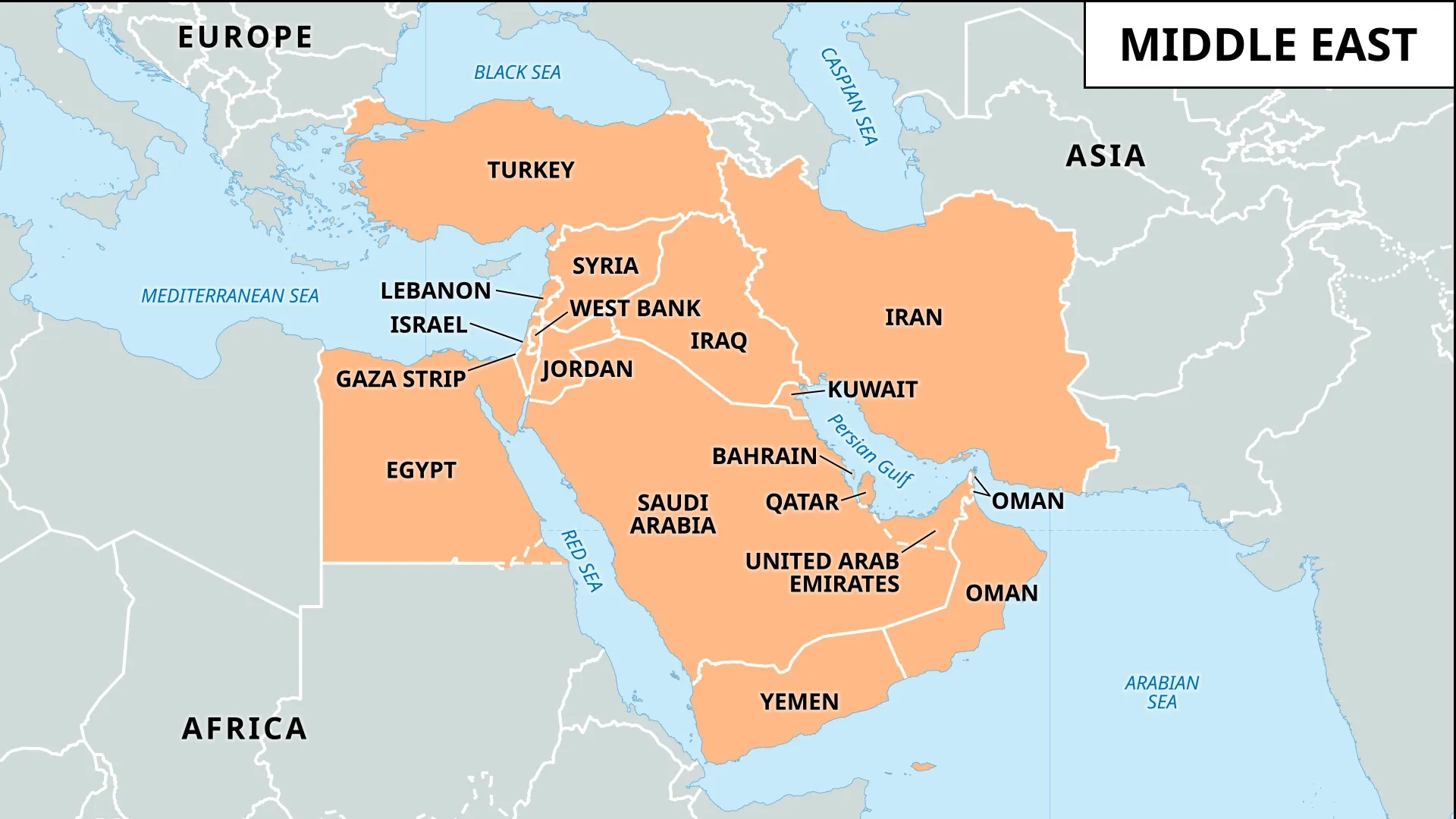
Is the idea of a New Middle East genuinely new, or is it merely the latest expression of an ambition that has haunted the region for more than two centuries? And after successive imperial interventions, revolutionary movements, nationalist projects, military dictatorships, ideological experiments, and devastating wars, a more fundamental question emerges: has the Middle East ever come closer to the stable, prosperous, and politically sustainable order that so many of its would be reformers promised to establish?
The answer requires us to look beyond the political language of the present and examine the historical continuity of the ambition itself. The expression New Middle East may be relatively modern, but the desire to reorganize the region, reshape its political geography, control its strategic resources, and determine the character of its future is much older. For more than two centuries, successive powers and movements have attempted to transform the Middle East according to their own strategic interests, ideological convictions, and visions of political order. Some have arrived in the name of civilization, others in the name of national liberation, religious revival, Arab unity, socialism, democracy, or regional supremacy. Yet despite their radically different promises, many have encountered a similar problem. They have sought to transform the region through the concentration of power, the imposition of political designs, and the subordination of societies to projects conceived by rulers, revolutionaries, or foreign capitals.
The history of the New Middle East is therefore not simply a history of failed foreign interventions. It is also a history of failed internal revolutions, authoritarian modernization, ideological absolutism, and political movements that promised liberation but frequently reproduced the structures of domination they claimed to abolish. The central tragedy has been the repeated assumption that the region can be transformed by whoever possesses sufficient military power, revolutionary determination, or ideological certainty. History has demonstrated that the capacity to destroy an existing order is not the same as the capacity to build a better one.
Napoleon and the Beginning of a New Strategic Age
To understand the historical roots of this ambition, we must return to 1798, when Napoleon Bonaparte led a French expedition into Egypt. The campaign was designed primarily to undermine British commercial and strategic interests, particularly Britain’s connections with India, while extending French influence across the eastern Mediterranean. It was not yet a project to create a New Middle East in the modern sense. Nevertheless, it marked an important turning point in the relationship between European power and the societies of the region.
Napoleon’s expedition combined military conquest with scientific investigation, historical scholarship, and the projection of imperial prestige. Alongside his soldiers, he brought scholars, engineers, artists, and scientists whose work contributed to the European study of ancient Egypt. The expedition demonstrated how military power could be accompanied by the collection of knowledge, the classification of societies, and the construction of narratives through which an outside power presented its intervention as a mission of enlightenment and progress. Yet the contradiction was unmistakable. The language of knowledge and civilization accompanied an expedition that sought to conquer and control a foreign society.
Napoleon’s campaign eventually failed. The French fleet was destroyed by the British at the Battle of the Nile in 1798, Napoleon returned to France in 1799, and French forces evacuated Egypt in 1801. In 1799, Napoleon had also invaded Ottoman Syria, advancing through Gaza and Jaffa toward Acre before abandoning the campaign. His inability to capture Acre exposed the limits of French military power and demonstrated that the region could not simply be subdued according to an imperial timetable.
Yet the strategic significance of the expedition outlived its military failure. Egypt’s position between the Mediterranean and the Red Sea, the importance of the eastern Mediterranean, and the routes connecting Europe with India became increasingly central to European strategic calculations. The region was not suddenly discovered in 1798. It had been an important crossroads of commerce, empire, religion, and civilization for millennia. What changed was the intensity and character of modern European intervention.
During the nineteenth century, European powers expanded their political, economic, and military involvement in the territories of the Ottoman Empire. Britain occupied Egypt in 1882 and subsequently became the dominant external power in the country. The opening of the Suez Canal in 1869 transformed the strategic importance of Egypt by creating a shorter maritime route between Europe and Asia. As British imperial interests in India became increasingly dependent on the security of this passage, control over the surrounding region assumed even greater importance.
The Middle East gradually emerged as a central arena of international competition. Its importance rested not on a single resource or geographical feature, but on the intersection of maritime routes, imperial communications, commercial interests, religious significance, and proximity to the territories of rival empires. Long before the phrase New Middle East entered political discourse, the strategic foundations of external involvement had already been established.
The Invention of the Middle East and the Politics of Geography
The modern expression Middle East belongs largely to the beginning of the twentieth century. Although the phrase had appeared earlier, American naval strategist Alfred Thayer Mahan helped popularize it in 1902 when he used it to describe the strategically important area around the Persian Gulf. The terminology reflected the perspective of external powers, for whom the region was defined partly by its position between Europe and the Far East and by its importance to maritime communications and imperial security.
This distinction matters. The societies now grouped under the label Middle East did not emerge in the twentieth century. Their histories, political traditions, languages, religious communities, commercial networks, and cultural relationships long predated the terminology imposed upon them. The region was never a single political or cultural entity waiting to be organized by an outside authority. It contained different peoples and political traditions whose relationships ranged from cooperation and coexistence to competition and war.
Nevertheless, geographical terminology gradually became connected to geopolitical planning. To name a region is not necessarily to control it, but the way a region is defined can influence how outside powers imagine its strategic interests, determine its boundaries, and organize their policies toward it.
The growing importance of petroleum reinforced this transformation. In the early twentieth century, oil began to alter the strategic calculations of the major powers. Exploration in Iraq began in the early 1900s, while the discovery of commercially significant oil in southwestern Iran in 1908 established the foundations of a major petroleum industry. In Iraq, the discovery of the Kirkuk field in 1927 marked a decisive milestone. Bahrain discovered oil in 1932, and commercially significant oil was discovered in Saudi Arabia in 1938. These developments occurred over several decades rather than as part of a single coordinated discovery.
The competition for oil was not simply a contest between Western companies and a unified regional population. It involved European and American corporations, Ottoman and successor governments, local rulers, financiers, and emerging national elites. Before the First World War, the Turkish Petroleum Company, established in 1912, became a major vehicle for competing interests in Mesopotamian oil. Its ownership and political backing reflected the broader rivalry among British, German, and other European interests. After the Ottoman Empire collapsed, the company was reorganized and eventually became the Iraq Petroleum Company.
In 1928, the Red Line Agreement formalized cooperation among several major oil interests and restricted their ability to pursue petroleum concessions independently within a vast area associated with the former Ottoman Empire. The agreement illustrated how the commercial organization of the region’s resources became intertwined with the political settlement that followed the war.
Oil did not create the strategic importance of the Middle East, but it dramatically increased its significance. The region’s resources would influence industrial development, military planning, diplomatic relationships, and international economic policy for generations. Petroleum also created a lasting contradiction. It offered the possibility of enormous public wealth, modernization, and development, while making states and societies vulnerable to external competition, unequal commercial arrangements, domestic corruption, and struggles over the distribution of national income.
From this point onward, the question of who controlled the Middle East could never be separated entirely from the question of who controlled its resources.
The First Great Reorganization: The Collapse of the Ottoman Empire
The First World War created the conditions for one of the most consequential reorganizations in the modern history of the Middle East. For centuries, the Ottoman Empire had governed much of the Arab world, although its authority varied considerably across different provinces and periods. The empire’s collapse opened the way for new states, borders, administrative systems, and competing national projects.
During the war, Britain and France negotiated arrangements concerning territories they expected to acquire or influence after an Ottoman defeat. The Sykes Picot Agreement of 1916 became the most famous example of these negotiations. It was not the sole instrument that determined the region’s future, nor did the eventual borders simply reproduce every provision of the agreement. Nevertheless, it symbolized the extent to which European powers regarded the postwar territories as subjects of strategic negotiation.
After the war, the mandate system established under the League of Nations placed Iraq and Palestine under British administration and Syria and Lebanon under French administration. These arrangements were presented in the language of international responsibility and preparation for self government, but they also preserved substantial European control over the political development of the region.
The new order was not created by European powers alone. Local leaders, political movements, tribal authorities, urban elites, and emerging nationalist organizations all shaped its outcome. Yet the framework within which they struggled had been profoundly altered by imperial decisions.
The consequences were lasting. New borders divided some communities, brought different populations into common political structures, and created disputes over territory, representation, and sovereignty. In some cases, new institutions eventually developed into functioning national states. In others, contested political legitimacy and unresolved social divisions remained serious sources of instability.
The central lesson is not that every modern Middle Eastern border was artificial or that the region would have remained peaceful without European intervention. The societies of the former Ottoman Empire already contained profound political and social differences, and local conflicts were not inventions of foreign powers. The deeper problem was that the postwar settlement frequently prioritized imperial interests and strategic convenience over the creation of political arrangements broadly accepted by the populations concerned.
A political order can be imposed on a map far more easily than it can be legitimized in the minds of the people expected to live within it.
Independence Without a Durable Political Settlement
The Second World War weakened the European empires and accelerated the movement toward independence. Across the Arab world, nationalism became a powerful instrument of political mobilization. Iraq, Syria, Lebanon, Jordan, and other states developed their own political institutions, while Egypt’s revolution of 1952 transformed the regional political landscape. Iran, Turkey, and the emerging Gulf states followed distinct historical trajectories, shaped by their own social structures, institutions, and strategic circumstances.
Independence, however, did not automatically resolve the problems inherited from the imperial era. Nor did it guarantee that political power would become accountable to the populations in whose name it was exercised.
In several countries, civilian institutions were weakened by military coups, ideological polarization, elite competition, and conflicts over the distribution of power. The army increasingly presented itself as the institution capable of rescuing the nation from corruption, foreign domination, and political fragmentation. Revolutionary officers promised national renewal, economic development, social justice, and a decisive break with the past.
In many instances, however, military intervention produced a different outcome. Political authority became concentrated in the hands of a ruling party, a military establishment, or an individual leader. Opposition was increasingly treated as a threat to national unity rather than a legitimate part of political life. Security institutions expanded, independent organizations were restricted, and the distinction between the state and the ruling regime gradually eroded.
This was one of the great contradictions of modern Middle Eastern politics. Leaders who claimed to be building strong states often weakened the institutions required to make those states resilient. They centralized authority in order to overcome fragmentation, but in doing so they made the political system increasingly dependent on the survival of a particular ruler or ruling coalition.
The state became powerful in its ability to command, punish, and mobilize, but frequently fragile in its ability to manage peaceful political competition or survive a transfer of power.
A state is not truly strong merely because its population fears its government. Its deeper strength lies in institutions that can enforce the law, protect citizens, resolve disputes, maintain public services, and preserve political continuity even when leaders change.
Too often, the modern Middle East witnessed the construction of powerful regimes without the equivalent development of durable, accountable institutions.
Arab Nationalism and the Promise of Unity
Among the most influential attempts to reorganize the region from within was Arab nationalism, particularly the movement associated with Egyptian president Gamal Abdel Nasser. Emerging from the failures of the old political order and the humiliation of the 1948 Arab Israeli war, Nasserism promised to overcome fragmentation, defeat imperial domination, promote social justice, and restore the political dignity of the Arab world.
Its appeal was considerable. It offered millions of people a vision of collective purpose that transcended the borders of individual states. It promised that Arab societies could overcome their divisions and acquire sufficient political, economic, and military power to shape their own destiny.
The creation of the United Arab Republic between Egypt and Syria in 1958 appeared to bring this ambition closer to reality. Yet the union collapsed in 1961, exposing the difficulties of reconciling the rhetoric of unity with the distribution of actual political power. Syrian officers and political elites increasingly resented Egypt’s dominance, while the centralized structure of the union undermined the autonomy that meaningful partnership required.
The failure did not mean that Arab cooperation was inherently impossible. It demonstrated that a shared identity, however powerful, could not by itself resolve disagreements over institutions, leadership, economic interests, and national sovereignty.
The defeat of Arab armies in the June 1967 war dealt another devastating blow to the movement’s claim that revolutionary nationalism could transform the regional balance of power. Nasser remained influential, but the promise of rapid military and political renewal had suffered a profound crisis.
Arab nationalism also produced different outcomes in different countries. In Iraq and Syria, Baathist movements claimed to pursue Arab unity, socialism, and national regeneration. Yet the Baathist regimes that eventually consolidated power developed highly centralized security states. Rival factions competed for control, and political loyalty became increasingly tied to the ruling apparatus.
In Iraq, the Baathist seizure of power in 1968 eventually produced the personal dictatorship of Saddam Hussein. In Syria, Hafez al Assad consolidated power after the 1970 Corrective Movement and established a political system dominated by the presidency and security institutions.
Both regimes used the language of national revival, resistance, and unity. Yet neither created the transnational Arab political order that the movement had originally promised. Instead, state interests, regime survival, military competition, and rival leadership ambitions repeatedly took precedence over the ideal of Arab unity.
The contradiction was fundamental. A movement that promised to overcome political fragmentation often reproduced it through authoritarian nationalism, rivalry among ruling elites, and the suppression of independent political life.
The lesson is not that national identity or Arab cooperation must fail. It is that unity imposed through domination is fundamentally different from unity constructed through consent.
Marxism, Revolutionary Politics, and the Limits of Ideology
The appeal of Marxism and other socialist doctrines also reflected a genuine historical context. Many Middle Eastern societies experienced deep economic inequality, foreign economic influence, weak public services, and entrenched social hierarchies. Socialist movements offered explanations for these problems and promised a more equitable distribution of wealth, the modernization of productive forces, and the emancipation of workers and peasants.
Some governments achieved significant gains in education, public health, infrastructure, and access to social services. State led development was not uniformly unsuccessful, and it would be historically inaccurate to dismiss every socialist policy as a disaster.
Nevertheless, in several countries, revolutionary ideology became closely associated with one party’s monopoly on political power. The claim to represent the interests of the people was used to justify the restriction of political pluralism. Independent labor movements, intellectuals, religious organizations, and opposition parties could be treated as enemies of the revolution rather than participants in national life.
Economic centralization also created problems where political loyalty took precedence over competence, competition, and accountability. In some cases, state control weakened productive incentives, encouraged patronage, and left economies poorly equipped to adapt to changing circumstances.
The deeper failure was not simply the adoption of socialist economic policies. It was the assumption that a single ideological doctrine, enforced by a centralized political authority, could adequately govern societies with diverse interests, beliefs, identities, and economic needs.
No political philosophy, whether socialist, nationalist, liberal, or religious, can substitute for effective institutions. Ideas may help societies identify injustice and imagine reform, but the success of reform depends on how power is exercised, how decisions are corrected when they fail, and whether citizens are permitted to challenge the authorities who govern them.
When an ideology becomes immune to criticism, its promise of liberation can become another instrument of control.
The Iranian Revolution and the Expansion of Revolutionary Power
The Iranian Revolution of 1979 introduced another transformative force into the regional order. It overthrew the monarchy of Mohammad Reza Shah Pahlavi and established the Islamic Republic under the leadership of Ayatollah Ruhollah Khomeini. The revolution drew support from a diverse coalition that included religious groups, leftists, nationalists, students, and other opponents of the monarchy, although these forces did not share a common vision of the political system that would follow.
The new Islamic Republic gradually consolidated power around its own institutions and ideological framework. It also developed a foreign policy that presented the export of revolutionary ideas and opposition to American and Israeli influence as central elements of its regional identity.
The subsequent Iran Iraq War, which began in 1980 when Saddam Hussein’s Iraq invaded Iran, devastated both countries. The conflict lasted until 1988, caused enormous human and economic losses, and entrenched militarized politics on both sides. Rather than producing a new regional consensus, it deepened mutual suspicion and established patterns of security competition that would shape the Middle East for decades.
After the war, Iran developed relationships with armed and political movements beyond its borders. Hezbollah in Lebanon became one of its most important regional partners, while Iranian influence later expanded through relationships with political parties and armed groups in Iraq, Syria, and Yemen.
These developments cannot be reduced to a single explanation for the region’s instability. The conflicts in Lebanon, Iraq, Syria, and Yemen each have distinct domestic origins, and their outcomes have also been shaped by other regional powers, local political actors, foreign interventions, and longstanding institutional weaknesses.
Nevertheless, Iran’s use of allied armed groups and its pursuit of regional influence have contributed to security dilemmas in several countries. In Lebanon, the existence of a powerful armed organization outside the ordinary authority of the state has complicated debates over sovereignty and the state’s monopoly on the use of force. In Iraq, the growth of Iran aligned armed factions has formed part of a wider struggle over the relationship between state institutions, political parties, and independent centers of military power. In Syria, Iranian support for Bashar al Assad’s government helped sustain the regime during a devastating civil war. In Yemen, Iranian support for the Houthi movement has formed part of a conflict also driven by domestic grievances, the collapse of political transition, and intervention by the Saudi led coalition.
The resulting pattern illustrates a broader problem. Revolutionary movements may begin with a claim to resist domination, yet their methods can create new forms of dependency, political exclusion, and armed competition. A movement’s claim to represent a community does not automatically give it the authority to determine the future of an entire country.
The same principle applies to religious identity. The political empowerment of a religious community is not inherently destabilizing, nor is Shia political participation itself a cause of regional disorder. Shia communities, like Sunni communities and other religious groups, contain diverse political traditions and interests. The problem arises when any state or movement attempts to transform religious affiliation into a permanent hierarchy of political power, or when armed organizations claim an authority that prevents citizens from determining their collective future through legitimate institutions.
The distinction is essential. Criticism of Iranian state policy or particular armed movements should not become a condemnation of Shia Islam or Shia populations. Nor should the conduct of Sunni governments or armed groups be confused with the beliefs of all Sunni Muslims. The failure lies in systems of domination, sectarian mobilization, and coercive political control, not in the mere existence of religious difference.
The Middle East does not need another project that seeks to establish the permanent supremacy of one religious or ideological camp. It needs political arrangements in which no community must surrender its identity in order to enjoy equal citizenship, and no community can claim the right to dominate others because of its identity.
Saddam Hussein and the Destructive Illusion of Regional Leadership
The dictatorship of Saddam Hussein offers another illustration of the gap between ambitions of regional greatness and the consequences of authoritarian power.
The Iraqi Baathist regime claimed to defend Arab nationalism, national sovereignty, and regional leadership. Iraq possessed substantial resources, a strategically important geographical position, and a population with considerable human and cultural potential. Its oil wealth offered opportunities for economic development, while its educational and administrative institutions provided a foundation for a modern state.
Yet the concentration of power around Saddam Hussein and the ruling party increasingly subordinated national institutions to regime survival. Political opposition was violently suppressed, and the state’s resources were directed in significant part toward military power, internal control, and the preservation of the ruling system.
The Iran Iraq War inflicted enormous damage on both societies. In 1990, Saddam invaded Kuwait, triggering an international crisis that led to the Gulf War of 1991. The invasion undermined Iraq’s regional position and brought catastrophic consequences for its population, followed by years of sanctions, international isolation, and continued confrontation.
In March 2003, a United States led coalition invaded Iraq and overthrew Saddam’s government. The regime fell quickly, but the destruction of the existing political order did not produce a stable democratic state.
The invasion and occupation were followed by the dismantling of major elements of the Iraqi security apparatus, the sweeping de Baathification policy, insurgency, sectarian violence, institutional breakdown, and the growth of armed organizations operating beyond effective state control. The emergence of the Islamic State, which seized large areas of Iraqi and Syrian territory in 2014, exposed the consequences of the region’s accumulated institutional weaknesses and the catastrophic interaction between war, exclusion, and political fragmentation.
Iraq’s subsequent history cannot be explained solely by the decisions of the invading powers. Saddam’s authoritarian legacy, the policies of post invasion authorities, the conduct of Iraqi political elites, sectarian mobilization, regional interference, and the actions of armed groups all contributed to the outcome. But the experience decisively challenged the assumption that an external power could overthrow a dictatorship and then construct a legitimate political order through military occupation and institutional redesign.
The United States and its partners spent enormous resources on the war and its aftermath, while the financial and human costs continued long after the initial invasion. The experience demonstrated how military campaigns that begin with promises of security and political transformation can generate obligations, instability, and consequences that extend across generations.
The central point is not that foreign intervention can never contribute to political change. It is that military victory and political reconstruction are fundamentally different undertakings. An occupying power may defeat an army, remove a government, and dissolve existing institutions. It cannot manufacture political legitimacy simply by announcing a new constitutional order.
A country is not rebuilt merely because its former ruler has been removed. It must be rebuilt through institutions that citizens recognize as legitimate, a political system that allows peaceful competition, a functioning economy, and a security structure accountable to the state rather than to competing parties, personalities, or sectarian interests.
Iraq became one of the clearest examples of the limits of externally imposed transformation. It also revealed the dangers of assuming that the destruction of an authoritarian regime will automatically produce the social trust and institutional capacity required for democracy.
The New Middle East and the Language of Reform
The expression New Middle East acquired particular prominence during the early twenty first century, although the aspiration to reshape the region had existed much longer. Following the attacks of September 11, 2001, American foreign policy increasingly connected the transformation of the Middle East to counterterrorism, political reform, and the spread of democracy.
The invasion of Iraq in 2003 became the most ambitious practical expression of this vision. Its supporters argued that removing Saddam Hussein would eliminate a dangerous regime and open the way to a more democratic Iraq that might influence the wider region. Yet the experience of occupation exposed the enormous distance between the promise of transformation and the realities of reconstructing a state after war.
The phrase New Middle East gained renewed international attention in July 2006, when American Secretary of State Condoleezza Rice described the violence surrounding the war between Israel and Hezbollah in Lebanon as the birth pangs of a New Middle East. Her language suggested that the existing regional order was undergoing a painful transformation that might eventually create a different political landscape. The remarks became a defining example of how the language of historical transformation can collide with the immediate experience of those living through violence.
The problem with this approach was not simply the phrase itself. It was the larger question of who possessed the authority to determine the future order of the region, whose interests that order would serve, and what mechanisms would make it legitimate and sustainable.
For many people in the Middle East, the promise of a new order had become inseparable from the experience of military intervention, civilian casualties, institutional collapse, displacement, and the competition among outside powers. The language of reform could no longer be evaluated solely by the intentions proclaimed by those advancing it. It had to be judged against the political and human consequences of the methods used to pursue it.
This does not mean that every external initiative is necessarily imperialistic or that democracy and human rights are foreign to the region. The Middle East has its own long histories of constitutional debate, legal scholarship, political reform, intellectual pluralism, and movements for accountable government. Nor does it mean that local governments should be shielded from criticism whenever foreign involvement is mentioned.
The more precise argument is that reform cannot be imposed successfully when the people expected to live under the new order are denied meaningful ownership of its construction. External assistance may contribute resources, expertise, diplomatic support, or security guarantees. It becomes deeply problematic when it substitutes for local political legitimacy or treats societies as objects to be reorganized according to a strategic design developed elsewhere.
The New Middle East, in this sense, has repeatedly encountered a fundamental contradiction. Those who promise to establish a new order often begin by exercising the very forms of domination that a legitimate order would need to overcome.
Why the Old Middle East Keeps Returning
Across these historical experiments, a recurring pattern becomes visible. Napoleon sought strategic advantage through military conquest. European imperial powers reorganized territories according to shifting interests. Nationalist movements promised liberation but sometimes produced authoritarian states. Revolutionary governments claimed to embody the people while restricting political pluralism. Regional powers pursued influence through military alliances and armed organizations. Western governments promised democratic transformation but underestimated the difficulty of rebuilding political institutions after war.
These projects differed in their objectives, methods, and consequences. They should not be treated as identical or assigned equal responsibility for every conflict. Nevertheless, many shared an underlying assumption: that the Middle East could be transformed by concentrating power in the hands of an actor convinced that it possessed the knowledge, authority, or historical mission required to determine the region’s future.
That assumption repeatedly failed to account for the complexity of the societies involved.
The Middle East is not a single nation, a uniform religious community, or a political system waiting for one final ideological solution. It encompasses Arabs, Kurds, Turks, Persians, and many other peoples. It contains Muslims, Christians, Jews, Yazidis, and other religious communities, each with its own internal diversity and historical experiences. Its societies differ in political traditions, economic structures, social organization, and relationships between religion and public life.
These differences do not make coexistence impossible. Nor do they mean that conflict is inevitable. They make political arrangements based on domination particularly dangerous because the exclusion of one group can quickly become a source of insecurity for others.
A sustainable regional order must therefore address several interconnected problems.
First, states must develop institutions stronger than the individuals who lead them. When a president, monarch, party, military establishment, or revolutionary movement becomes indistinguishable from the state itself, political succession becomes a potential national crisis. Durable institutions must be able to survive changes in leadership without collapsing into violence.
Second, sovereignty must be understood as a responsibility toward citizens rather than merely a claim against foreign interference. A government that protects its independence while denying its population political rights may preserve its own authority without establishing a legitimate political order. Equally, a foreign power that invokes human rights to justify intervention cannot assume that the use of military force will automatically advance those rights.
Third, national identity must not become an instrument of exclusion. Arab nationalism, Turkish nationalism, Kurdish nationalism, Persian national identity, and other forms of collective belonging can provide solidarity and a sense of historical purpose. They become dangerous when the political rights of individuals and communities are made conditional on conformity to the identity of the dominant group. The challenge is not to abolish national identity but to reconcile it with equal citizenship and the legitimate rights of others.
Fourth, religious and ideological differences must be managed through institutions rather than through permanent struggles for supremacy. No sect, religious establishment, revolutionary party, or ideological movement can create lasting stability by demanding unconditional submission from everyone else. Political systems that treat disagreement as treason inevitably encourage opposition to develop outside ordinary institutions, sometimes through armed movements that further weaken the state.
Fifth, economic resources must serve the development of society rather than the survival of ruling elites. The history of oil in the Middle East illustrates the enormous opportunities created by natural wealth, but it also highlights the dangers of corruption, patronage, economic dependency, and competition over resource revenues. Wealth alone cannot create effective institutions. Without accountability and competent governance, even substantial natural resources can become a source of political vulnerability.
Finally, the regional order must recognize that the security of one society cannot be permanently built on the insecurity of another. Attempts to establish hegemony, create dependent political entities, or surround rivals with hostile armed groups may produce short term strategic advantages. They also generate countermeasures, mistrust, and recurring crises. Security arrangements that disregard the legitimate interests of neighboring societies are unlikely to provide a durable foundation for peace.
These are not problems that can be solved by another grand declaration, another revolutionary doctrine, or another campaign to redraw the region’s political map. They require a different understanding of what political transformation actually means.
A New Middle East Must Emerge From Within
If the previous attempts to reorganize the Middle East have repeatedly fallen short, where should a more sustainable transformation begin?
The answer lies in recognizing the agency of the region’s own peoples while acknowledging that internal ownership alone does not guarantee success. Local governments and movements can be as authoritarian, exclusionary, or destructive as foreign powers. The fact that a project originates within the region does not make it legitimate, and the fact that it invokes national independence does not mean that it serves the interests of the population.
The decisive question is not simply whether transformation comes from outside or inside. It is whether the process is based on consent, accountable institutions, political inclusion, and respect for the rights of those who will live with its consequences.
The peoples of the Middle East must have the primary role in determining their political futures. Arabs, Kurds, Turks, Persians, and the region’s other communities need not abandon their identities or erase their historical differences to build a more stable order. They must instead find ways to cooperate without demanding uniformity, defend their interests without denying the rights of others, and pursue national aspirations without turning them into projects of domination.
This will require difficult compromises. It will require states to respect one another’s sovereignty, political movements to accept the limits of their authority, and armed organizations to recognize that lasting security depends on legitimate institutions rather than the indefinite preservation of independent military power. It will also require foreign governments to recognize the limits of military intervention and to support political processes without assuming that the future of the region can be designed in distant capitals.
Regional cooperation should not mean the creation of a single superstate or the imposition of one political identity across different societies. It can instead begin with practical arrangements that address shared interests, including trade, water security, energy, infrastructure, environmental challenges, the protection of minorities, and the peaceful management of disputes. Cooperation in these areas can create habits of consultation and mutual dependence without requiring every government to share the same ideology or political system.
Such a process will be neither quick nor perfectly linear. Political reform can be reversed, democratic institutions can weaken, and regional crises can undermine years of progress. But a political order built on negotiation and accountable institutions has a stronger basis for surviving disagreement than one dependent on coercion and the unquestioned authority of a single leader.
The objective should not be to produce a Middle East without differences. It should be to create a Middle East in which differences no longer have to become existential struggles for political survival.
The Final Question: Who Has the Right to Build the Future?
From Napoleon’s expedition to Egypt in 1798 to the invasion of Iraq in 2003, and from the revolutionary promises of Arab nationalism to the competing projects of religious and ideological movements, the history of the Middle East reveals the repeated failure of those who confuse the power to impose change with the ability to create a sustainable political order.
The names, doctrines, and instruments have changed. The underlying ambition has remained remarkably persistent. Again and again, rulers and movements have promised to end the failures of the past by imposing a decisive new beginning. Again and again, the complexity of society, the struggle for power, and the absence of legitimate institutions have undermined their ambitions.
The foreign empire, the military dictator, the revolutionary party, the religious movement, and the nationalist strongman may speak different political languages, but none can establish a lasting order merely by claiming to possess the correct vision for everyone else.
The experience of Iraq after 2003 demonstrates that a foreign power can overthrow a government without creating a legitimate successor. The collapse of the United Arab Republic demonstrates that a shared national identity cannot sustain unity when political power is distributed in ways that deny meaningful partnership. The history of authoritarian nationalist regimes demonstrates that a state can accumulate coercive power while undermining the institutions required for its long term stability. The regional consequences of revolutionary competition demonstrate that a movement claiming to liberate one community can contribute to insecurity when it seeks influence through armed structures that weaken the sovereignty of other states.
These experiences do not establish that reform is impossible, that the region is condemned to perpetual conflict, or that every attempt at external assistance must fail. They establish something more precise and more important: political transformation cannot be sustained by force and ideology alone. It requires legitimacy, institutional capacity, social trust, and an acceptance that no single actor can permanently monopolize the definition of the public good.
The New Middle East, therefore, should not be understood as a project of replacing one dominant power with another, one dictatorship with another, one exclusive ideology with another, or one regional hegemony with its rival. Such changes may alter the distribution of power, but they do not necessarily resolve the conditions that produce instability.
A genuinely new Middle East would have to be new in a more fundamental sense. It would be a region in which the state belongs to its citizens rather than to a ruler or party, in which national identity does not require the exclusion of minorities, in which religious affiliation does not determine the limits of political rights, and in which regional cooperation becomes possible without the subordination of weaker societies to stronger ones.
Above all, it would be a region in which political legitimacy comes not from the ability to impose a vision, but from the capacity to govern fairly, protect rights, provide security, and allow different communities to share a political future.
Perhaps the greatest mistake of the past two centuries has been the belief that the Middle East needs to be remade by someone powerful enough to impose a new order. Its history suggests a different conclusion. The region does not lack identities, resources, intellectual traditions, or political aspirations. What it has repeatedly struggled to establish is a durable framework through which these differences and ambitions can coexist without becoming permanent sources of conflict.
The task is not to erase the Middle East that history has created, nor to restore an imagined past in which conflict did not exist. It is to build institutions and relationships capable of confronting the region’s real problems without reproducing the failures of its previous transformations.
That task cannot belong exclusively to Washington, London, Paris, Moscow, Ankara, Tehran, Riyadh, or any other external or regional capital. Nor can it belong to a dictator, a revolutionary movement, or a self appointed guardian of national or religious identity.
Its legitimacy must ultimately come from the people who will live under the order being created.
The New Middle East will not become new simply because its borders change, its rulers fall, its armies advance, or its ideological slogans are replaced. It will become new when political power is no longer treated as a license to dominate, when coexistence becomes a principle of governance rather than a temporary concession, and when the peoples of the region can shape their common future without being compelled to surrender their differences.
Until then, the New Middle East will remain an old ambition repeatedly presented as a new beginning.
The future of the Middle East will not be secured by the power to reorganize it, but by the wisdom to build a political order in which its peoples no longer need to fear one another in order to survive.
The views expressed in this article are those of the author and do not necessarily reflect the views of Kurdistan24.