Demolition Dispute Sparks Protest and Road Blockade in Kirkuk
Residents of Kirkuk's Barutkhana neighborhood blocked the Erbil-Baghdad highway to protest planned home demolitions, citing fears of displacement and housing insecurity.
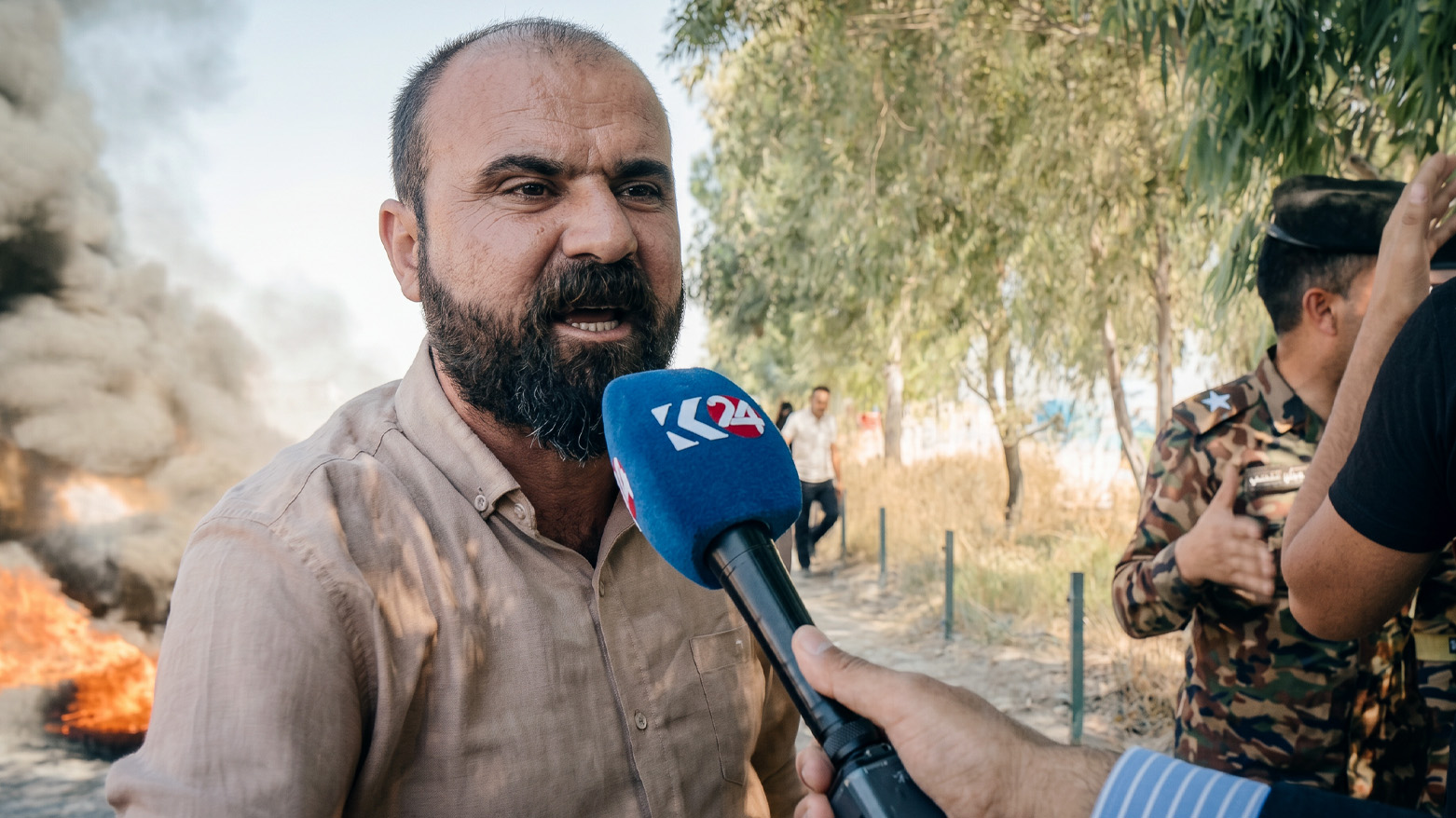
ERBIL (Kurdistan24) - Long lines of vehicles stretched along the Erbil-Baghdad highway on Tuesday as residents of Kirkuk's Barutkhana neighborhood gathered in protest, bringing traffic on one of Iraq's busiest routes to a halt. At the center of the demonstration was a growing dispute over a government plan to demolish homes that residents say have sheltered their families for years.
For those assembled along the roadside, the issue extended well beyond bricks and concrete. Many said the homes represented decades of savings, personal sacrifice and community ties, leaving families uncertain about where they would go if demolition orders are carried out.
Reporting from Kirkuk, Kurdistan24 correspondent Hemin Dalo said protesters blocked the highway after receiving notices requiring residents to vacate parts of the neighborhood.
Demonstrators insisted they would continue their protest until authorities suspend the planned demolitions and provide clear answers about the future of the community.
Residents say Barutkhana is home to around 330 households, while officials are seeking control of approximately 16 acres (64 dunams) of land for what has been described as an investment project.
Standing among fellow protesters, one resident said families had been given only days to leave.
"They are threatening to bulldoze our homes and have given us until Sunday to evacuate," he told Kurdistan24.
He said repeated efforts to seek clarification from local authorities had produced conflicting responses.
"When we contact city officials, they claim to be unaware of the decision," he said, adding that even officials from the Investment Directorate appeared unable to explain who ultimately authorized the demolition.
The uncertainty has compounded residents' concerns. Many say they have received little information about compensation, relocation or alternative housing should the project proceed.
Another protester questioned how hundreds of families could realistically be displaced without a clear plan.
"Where are these poor people supposed to go?" he asked. "How can they just demolish their homes?"
The demonstration also revealed the deeply personal impact the dispute has had on longtime residents.
One man, who identified himself as a member of the Peshmerga, said his family had spent years building their home despite significant financial hardship.
"I built my home through immense hardship and debt," he said. "Now they say they will tear down the rest of the houses for projects."
For many families, the prospect of demolition is not simply a legal or administrative matter but a question of financial survival. Several residents told Kurdistan24 they invested their life savings in homes they believed would provide long-term security for future generations.
Some protesters also alleged that security personnel had warned residents to vacate the area before demolition work begins.
One demonstrator claimed he was detained during earlier operations and said security forces informed him they were acting under official instructions.
"They told us they would bring the houses down on our heads by Sunday if we didn't leave," he said.
Kurdistan24 has not independently verified those allegations, and local authorities had not publicly responded to the specific claims at the time of publication.
Beyond the immediate dispute, the controversy reflects broader challenges surrounding land use and urban development in Kirkuk.
Since the fall of the former Iraqi regime in 2003, several Kurdish neighborhoods have expanded across the city, while some areas have later become the subject of redevelopment plans or investment proposals.
According to Kurdistan24 further investigation, demolition orders linked to land designated for investment have periodically generated disputes between residents and local authorities.
Such cases often raise difficult questions over property rights, compensation mechanisms and relocation arrangements, particularly where established communities have existed for many years.
The Barutkhana dispute illustrates how redevelopment projects can quickly evolve into wider debates over transparency and public trust. Residents say they have struggled to identify which institution bears responsibility for the decision, with different offices providing differing explanations regarding the planned demolition.
Urban renewal and investment remain important components of municipal planning, yet specialists frequently note that projects affecting residential neighborhoods require clear legal procedures, effective communication and safeguards for affected families to minimize social disruption.
As Tuesday's demonstration continued, those broader policy questions remained secondary for residents standing beside the highway. Their immediate concern was preserving their homes and obtaining assurances that any future decisions would be made transparently and with meaningful consultation.
By late afternoon, protesters maintained their blockade, saying they would not leave until officials address their demands. Whether negotiations emerge in the coming days may shape not only the future of Barutkhana but also the handling of similar land-use disputes elsewhere in Kirkuk.
|
Summary Residents of Kirkuk's Barutkhana neighborhood blocked the Erbil-Baghdad highway to oppose planned home demolitions, citing fears of displacement and uncertainty over relocation. The dispute highlights wider challenges involving urban planning, property rights, and public confidence in local decision-making. |