Syrian Foreign Minister Meets Hezbollah Ally Nabih Berri During Beirut Visit
First meeting with Lebanon's parliament speaker underscores renewed diplomatic engagement despite Syria ruling out a military role against Hezbollah
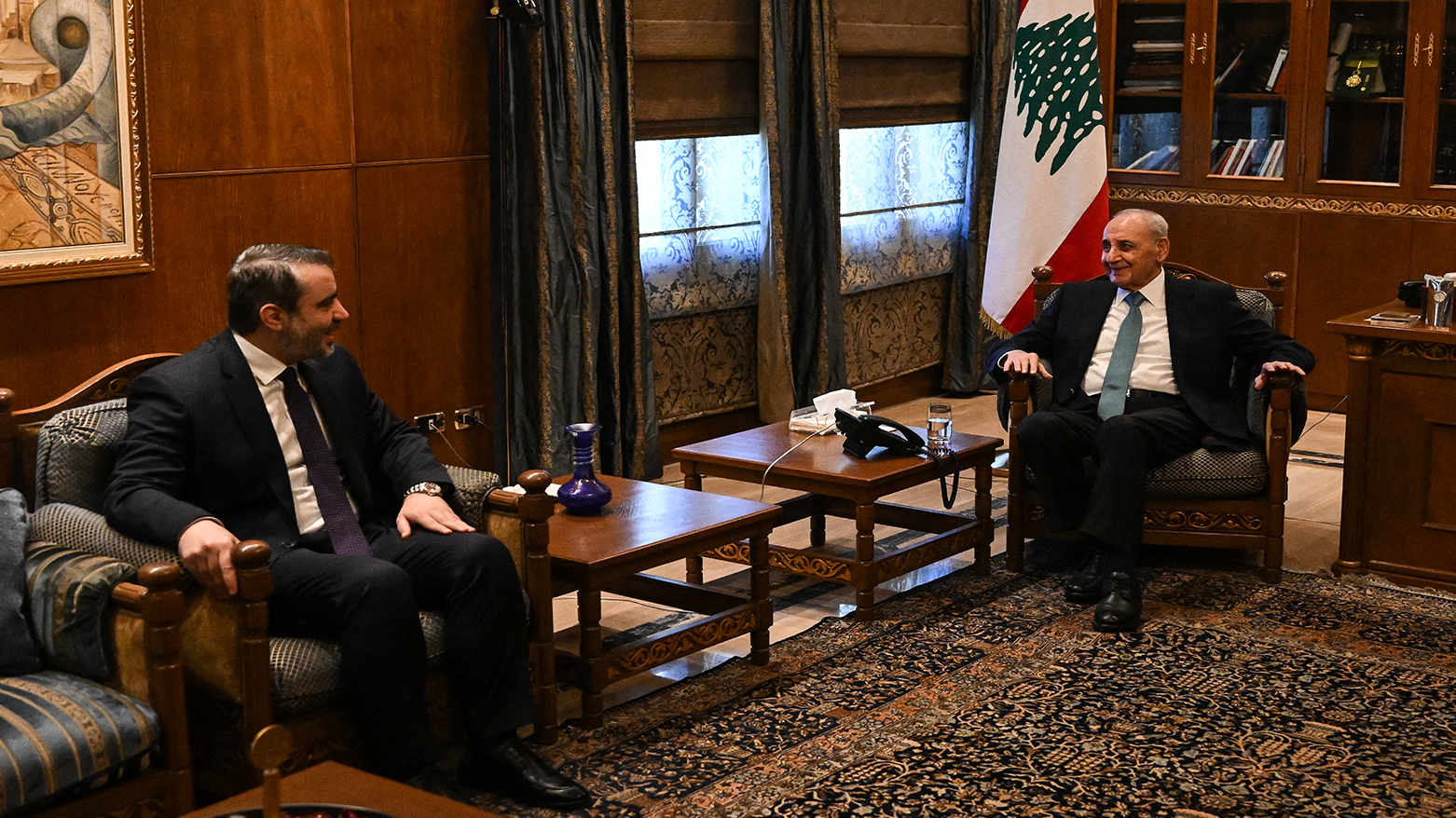
ERBIL (Kurdistan24) — Syrian Foreign Minister Asaad al-Shaibani met Lebanese Parliament Speaker Nabih Berri on Thursday during a visit to Beirut, marking the first meeting between Syria's top diplomat and the veteran Lebanese politician since the country's new leadership took power in Damascus.
Shaibani's visit comes as Syria has reiterated that it has no intention of intervening militarily in Lebanon, despite repeated calls from U.S. President Donald Trump suggesting that Damascus could play a role in confronting the Iran-backed Hezbollah movement.
Upon arriving in Beirut, Shaibani was received by Lebanese President Joseph Aoun before holding talks with Berri, a longtime Hezbollah ally and one of Lebanon's most influential political figures, according to local media.
The visit is Shaibani's second official trip to Lebanon since Syria's political transition. His first visit, in October 2025, was the first by a senior Syrian official after President Ahmed al-Sharaa's coalition overthrew longtime ruler Bashar al-Assad in December 2024, opening a new chapter in relations between the neighboring countries.
Lebanese Prime Minister Nawaf Salam also visited Damascus in May as both governments have sought to rebuild diplomatic ties after years of strained relations.
Shaibani's latest trip comes against the backdrop of mounting regional tensions and international attention over Hezbollah's future role.
President Trump has repeatedly argued that Syria could "take care of Hezbollah," criticizing Israel's military strategy in its conflict with the Iran-backed group.
However, President Sharaa has firmly rejected any suggestion that Syria would become involved militarily in Lebanon, saying his government has no intention of reopening historical conflicts or intervening in its neighbor's affairs.
Relations between Damascus and Hezbollah have deteriorated sharply since Syria's political transition. The new Syrian authorities have accused the group of maintaining affiliated cells inside Syria and announced several arrests linked to alleged Hezbollah networks.
Hezbollah has denied having any presence in Syria.
Damascus has also said it has thwarted multiple attempts to smuggle weapons into Lebanon since late 2024, after Hezbollah lost key supply routes that had operated through Syrian territory during the Assad era.
The changing relationship marks a dramatic reversal from the previous Syrian government, under which Hezbollah was one of Assad's closest military allies throughout Syria's civil war.
Syria's role in Lebanon has long been a sensitive issue. Syrian forces entered Lebanon during the country's civil war in 1976 and maintained a dominant political and military presence for nearly three decades. During that period, Damascus faced widespread accusations of political interference and involvement in a series of assassinations, allegations it consistently denied.
Despite ongoing political differences, recent diplomatic engagement has produced tangible results. Shaibani's first visit to Beirut last year helped break a longstanding impasse over Syrian prisoners held in Lebanese jails, a priority issue for Damascus.
Approximately 2,000 Syrians—nearly one-third of Lebanon's prison population—are currently detained in the country's overcrowded prisons. Following Shaibani's October visit, more than 250 Syrian prisoners were transferred back to Syria, marking one of the most significant bilateral agreements reached since the change of government in Damascus.