Iran Claims Strikes on U.S. Bases in Kuwait and Jordan as Fighting Intensifies Across Gulf
Tehran says it hit American military assets, while U.S. strikes kill at least one near Tabriz amid fresh security incidents in the Strait of Hormuz and Bahrain
ERBIL (Kurdistan24) — Iran's Islamic Revolutionary Guard Corps (IRGC) on Monday claimed responsibility for a series of coordinated attacks against U.S. military facilities in Kuwait and Jordan, as Washington and Tehran exchanged fresh strikes and the conflict spread across the Gulf, raising fears of further regional escalation.
In a statement carried by Iran's state news agency IRNA, the IRGC said it had struck U.S. military targets in Kuwait, including an early-warning radar system that it claimed was "completely destroyed."
The Guards also said Iranian drones targeted a warehouse storing military equipment and aircraft parts, as well as an MQ-9 drone hangar at Ali Al Salem Air Base, alleging that several drones caught fire during the attack.
In a separate statement reported by Iranian state media, the IRGC said it launched ballistic missiles at U.S. military aircraft stationed at Aqaba Airport in Jordan, claiming the strikes caused "severe damage" to several American heavy transport and command-and-control aircraft. The claims could not be independently verified, and there was no immediate confirmation from U.S. or Jordanian authorities.
Separately, Iranian state media reported that U.S. strikes hit several locations in the southern port city of Bushehr, home to Iran's only civilian nuclear power plant. On Monday, Bushehr Governor Mohammad Mozaffari told the official IRNA news agency that "several locations in Bushehr city were hit by American enemy projectiles," though he did not specify the targets or report any immediate casualties or damage to the nuclear facility.
The latest attacks came as Kuwait's military announced that its air defense systems were intercepting what it described as hostile Iranian drone attacks.
"The General Staff of the Army notes that any explosions heard are a result of air defense systems intercepting the hostile attacks," the Kuwait Army said in a statement posted on its official X account.
Meanwhile, explosions echoed across Bahrain's capital, Manama, after air raid sirens were activated on Monday morning, according to AFP journalists on the ground.
"The siren has been sounded. Citizens and residents are urged to remain calm and head to the nearest safe place," Bahrain's Interior Ministry said in a post on X, without immediately providing details on the nature of the threat.
The exchange of attacks followed overnight U.S. strikes in northwestern Iran, where Iranian state media reported that at least one person was killed and several others were wounded.
Majid Farshi, head of crisis management for East Azerbaijan province, told IRNA that "one person was martyred and several others were injured in a terrorist and aggressive American attack on an area southwest of Tabriz on Monday morning."
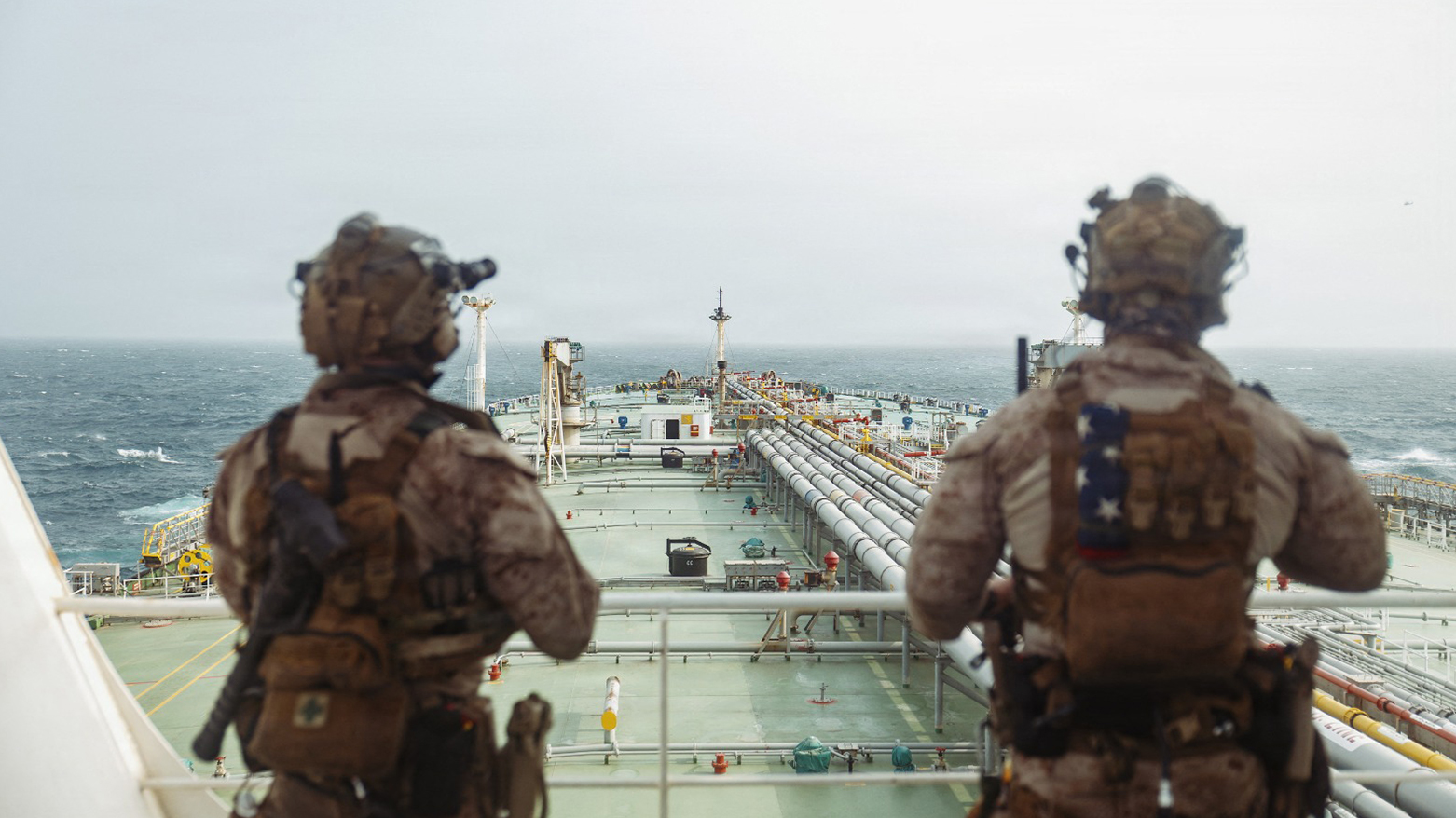
The military confrontation also intensified in the strategically vital Strait of Hormuz, where Iran claimed two oil tankers attempting to transit the waterway had exploded.
According to a statement carried by the Tasnim News Agency, the IRGC said two "non-compliant" oil tankers attempting to use what it described as the "unsafe and hazardous southern route" through the Strait of Hormuz exploded and were brought to a halt. Tehran did not provide evidence for the claim or identify the vessels.
Separately, the United Kingdom Maritime Trade Operations (UKMTO) agency reported that a vessel was on fire approximately eight nautical miles northwest of Kumzar, Oman.
"UKMTO have received information from military authorities that a vessel is on fire," the agency said, adding that the cause of the incident had not yet been verified.
The Strait of Hormuz, through which roughly one-fifth of the world's oil supply passes, has become one of the main flashpoints in the conflict, with repeated military operations threatening global energy shipments and maritime security.
Monday's developments mark another significant escalation in the widening confrontation between the United States and Iran, which has increasingly spread beyond direct strikes inside Iran to encompass U.S. military installations, Gulf states, and critical maritime trade routes.
Regional governments have placed their security forces on heightened alert as the fighting intensifies, while international leaders continue to warn that further escalation could destabilize the broader Middle East and disrupt global energy markets.