Russia Warns U.S. Against More Arms for Ukraine as Top Diplomats Meet in Manila
Lavrov tells Rubio that continued military aid to Kyiv is "unacceptable" as Washington seeks to revive diplomacy while balancing crises in Ukraine and the Middle East
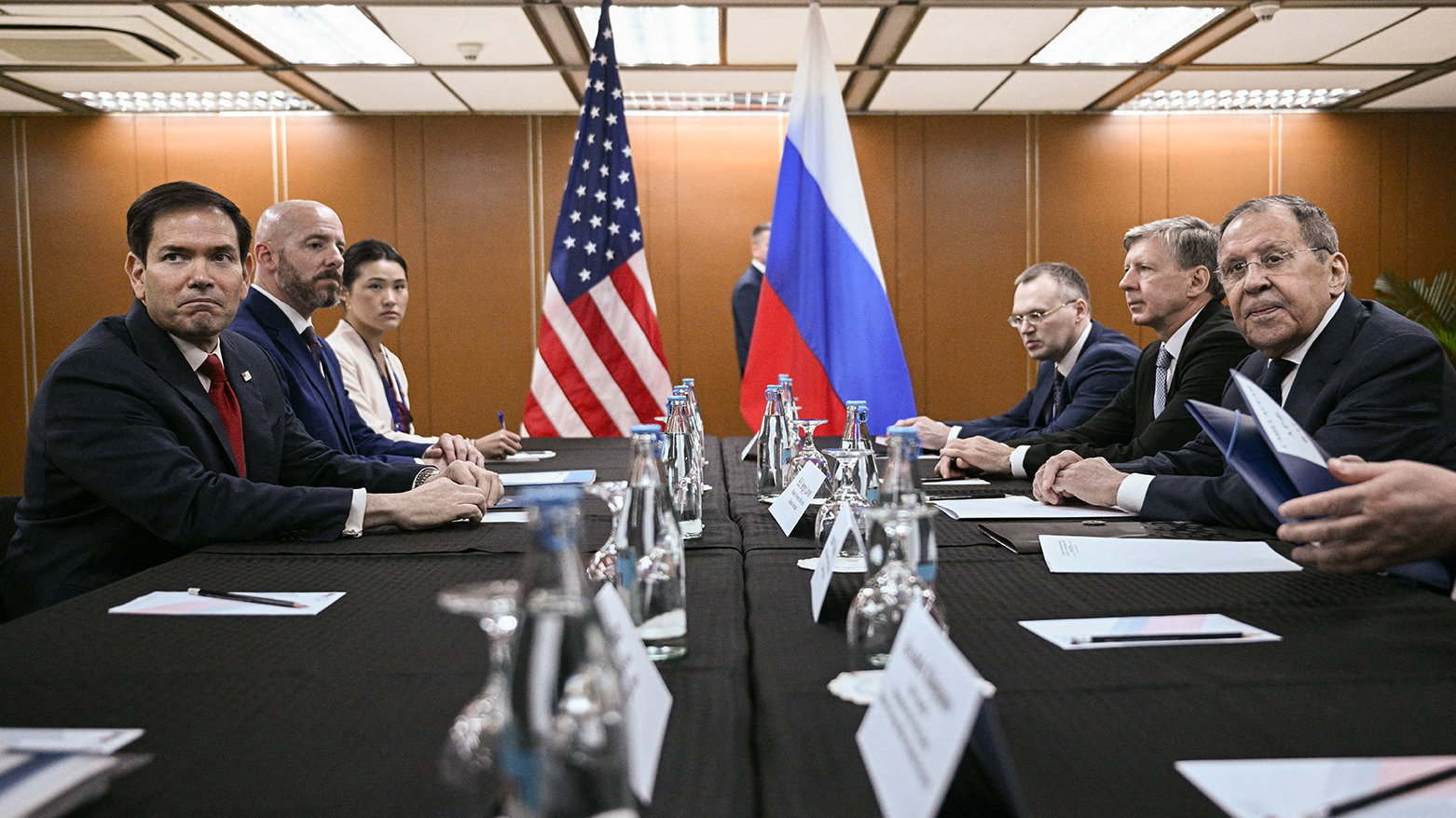
ERBIL (Kurdistan24) — Russia on Thursday warned the United States against continuing arms deliveries to Ukraine, as Russian Foreign Minister Sergei Lavrov and U.S. Secretary of State Marco Rubio held high-level talks in Manila amid renewed diplomatic efforts to end the war and growing geopolitical tensions.
The meeting, held on the sidelines of the Association of Southeast Asian Nations (ASEAN) summit in the Philippine capital, marked the first formal talks between Lavrov and Rubio since September 2025. The discussions came as Washington's diplomatic focus has increasingly shifted from mediating the war in Ukraine to addressing the escalating conflict in the Middle East.
According to the Russian Foreign Ministry, Lavrov told Rubio that continued U.S. military support for Ukraine was "unacceptable" and urged Washington to halt weapons deliveries to what Moscow described as the "Kyiv regime."
Lavrov also criticized European governments for pursuing what he called a "destabilizing policy" aimed at inflicting a "strategic defeat" on Russia, while reiterating that Moscow remained open to a "political-diplomatic resolution" of the conflict.
The U.S. State Department said the two diplomats discussed the broader U.S.-Russia relationship and "the need to end the Russia-Ukraine war," but offered few details on the substance of the talks. The officials were also expected to address the conflict in the Middle East, where Russia has strongly condemned recent U.S. military strikes against its ally Iran.
Speaking to reporters before the meeting, Rubio acknowledged that the war in Ukraine had significantly strained relations between Washington and Moscow.
"The war in Ukraine, I think, has in many ways impeded the ability of Russia and the United States to find areas of agreement on other topics," Rubio said.
"That doesn't mean we won't seek to find other areas of potential cooperation. But by the same token, we'd like to see that war come to an end," he added.
Lavrov, for his part, described the meeting as worthwhile, saying it was "good to ask questions and get answers."
The diplomatic engagement comes as peace efforts remain stalled, with Moscow continuing to insist that Ukraine surrender occupied territories as part of any settlement—conditions Kyiv has repeatedly rejected.
Ukrainian President Volodymyr Zelensky said Thursday he had held what he described as an "important conversation" with senior U.S. envoys Steve Witkoff and Jared Kushner aimed at "reinvigorating diplomacy" to revive negotiations over the more than four-year-old conflict.
Rubio and Lavrov had already spoken briefly during an ASEAN gala dinner earlier this week before participating in Thursday's bilateral meeting and the ASEAN Regional Forum.
Meanwhile, U.S. President Donald Trump has publicly backed Ukraine's campaign of long-range drone strikes targeting Russian energy infrastructure, arguing that such operations could "help bring about an end" to the war.
Ukraine has intensified attacks on Russian refineries, oil depots, and maritime logistics in recent months, contributing to fuel shortages inside Russia and increasing pressure on Moscow's wartime economy.
The conflict has continued to exact a heavy human toll. In late June, a large-scale Russian missile and drone barrage struck the Ukrainian capital, Kyiv, killing at least 30 people in one of the deadliest attacks in recent months.
The Manila meeting underscored the complex balancing act facing Washington, which is attempting to sustain diplomatic engagement with Moscow over Ukraine while simultaneously managing escalating tensions across the Middle East, where U.S.-Russia differences have deepened over the conflict involving Iran.