KRG Approves Emergency Fuel Strategy, Reaffirms Budget Rights in 2027 Federal Spending Plan
The KRG Council of Ministers strongly condemned the continued “terrorist” attacks targeting the Kurdistan Region, warning that they threaten security, stability, citizens' lives, and the interests of both the Kurdistan Region and Iraq.
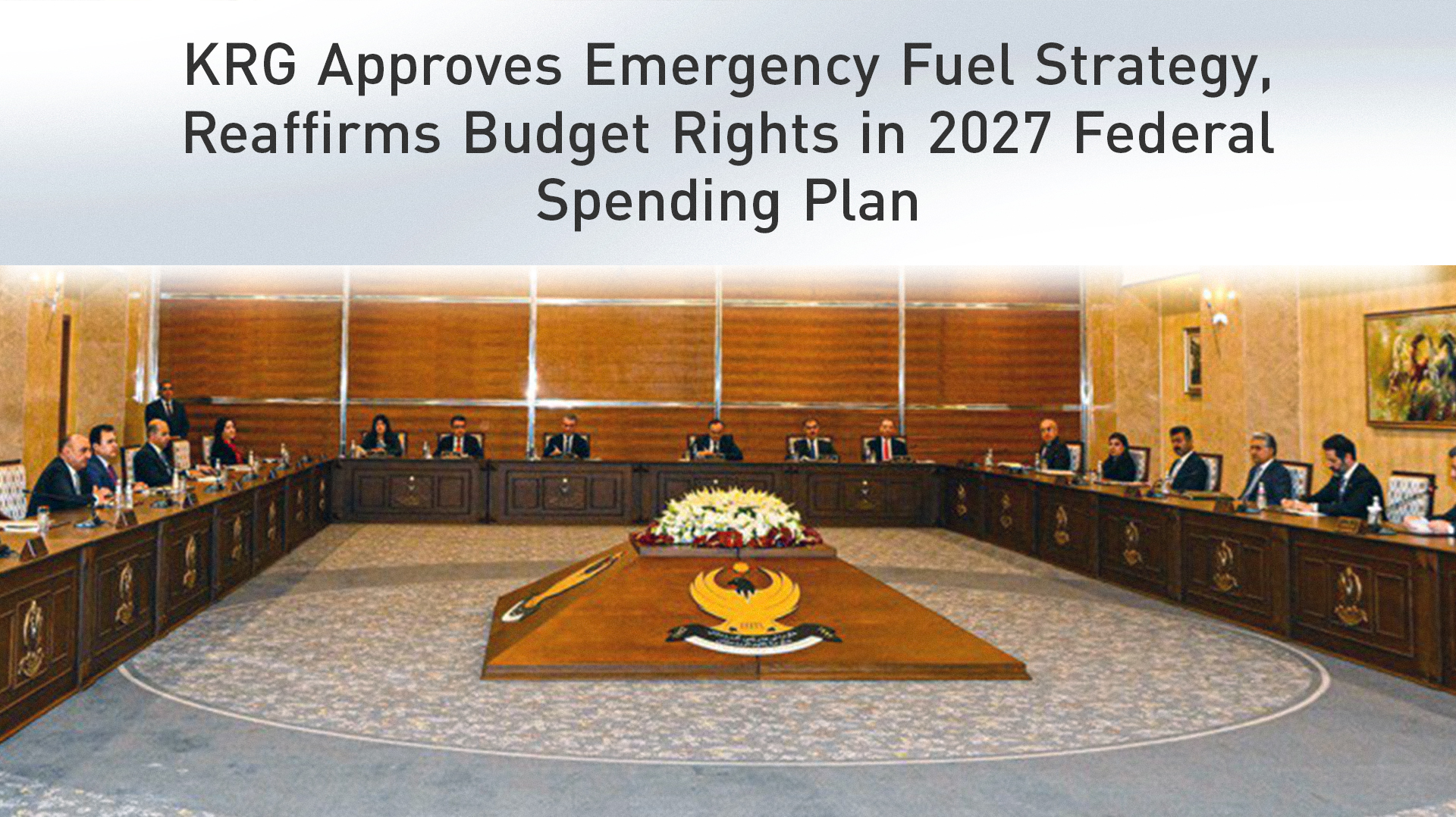
ERBIL (Kurdistan24) — The Kurdistan Regional Government (KRG) Council of Ministers on Wednesday approved an emergency strategy to tackle fuel shortages and electricity disruptions while reaffirming the Kurdistan Region's constitutional rights to its share of domestically allocated oil and fair financial entitlements in Iraq's 2027 federal budget.
The decisions were made during the council's regular weekly meeting, chaired by Prime Minister Masrour Barzani, according to a KRG statement.
At the start of the meeting, the council strongly condemned the continued “terrorist” attacks targeting the Kurdistan Region, warning that they threaten security, stability, citizens' lives, and the interests of both the Kurdistan Region and Iraq. It reiterated that the Kurdistan Region has consistently remained outside regional conflicts and has supported peace, dialogue, and good neighborly relations.
The council then reviewed efforts to address shortages of gasoline and other fuel supplies, resume gas production, and restore electricity generation. Acting Minister of Natural Resources and Minister of Electricity Kamal Mohammad briefed ministers on ongoing measures to resolve the crisis.
Following the discussion, the council instructed the Ministry of Natural Resources to take all necessary legal and technical steps to restore fuel supplies, coordinate with relevant authorities to monitor fuel markets and quality, prevent monopolistic practices, and ensure fuel remains available to citizens at reasonable prices.
The council also reaffirmed the Kurdistan Region's constitutional right to receive its share of oil allocated for domestic consumption across Iraq based on population and the principles of equality and fairness.
Turning to Iraq's 2027 federal budget, Finance and Economy Minister Awat Sheikh Janab presented the KRG's preparations for submitting its proposals. Officials reviewed the Region's constitutional and legal financial rights, arguing that provisions in previous federal budget laws had limited the Kurdistan Region's budget allocations and contributed to delays in salary payments.
The council directed the Ministries of Finance and Planning to work with all government institutions to prepare a unified proposal outlining the Kurdistan Region's demands for the 2027 budget. It also stressed that public employees in the Kurdistan Region are constitutionally entitled to receive salaries and financial benefits on an equal basis with government employees elsewhere in Iraq.
To strengthen coordination, the council tasked its secretariat with organizing a joint meeting between Kurdish parliamentary blocs in Baghdad and relevant KRG officials to unify positions on defending the Region's constitutional rights during budget negotiations.
In the final agenda item, ministers reviewed draft federal laws concerning international loans, grants, foreign assistance, and Iraq's final financial accounts for the 2012–2015 fiscal years. The council instructed relevant ministries to prepare the Kurdistan Region's legal observations and submit them to the federal government, the Iraqi parliament's Finance Committee, and Kurdish parliamentary blocs.
The council also reaffirmed the Kurdistan Region's constitutional right to receive a fair share of international loans, grants, and assistance secured by the federal government, emphasizing that the Region shares responsibility for repaying international loans and should therefore receive its equitable share of the funding. It concluded by stressing that any federal legislation affecting the Kurdistan Region's financial rights must comply with the Iraqi Constitution and uphold the principles of federalism, justice, and equality.