Trump Vows to 'Hit Hard' After Iran Targets US Bases in Jordan
US president promises forceful retaliation as Iran-backed groups reignite regional conflict and Washington expands military operations against Tehran's allies
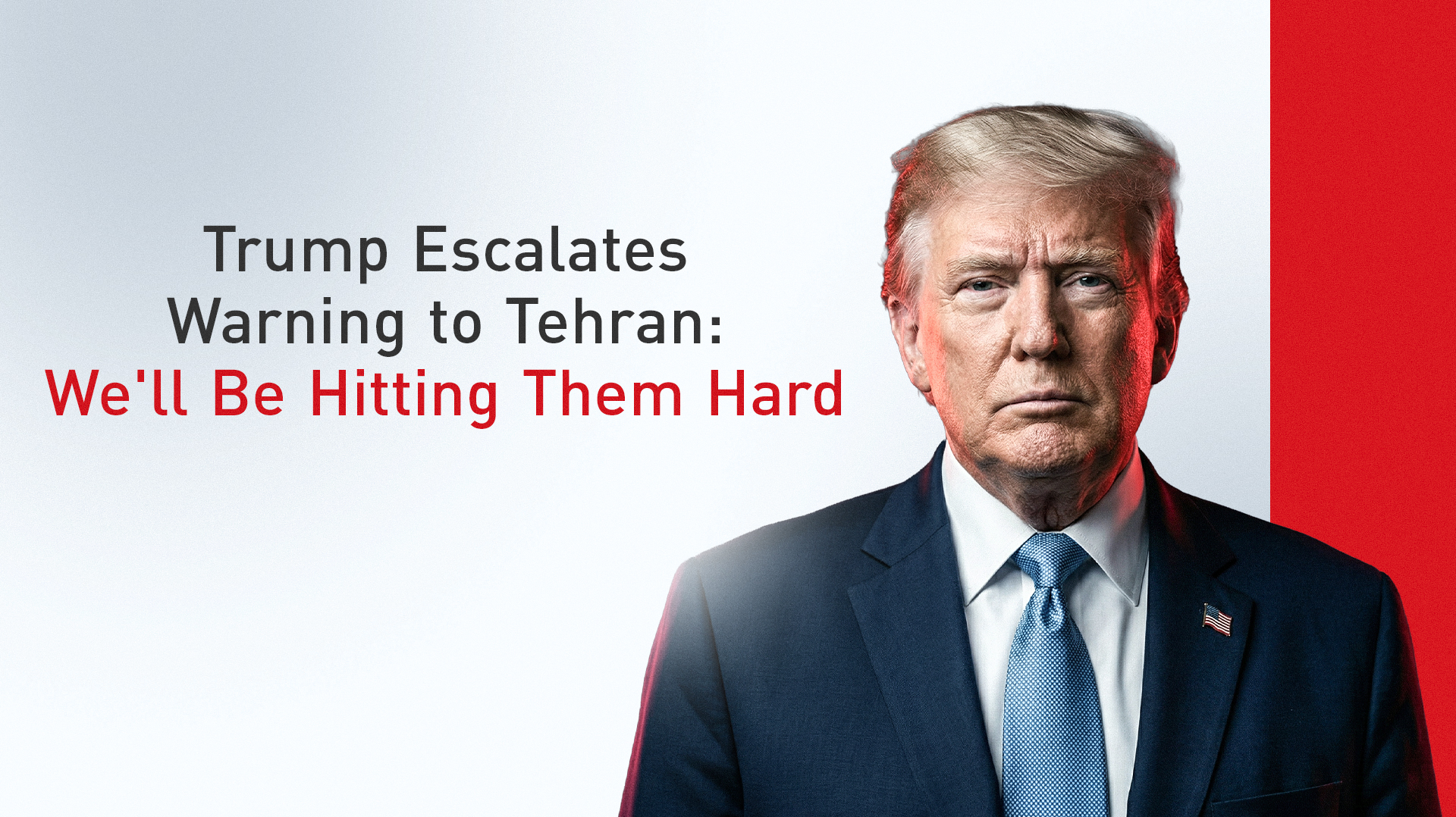
ERBIL (Kurdistan24) — US President Donald Trump vowed a forceful response on Wednesday after Iran launched missiles targeting US bases in Jordan, warning that Tehran would face severe retaliation as the renewed Middle East conflict escalates.
"We'll be hitting them hard. They're going to get a beating," Trump told Fox News, according to the network's correspondent. The US president further underscored his warning, saying, "We are going to beat the 'effing s' out of them."
Trump's remarks came after Iran's Islamic Revolutionary Guard Corps (IRGC) said it had targeted US military bases in Jordan, where the Jordanian military later announced it had intercepted five Iranian missiles before they reached their targets.
The latest exchange ended a brief lull in fighting that had raised hopes for renewed diplomacy between Washington and Tehran. Instead, the conflict rapidly widened across several fronts, reigniting fears of a broader regional war.
Earlier on Wednesday, the United States and Saudi Arabia announced coordinated strikes against Iran-backed militant positions in Iraq, saying the operation was carried out in response to attacks on US forces and Saudi oil infrastructure.
According to Fox News, Trump said those strikes were coordinated with the Iraqi government.
The US military said the operation targeted logistics and weapons facilities belonging to an Iran-aligned armed group.
The Popular Mobilization Forces (PMF), also known as the Hashed al-Shaabi, said the strikes killed at least 20 of its members across seven Iraqi provinces, including Baghdad.
Two PMF officials told AFP that five Iranian advisers were among the dead, while AFP correspondents observed coffins draped in Iranian flags during funeral ceremonies in Baghdad.
The renewed violence also extended to Lebanon, where Israel accused the Iran-backed Hezbollah movement of violating an existing ceasefire by launching a drone at an Israeli vehicle inside Lebanese territory.
Saudi Arabia, meanwhile, reported a second consecutive day of drone attacks targeting its oil facilities, blaming Iran-backed armed groups in Iraq for the assaults.
Security analyst Hesham Alghannam told AFP that Tehran appeared to be relying on its regional allies to maintain military pressure while diplomatic efforts continued.
"Tehran is now using its proxy network to sustain leverage while the diplomatic track absorbs international attention," he said.
The escalation has also rattled global energy markets. Oil prices surged around 7% on renewed concerns that the expanding conflict could disrupt crude exports from the Middle East.
Iran's state media also reported a US strike near the country's border with Iraq in the Piranshahr area. Officials in Iran's West Azerbaijan province said a missile struck an uninhabited location, causing no casualties.
Meanwhile, the Revolutionary Guards reiterated that attacks against US interests would continue.
"As long as the threats against the Islamic Republic of Iran continue... the resistance will continue," the IRGC said.
The renewed fighting has also intensified tensions around the Strait of Hormuz, where Iran claims to have intercepted and stopped three oil tankers while insisting it has "full control" over the strategic waterway.
Tehran has also announced plans to impose transit fees on vessels using the strait, a move opposed by Washington. In response, the United States unveiled new sanctions targeting entities linked to the Revolutionary Guards that it accuses of extorting commercial shipping.
With uncertainty surrounding navigation through the Strait of Hormuz, attention has increasingly shifted to the Red Sea, which has become the principal alternative maritime route for Saudi oil exports as regional tensions continue to mount.