European Leaders Call for Tougher Border Controls as Ceuta Migration Crisis Deepens
A mass influx of nearly 60,000 migrants into Spain's North African enclave of Ceuta has triggered political and security concerns across Europe, prompting calls for stricter border controls
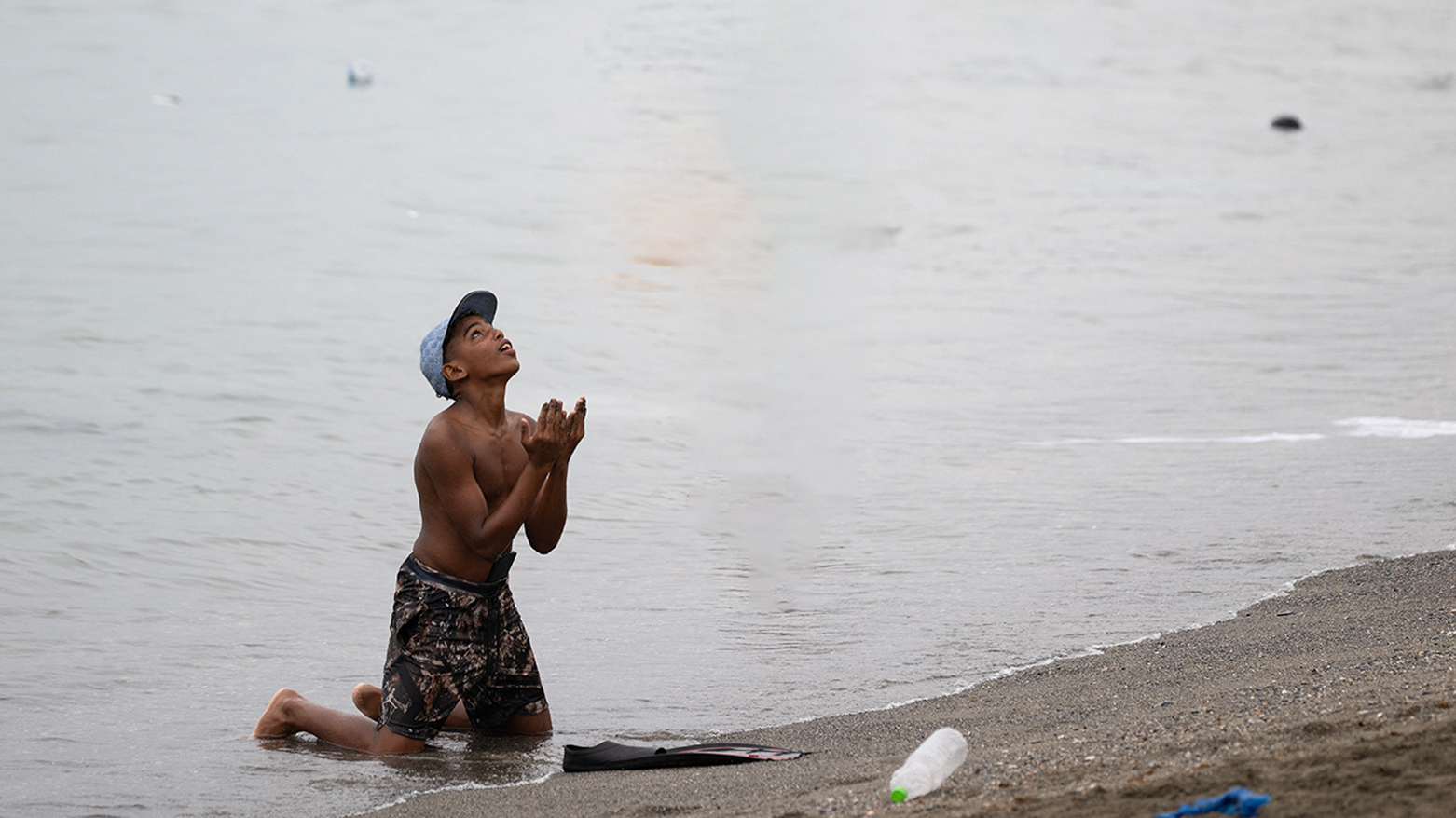
ERBIL (Kurdistan24) - A record surge of nearly 60,000 migrants crossing from Morocco into Spain's North African enclave of Ceuta has sparked one of the European Union's most significant security and political crises in recent years, prompting several European leaders to call for tougher border measures while reigniting debate over the future of the Schengen free movement area.
The influx, which unfolded over just a few days, amounts to more than half of Ceuta's population, placing unprecedented pressure on local authorities and border security.
Juan Jesús Vivas, president of the autonomous city of Ceuta, said many migrants entered the enclave by swimming around the maritime border barrier. He added that at least 34 migrants died while attempting the crossing.
Spain's Interior Ministry said more than 25,000 migrants have voluntarily returned to Morocco, while temporary transfer operations are continuing at a pace of around 150 people per minute.
Spanish Prime Minister Pedro Sánchez described the situation as an attack on Spain's territorial integrity.
"The government is deploying all available state resources to guarantee security, reinforce the maritime physical barrier, accelerate deportation procedures and coordinate with Morocco against human trafficking networks," Sánchez said.
Germany
German Chancellor Friedrich Merz urged Morocco to immediately readmit irregular migrants and stressed the need to protect the European Union's external borders.
His position coincided with Interior Minister Alexander Dobrindt's proposal to extend enhanced controls along Germany's internal borders beyond September.
Alice Weidel, co-leader of Germany's right-wing conservative party, said Ceuta had been overwhelmed and called for suspending Schengen arrangements with Spain to protect Germany.
France
French President Emmanuel Macron ordered tighter border surveillance along France's frontier with Spain.
Interior Minister Laurent Nuñez said rapid intervention forces had been deployed to strengthen border security.
Marine Le Pen accused Spain's Socialist government of encouraging migrant crossings, while Jordan Bardella called for an emergency session of the European Parliament.
Italy
Italian Prime Minister Giorgia Meloni described the situation as a genuine threat to Europe's borders.
She said Italy was prepared to adopt tougher border measures and, together with Interior Minister Matteo Piantedosi, supported the temporary suspension of Schengen arrangements with Spain.
Denmark and the United Kingdom
Danish Prime Minister Mette Frederiksen called on the European Union to examine the temporary suspension of Spain from the Schengen area.
Meanwhile, UK Prime Minister Andy Burnham said Britain had formally offered assistance to Spain in addressing the crisis.
European Commission President Ursula von der Leyen described the situation as unacceptable.
She said European Commissioner for Internal Affairs Magnus Brunner and Commissioner for the Mediterranean Dubravka Šuica had been tasked with coordinating with Morocco to help bring the situation under control as quickly as possible.
US President Donald Trump used the developments in Ceuta to warn about illegal immigration in the United States ahead of the upcoming midterm elections.
In an interview with Fox News, Trump said:
"Remember that picture. That's what we'll be in three years if the wrong side gets into power."
He warned that a Democratic victory would lead to similar scenes in the United States.
Vice President JD Vance said the images represented what he described as the consequences of "the globalist left's radical policies."
White House Deputy Chief of Staff Stephen Miller argued that Democrats welcomed such developments while American communities suffered.
The comments came as recent polling showed public confidence in Trump had fallen below 30%.