Nearly 5 Million Foreign Pilgrims Arrive in Iraq as Arbaeen Draws Vast Crowds to Karbala
Authorities intensify security, transport, and public services as millions of Iraqi and international pilgrims gather for one of the world's largest annual religious commemorations.
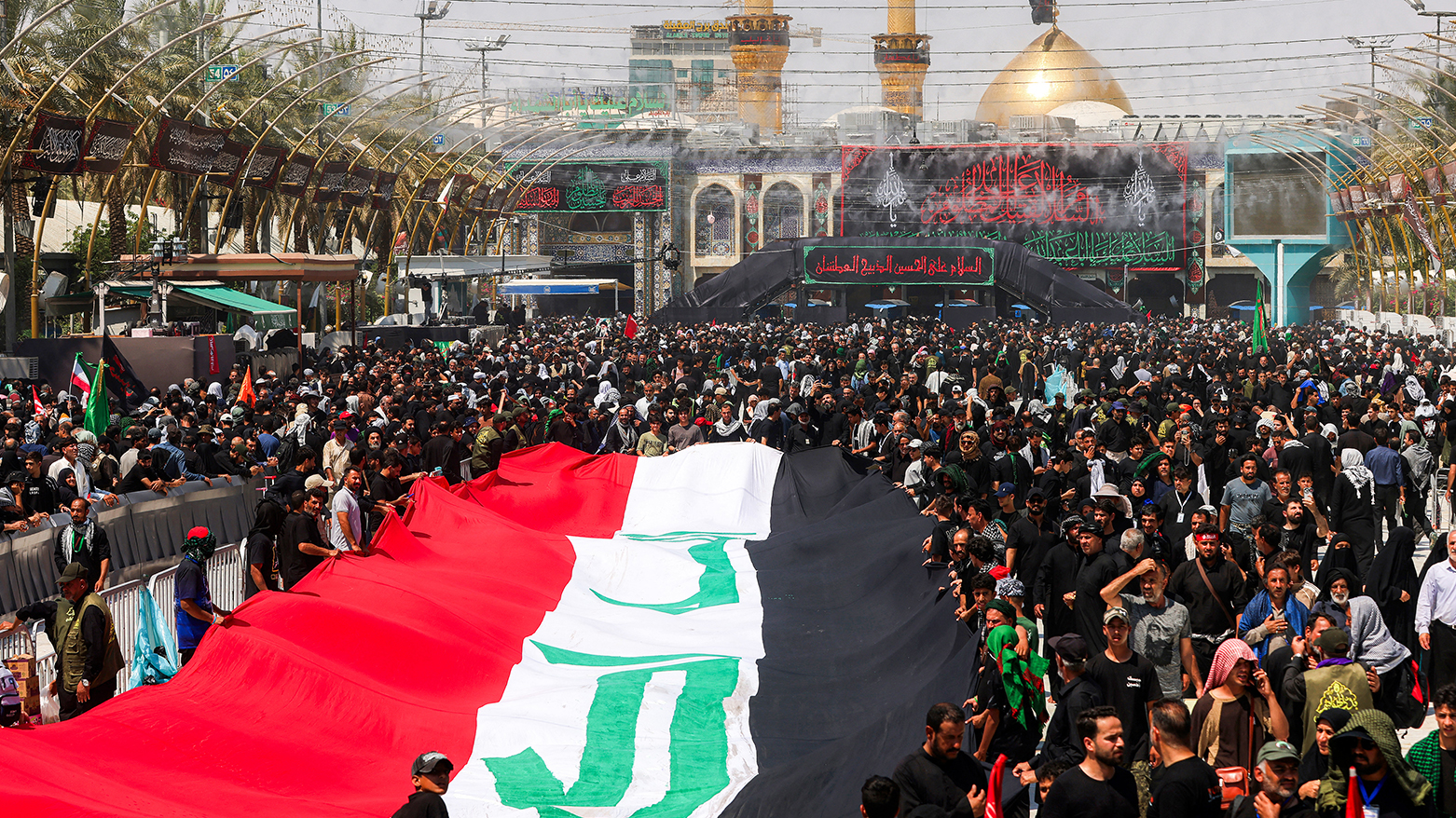
ERBIL (Kurdistan24) - Nearly 5 million foreign pilgrims have entered Iraq for this year's Arbaeen commemorations, according to the latest official figures, underscoring the immense scale of one of the world's largest annual religious gatherings as millions continue converging on the holy city of Karbala.
The Iraqi Security Media Cell said 4,887,660 international pilgrims had crossed into the country as of Monday night, while Iraqi pilgrims continue arriving in large numbers for the commemoration of Arbaeen, which marks 40 days after the martyrdom of Imam Hussein, the grandson of the Prophet Muhammad.

Officials expect the flow of visitors to continue through Tuesday, with Monday night recorded as one of the busiest periods of the pilgrimage season.
Pilgrims Converge on Karbala
Roads leading to Karbala have remained crowded as worshippers from across Iraq and abroad make their way to the city, where millions gather each year to honor Imam Hussein through prayer, remembrance, and acts of devotion.

An official source in Karbala said the influx of pilgrims reached its highest level on Monday evening and is expected to remain heavy into Tuesday as the city approaches the peak of the annual observance.
The latest figure released by Iraqi authorities reflects only foreign pilgrims entering the country and does not include the millions of Iraqi participants who also travel to Karbala during Arbaeen.
Security and Services Intensify
Managing an event of this magnitude has required an extensive nationwide operation involving security forces, transport authorities, healthcare providers, and public service institutions.
The General Directorate of Traffic said 16,000 officers and personnel have been deployed to implement traffic management plans across Karbala and along the highways connecting the city to major border crossings and neighboring provinces.

Authorities have also coordinated the delivery of essential public services, including continuous electricity, drinking water, healthcare, and medical supplies to accommodate the growing number of pilgrims.
The effort reflects close coordination between Iraq's security agencies and civilian institutions tasked with maintaining public order while ensuring pilgrims have access to basic services throughout the commemorations.

A Gathering of Global Significance
Arbaeen is widely regarded as one of the world's largest recurring religious gatherings, attracting millions of Shiite Muslims each year from Iraq and dozens of other countries.
The commemoration marks the end of the 40-day mourning period following the death of Imam Hussein in the Battle of Karbala, an event that occupies a central place in Shiite Islamic tradition.

For many pilgrims, the journey is both a religious obligation and a personal expression of faith, with countless participants walking long distances before reaching the city's holy shrines.
How This Year's Numbers Compare
Historical attendance figures illustrate the remarkable scale of the annual pilgrimage while highlighting the distinction between total participation and the number of foreign visitors entering Iraq.
According to data cited by the Iraqi News Agency (INA), overall attendance reached approximately 11.2 million pilgrims in 2016 before climbing to more than 21 million in 2022. A record of over 22 million participants was registered in 2023, while attendance remained at roughly 21 million during both 2024 and 2025.

The current figure of 4,887,660 represents international pilgrims entering Iraq and should not be interpreted as the total number of people expected to participate in this year's Arbaeen commemorations.
The Cost of Hosting Millions
Hosting one of the world's largest annual public gatherings requires a vast logistical commitment from the Iraqi government.

Authorities have allocated 52.5 billion Iraqi dinars to support the pilgrimage, with funding directed toward the holy shrines and the agencies responsible for delivering security and essential services.
More than 100,000 security personnel have been mobilized as part of the nationwide operation, while approximately 2,400 large buses have been assigned to provide free transportation between border crossings, major cities, and pilgrimage routes.

Government spending has also increased to support electricity networks, water supplies, sanitation services, healthcare facilities, emergency response teams, pharmaceuticals, and field medical units operating along the pilgrimage corridors.
The operation highlights the complexity of managing a religious event that temporarily transforms Karbala into one of the world's busiest gathering places.

Economic Impact Beyond Government Revenue
Despite the enormous number of visitors, Arbaeen does not generate direct government income on the scale of Saudi Arabia's Hajj pilgrimage.
A reciprocal visa waiver agreement between Iraq and Iran removes one of the principal potential sources of state revenue from millions of international visitors.

At the same time, thousands of volunteer Mawkebs provide pilgrims with free meals, accommodation, refreshments, and other services, reducing spending on hotels and restaurants during the pilgrimage.
Economic benefits are therefore concentrated largely in the private sector, where transport operators, telecommunications providers, retailers, airports, and Iraqi Airways experience a significant seasonal increase in demand.
Economists generally view Arbaeen as an event driven primarily by public service, religious solidarity, and volunteerism rather than as a major source of government revenue, with the state's logistical and security expenditures substantially outweighing its direct financial returns.
