Iraq Advances Bill Targeting ISIS Genocide Crimes Amid Calls to Secure Sinjar
Draft legislation would allow Iraqi courts to prosecute ISIS members for genocide, war crimes, and crimes against humanity while supporting reparations for survivors and advancing accountability efforts.
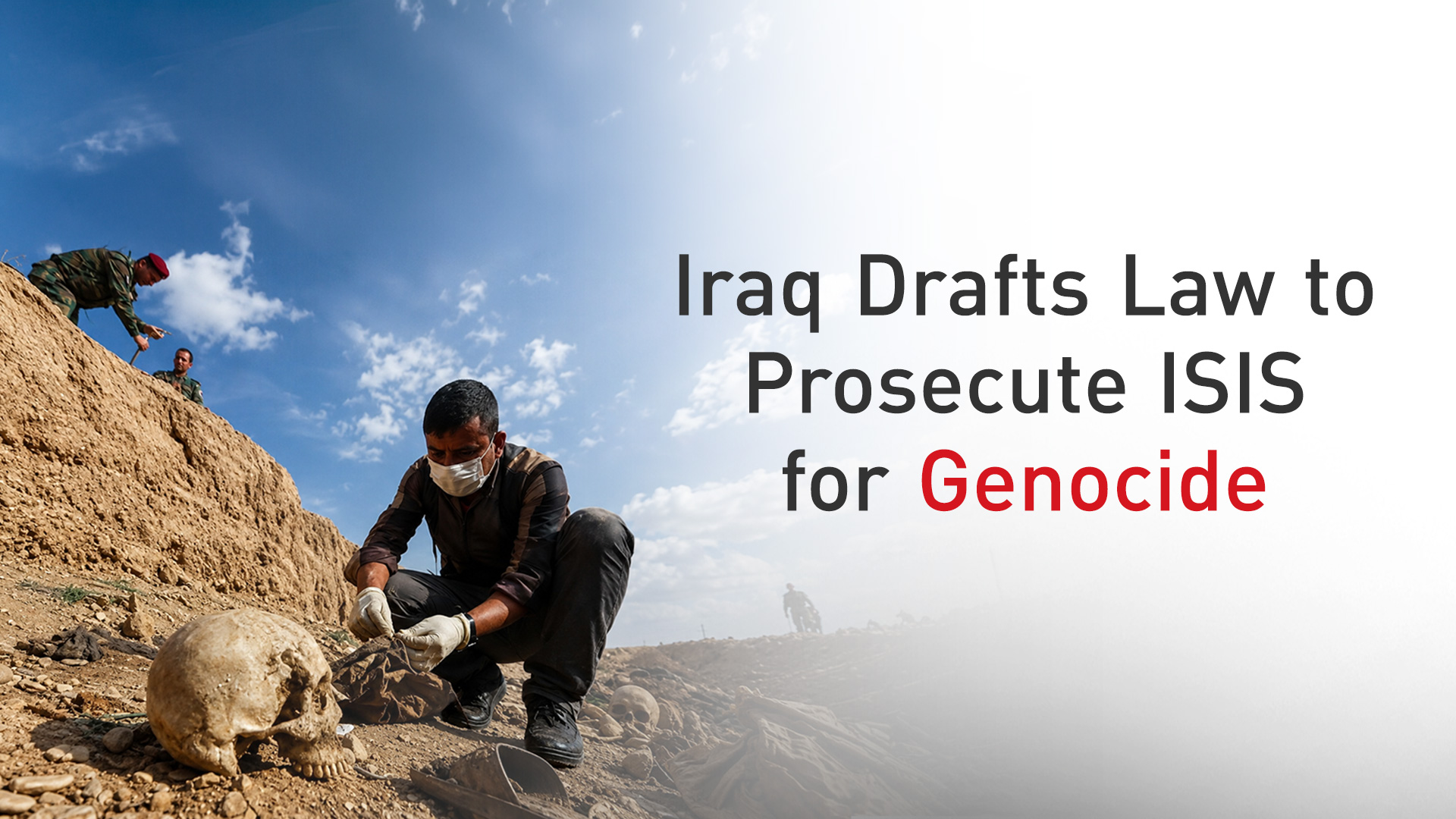
ERBIL (Kurdistan24) - Iraq has completed drafting landmark legislation that would, for the first time, allow ISIS members to be prosecuted for genocide, war crimes, and crimes against humanity rather than solely under the country's anti-terrorism laws, marking what officials describe as an important step toward greater accountability for atrocities committed against the Ezidis (Yazidis or Yezidis) and other victims.
Speaking on Kurdistan24's Basi Roj program with Zhino Mohammed, Iraqi Prime Minister's Advisor for Ezidi Affairs Khalaf Sinjari said the proposed Law on Combating International Crimes has completed its legal review within both the General Secretariat of the Council of Ministers and the State Council and is expected to be submitted to the Iraqi Parliament.
"Previously, ISIS members were prosecuted only under anti-terrorism legislation," Sinjari said, explaining that the new bill would enable Iraqi courts to pursue charges of "genocide, war crimes, and crimes against humanity."
The proposed legislation also seeks to establish a dedicated compensation fund to provide both material and moral reparations to survivors and victims of ISIS crimes.
According to Sinjari, the measure is intended to strengthen Iraq's legal framework for addressing the legacy of ISIS atrocities while expanding avenues for justice beyond terrorism-related convictions.
Although the legislation still requires parliamentary approval before taking effect, it represents a significant shift toward recognizing the full scope of crimes committed during ISIS's campaign against vulnerable communities.
Security Remains Key to Sinjar's Recovery
Sinjari said legal accountability alone will not be sufficient to restore stability in Sinjar, arguing that the continued presence of illegal armed groups remains the principal obstacle preventing displaced families from returning to their homes.
He said the Iraqi government is working to restructure security arrangements in the district as part of broader efforts to restore state authority.
"The presence of unofficial armed groups is the biggest obstacle to implementing the Sinjar Agreement and ensuring the safe return of displaced people," he said.
According to Sinjari, successful implementation of the agreement will require sustained cooperation between Baghdad, the Kurdistan Regional Government (KRG), and international partners, alongside efforts to improve security and restore essential public services.
Recognition of the KRG's Support
During the interview, Sinjari also praised the Kurdistan Regional Government's response to the Ezidi community following the ISIS attacks.
He credited the KRG with helping bring international recognition to the Ezidi genocide, sheltering large numbers of displaced families, supporting survivors, and maintaining international advocacy on behalf of the community.
Sinjari also voiced support for Prime Minister Masrour Barzani's continued calls for greater international assistance for Ezidis, saying such appeals remain both justified and necessary as recovery efforts continue.
Humanitarian Needs Persist
Despite ongoing recovery initiatives, Sinjari said the humanitarian consequences of the ISIS attacks remain far from resolved.
He noted that approximately 120,000 people displaced from Sinjar continue to live in camps, underscoring the need for an internationally supported compensation mechanism capable of helping survivors rebuild their lives.
He also said efforts remain underway to locate Ezidis who were abducted during the ISIS assault, adding that many of those still missing are believed to be in Syria.
Sinjari's remarks underscored the interconnected nature of Iraq's recovery efforts, arguing that meaningful justice for survivors depends not only on prosecuting those responsible for genocide and other international crimes, but also on restoring security, rebuilding communities, and creating the conditions for displaced families to return home safely.